



The Adani order and the Indian ‘free” media By Justice Katju
These days many journalists claiming to belong to India’s ‘free’ media are raising a big hue and cry over the…
Keeping Pace with Legal Change

The Bar Council of India (BCI) has released the schedule for the All India Bar Examination (AIBE) 22 (XXII). Law graduates and eligible candidates appearing…
These days many journalists claiming to belong to India’s ‘free’ media are raising a big hue and cry over the…
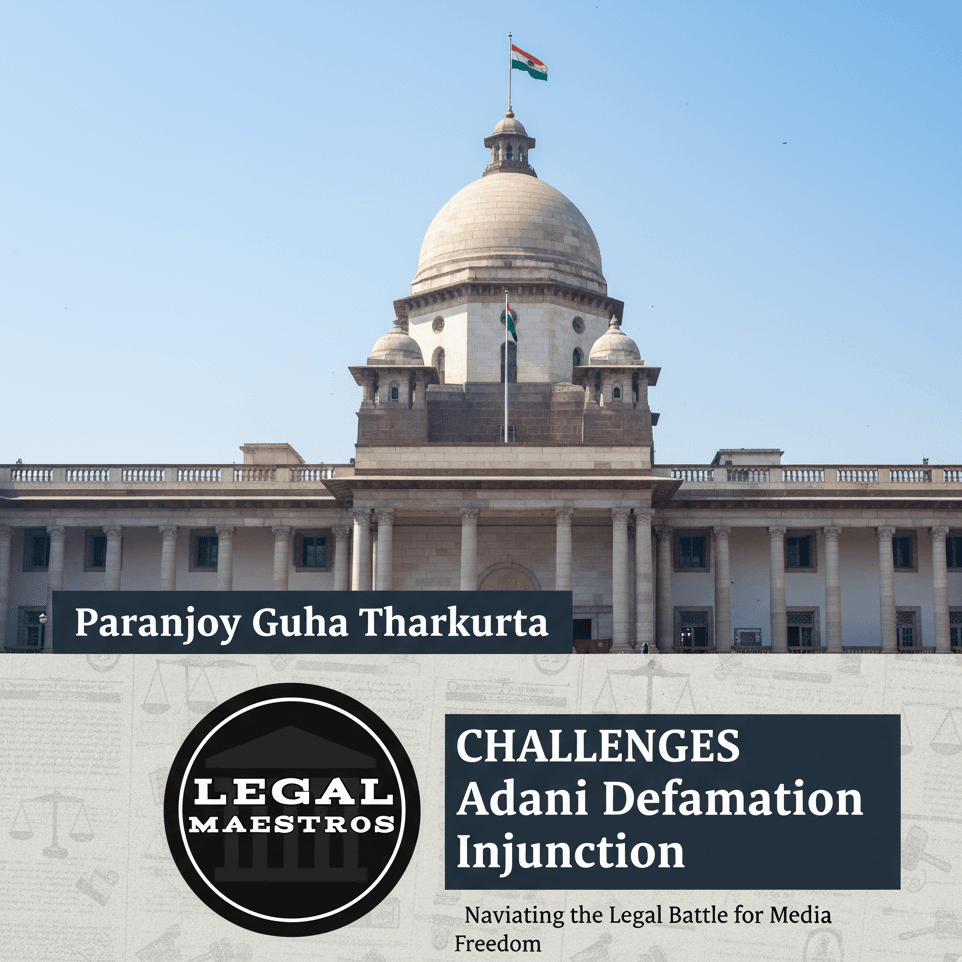
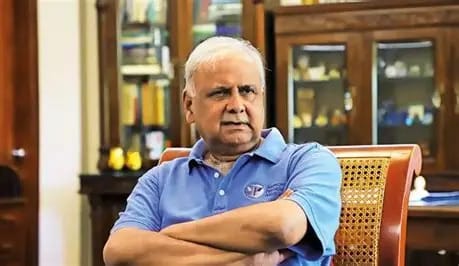
Paranjoy Guha Thakurta, a long-time veteran journalist, is once again caught in the middle of a legal tempest, over a defamation injunction that was brought against the journalist by Adani Enterprises Ltd. The case is a highly controversial area of the Indian media life, which also reveals the conflict between corporate interests and the right of press freedom.
Prof Jagdeep Chhokar, who died recently, is being highly praised for his contribution to strengthening Indian democracy https://archives.iima.ac.in/faculty/Jagdeep-S-Chhokar.html Indian ‘liberals’…
Introduction In a significant ruling, the Supreme Court of India, in the case of Pradnya Pranjal Kulkarni v. State of…
A legal fight and one of the biggest in the world has broken out between some of the largest entertainment companies in the world and a Chinese technology company, which tends to reflect the increasing tensions related to artificial intelligence and the ownership of intellectual property.
This is what the user has prompted me to get all the information needed to complete this task. The user has inputted the name of the show, the star, the number of the season, the genre, the date of release and the overall subject matter. Using this information I will be able to come up with a fictional article.
Karishma Sundara is a renowned lawyer in the legal fraternity officially stating the opening of her new business, Kintsugi Law. The boutique legal firm represents one of the sharpest turning points of her career that had ended with her leaving the legal giant, Trilegal, where she worked as counsel.
The user would like me to write an article concerning a particular and fictional occurrence the waqf Amendment Act 2025 being temporarily blocked by the Supreme Court.
The Lokpal is an anti-corruption ombudsman of India and was established with a noble intention of eliminating corruption amongst the public officials. Its authority, however, has just come to a wall in its constitutional power.
The Delhi High Court in an unprecedented decision has refused an interim injunction requested by Wow Momo Foods Private Limited against Wow Burger