By Justice Katju
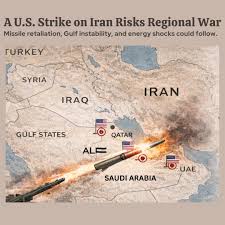
A 10 day peace agreement has been reached between Israel and Lebanon, and consequently Iran has opened the Strait of Hormuz. The 2 week peace agreed upon by the US and Iranian governments on 8th April will end on 22nd April, and now the question on many people’s mind is whether the peace will continue beyond that date. Negotiations between the 2 sides are going on in this connection, with Pakistan as an intermediary
https://www.theguardian.com/world/2026/apr/15/us-iran-indirect-talks-middle-east-war-ceasefire
Many people think that in view of the forthcoming mid term elections in November to the US Congress ( in which the Republicans presently have a majority in both Houses ) President Trump will continue the peace, as the war has become unpopular among the majority of Americans. As of mid-April 2026, the joint US-Israel military attack against Iran—initiated on February 28, 2026—is widely considered “deeply unpopular” among the American public. Public opinion polls consistently show that a majority of Americans oppose the military action.
However, I am of a different opinion. In my opinion even if the ceasefire is continued for a short period beyond 22nd April, the war will resume thereafter. Let me explain. I have already expressed my view in the articles below, but would like to elaborate
https://indicanews.com/the-next-stage-in-the-u-s-iran-war
https://share.google/rmACopVjOA8CnAyGy
To understand this one must delve deeply into economics, for, as it is often said, politics is concentrated economics. Without understanding economics, one can never understand politics.
In 1929 the Great Depression began in America with the Wall Street Slump, and then spread to many parts of the world. This was the deepest economic recession in world history.
Economic recessions are caused when the manufacturing capacity far outstrips demand. As is sometimes said, while the productive capacity increases at geometric progression, demand increases only at arithmetic progression, and this inevitably leads to a recession. By 1929 US productive capacity had increased enormously, while the demand of its products did not correspondingly increase. This caused the Great Depression, during which US industrial capacity fell by almost 47%, throwing tens of millions of Americans into unemployment
https://www.britannica.com/event/Great-Depression
President Franklin Roosevelt tried to alleviate the situation by his New Deal measures, but this only had a fringe effect.
It was the outbreak of the Second World War in 1939 which really brought America out of the Great Depression, when the great demand for weapons and other supplies created a massive economical revival. President Roosevelt rapidly converted the US economy into a war eonomy, setting up huge plants for war production, and this generated employment.
However, when the war ended in 1945 top US authorities were deeply concerned that with the end of the war demand for weapons etc will drastically drop, and the Great Depression may again resume. They got over this problem by creating a massive arms industry in the United States to supply weapons not only for its own needs but also for many countries all over the world. In other words, the arms industry which was created in America only as a temporary measure during the second world war, became a permanent feature after the war, with its companies grossing huge profits, and generating employment.
https://www.europarl.europa.eu/RegData/etudes/BRIE/2025/777967/EPRS_BRI(2025)777967_EN.pdf
Former U.S. President Eisenhower, in his 1961 farewell address, warned of the “military-industrial complex”—the dangerous convergence of a massive military establishment and a large private arms industry. He cautioned that this alliance, growing in the Cold War era, could gain unwarranted influence and threaten democratic processes and peace, advising that only an alert citizenry could protect against it.
However, Eisenhower’s advice was ignored, and the arms manufacturers continued to grow and became more and more powerful, demanding that the U.S. government wage regular wars (so as to continue and increase their profits). Hence, when one war by America ended, another began after some time. Thus, the Korean War was followed by the Vietnam War, the Iraq War, the Afghanistan War, and now the Iran war. There were many smaller wars also.
The real ruler of America is not its President, Donald Trump, but its big business class. This class is broadly divided into 2 groups: (1) the arms manufacturers, which consist of gigantic companies like Boeing, Lockheed Martin, General Dynamics, RTX Corporation, Northrop Grumman, etc and (2) the rest.
Of these two, often the former is the dominant group, which controls broad U.S. policies through its agents, the U.S. politicians, and also indirectly controls the US media which strongly influences public opinion.
The arms manufacturers are pro-war, as war generates increased demand for their products, and thus increases their profits. Peace reduces this demand, and thus reduces profits. Hence they will put strong pressure on President Trump to continue the US-Iran war.
There is an additional reason why the war will continue. As explained in my article below, after the end of the second world war, the imperialist powers realized that they could not continue ruling their colonies directly ( through their armies and officials stationed in the colonies ), as a spirit of nationalism had arisen among the colonial peoples, and independence struggles had begun. Hence they switched over from colonialism to neo-colonialism, i.e. from direct to indirect rule, which, while formally granting independence to the colonies, enabled them to safeguard their economic interests in the erstwhile colonies, which seemingly had become free.
Thus, all middle eastern and Latin American countries are formally independent, but their governments are really US puppets, loyally complying with the orders of their masters. Governments in Latin America like Chile, Gautemala, Granada, and of late Venezuela, which tried to throw off the US yolk and become really independent, were crushed by US troops or their local agents. The same happened to Saddam Husain in Iraq and Bashar Asad in Syria who tried to assert independence.
Iran too was under indirect US rule under the late Shah, who was a US puppet, but after he was overthrown by a popular upsurge in 1979 led by Ayatollah Khomeini, Iran has become really independent, and often cooks a snook at the Americans. The latter realized that unless Iranian independence was crushed, it would inspire people in other underdeveloped countries to do the same, and cease being neo-colonies of the developed countries, and become really free.
https://indicanews.com/the-historical-significance-of-the-u-s-iran-war
https://www.hastakshepnews.com/2026/04/iran-is-hero-and-leader-of.html
Hence the US war against Iran will continue, in an all out effort to crush Iranian independence ( and seize its huge oil reserves in the bargain ), which is inspiring other underdeveloped countries to also fight for their real independence
https://indicanews.com/the-neo-colonial-era-and-the-historical-significance-of-the-u-s-iran-war
However, though they will have to make tremendous sacrifices, Iran will eventually win the war, for the reasons given in my articles below
https://indicanews.com/why-iran-will-win-the-war