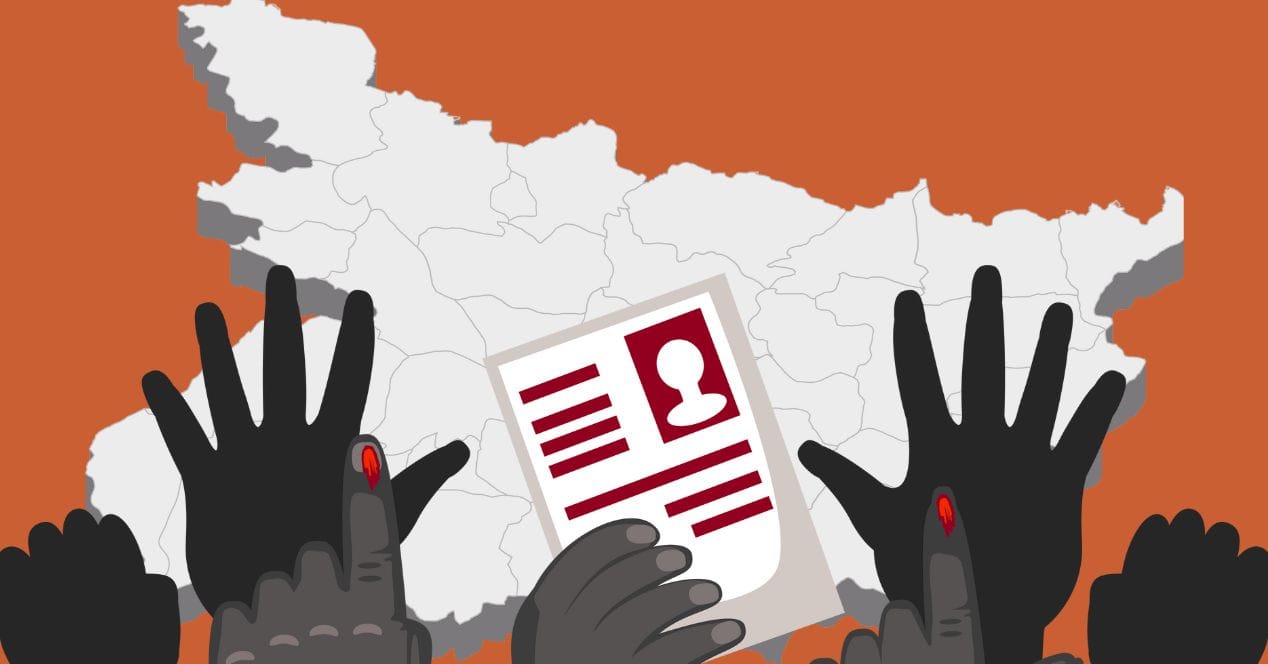
The Supreme Court just issued a giant decision that will impact virtually every voter in the nation. It’s all about the Special Intensive Revision. Most people simply refer to it as the SIR. This is essentially the Election Commission of India that is attempting a massive clean-up of the national voter list. Its origin was in Bihar. Then it expanded. It promptly triggered a large-scale court battle
The case was dragged to the highest court by organisations such as the Association for Democratic Reforms and the People’s Union for Civil Liberties. They were followed by a group of powerful politicians. Petitions were filed by people such as Mahua Moitra, Manoj Jha and Supriya Sule. They were terrified. They felt this massive bureaucratic machine was going to debar millions of voters from voting their rightful ballots. They said the government was conducting a “back-door citizenship exam.”
On Wednesday, a bench led by Chief Justice Surya Kant and Justice Joymalya Bagchi threw those petitions out. They supported the whole SIR process. They handed over a gigantic “go for it” to the Election Commission to scrub the rolls
Need Help With Your PhD or LLM Thesis?
Explore our thesis and dissertation writing support services for PhD and LLM students. Get subject-specific academic assistance for your research project.
Explore Our Services →The Cleanup is happening now because of the critical need for action.
The judges agreed on one very basic issue with the Election Commission. The voters’ lists stink. This is the first time the country has undertaken a thorough and thorough revision in a while, back in 2003. Consider the changes in the country in the past 20 years. Village to cities. Entire neighbourhoods disappear in a flash. Massive migrations have turned the nation’s demographic map upside down.
The Election Commission said that data that is 20 years old can’t be used to have a free and fair election. The court agreed. They specifically referenced to Article 324 of the Constitution and Section 21 of the Representation of the People Act. The judges decided the authority for this kind of deep revision is embedded in the law. However, a healthy democracy isn’t simply about the mechanics of polling day. Relies solely on the correctness of the raw data. If it is already done, with duplicates or ghosts in the list, the election is already rigged before anyone presses a button on an EVM
It is an intensive revision that gives the democratic process “a living form”, said the court. They realized just how extensive the issue was. They didn’t think it was too much to ask for a sweep of the entire nation. It was a must.
The Fear of Getting Kicked Off the List
The issues that scared the opposition the most was the citizenship angle. Bihar’s original order called for people not shown on those 2002 or 2003 legacy rolls to then be able to show documentary evidence. They needed to demonstrate a connection to a person on the lists from that time. The petitioners had contended that this was highly perilous.
The petitioners continued to refer to a “well-known” old case titled Lal Babu Hussein v. Electoral Registration Officer. That case established the principle that it’s not okay to taint a person’s citizenship status because they’re poor or undocumented, particularly if they are named on the rolls. The old legal doctrine that if your name is registered on the voter list, you are presumed to be an Indian citizen. The burden is on the State to prove otherwise. The attorneys representing the NGOs said that the SIR had turned this presumption on its head. It suddenly made it the responsibility of normal people to prove that they were normal. They claimed that the Election Commission was becoming a citizenship verification organisation without any legal mandate.
The Supreme Court put an end to it. Their efforts were made apparent by one very big guardrail, however. The judges determined that the presumption of citizenship is not provable. It is rebuttable. A voter’s eligibility to vote does not depend on presenting some supporting documents. It just verifies it. The Election Commission has full permission to ask questions to ensure that someone is indeed eligible to vote.
Who Decides Citizenship? is another title by the same author.Who Decides Citizenship? is the author’s other book.
The court was extremely careful to clearly set out the limits of what the poll panel can do. The judges were very clear. The Election Commission does not have the final say on who can be an Indian citizen.
An election officer does not have the authority to unilaterally take away a person’s citizenship if he or she thinks the individual may not be eligible because of citizenship requirements. They are able to flag it for electoral roll. That’s where their strength ends. The court directed that any doubtful cases shall be referred immediately to the relevant department for verification as per Citizenship act. And the Election Commission has a narrow four-week timeframe to turn those files over.
This implies that the poll panel can control the voter registry. The final decision about citizenship remains as it is. It continues to be a distinct legal procedure, and is governed by a separate statute. This was a limited inquiry in the court’s opinion. It is sufficient to safeguard the voting process without changing a man’s legal status in the country.
How it Works.How it Works Ground Reality.
This decision is not an abstract discussion about the law. It comes with immediate and large repercussions on the ground. Some States such as Bihar, West Bengal, Tamil Nadu and Kerala have already completed the revision. These lists, which have been scrubbed, have been used in entire assembly elections. The process is on-going now in Uttar Pradesh, Rajasthan and Gujarat. This is a huge rollout at the third phase level, which will take months. Thousands of police officers will be pounding on doors. Checking names. Cross-referencing documents. The logistics involved in it are very crazy. But the legal obstacle has been removed.