Here is a simple English article with headings, based on the Supreme Court judgment you provi
The Supreme Court of India made a big decision. They said that when employees do something the punishment should be decided based on their role in the company. The Court said that just because two people do the same thing wrong it does not mean they should get the punishment. This decision is about a man named Raj Kumar who worked at Punjab & Sind Bank.
Background of the Case
Raj Kumar started working at Punjab & Sind Bank in 1987. He worked hard. Became a Senior Manager.. In 2011 he got in trouble. People said he did some bad things like taking money from customers and lying about it. The bank did an investigation. Found out that he was guilty. So they fired him from his job in 2014.
The people he worked with who also did bad things did not get fired. One of them had to retire and the other got a smaller salary.
Challenge Before the High Court
Raj Kumar did not like the decision so he went to the Delhi High Court. He said that it was not fair that he got a punishment than his friends. He said that everyone should be treated equally. The High Court agreed with him. They said that since everyone did the thing wrong they should get the same punishment. So they changed Raj Kumars punishment from being fired to retiring
Issue Before the Supreme Court
The Supreme Court had to decide if the High Court made a mistake. They had to answer a question: can the Court change the punishment that the company gave to the employee?
Supreme Court’s Analysis
The Supreme Court looked at the law. They said that the Court should not normally change the punishment that the company gave. They should only change it if the punishment is very unfair. The Court said that the punishment should be fair and based on what the employee did wrong.. It should also be based on the employees role in the company.
Role of Rank and Responsibility
The Supreme Court said that Raj Kumar was a Senior Manager. He had a responsibility. He was supposed to be an example for others. So when he did something he should get a harsher punishment. The Court said that just because two people do the same thing wrong it does not mean they should get the punishment. The punishment should be based on their role in the company.
On the Principle of Equality
The Supreme Court said that equality does not mean that everyone should be treated the same. It means that people who are in the situation should be treated the same. In this case Raj Kumar and his friends were not in the situation. Raj Kumar was a Senior Manager. They were not. So he should get a punishment.
Limits of Judicial Review
The Supreme Court said that the Court should not change the punishment unless it is very unfair. They should not act like the company. Decide the punishment. They should only change it if it is irrational or very unfair.
Final Decision of the Supreme Court
The Supreme Court decided that the High Court made a mistake. They said that Raj Kumar should be fired from his job. The Court said that the punishment was fair and based on what he did wrong.
Names of the Justices
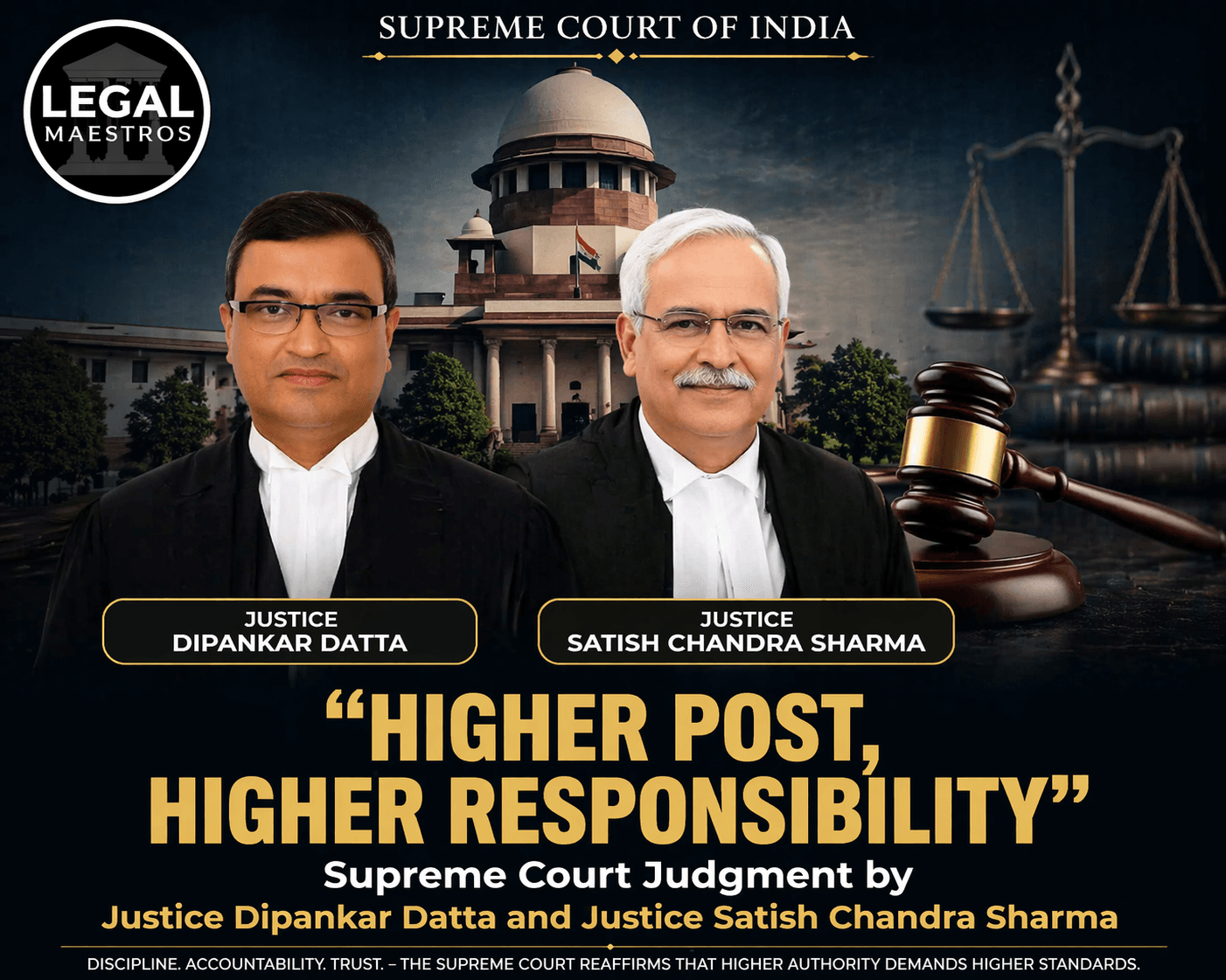
The decision was made by Justice Dipankar Datta and Justice Satish Chandra Sharma.
This decision is important. It says that people in roles should be held to a higher standard. If they do something they should get a harsher punishment. The Supreme Court said that equality does not mean that everyone should be treated the same. It means that people who are in the situation should be treated the same.
Keywords
Supreme Court judgment, Punjab and Sind Bank case, proceedings, Article 14 equality, proportionality principle, judicial review, service law, dismissal, from service, bank fraud case, Justice Dipankar Datta, Justice Satish Chandra Sharma