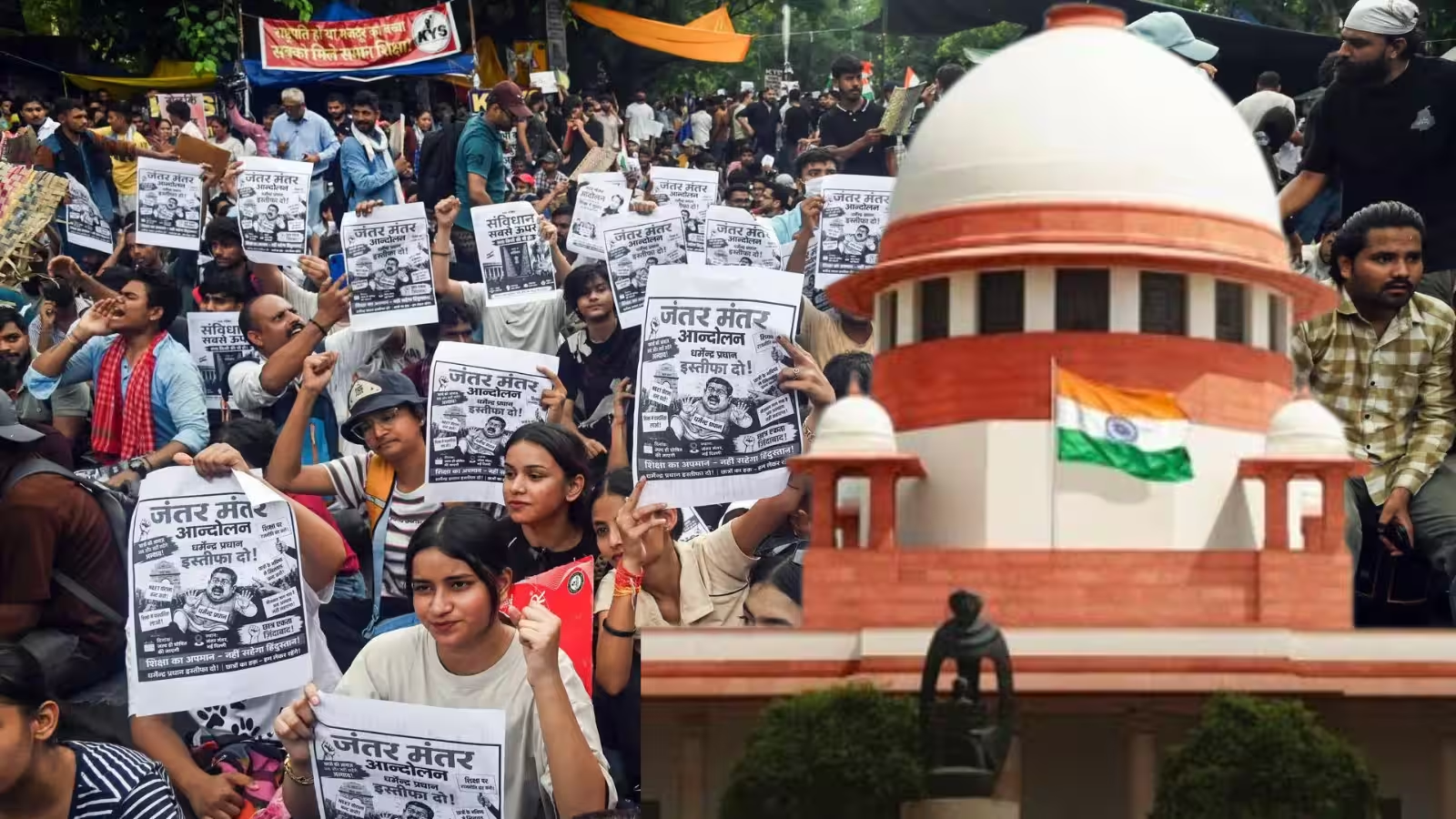
The Supreme Court of India appears on the brink of delivering much-needed relief to thousands of young Indian students. In a significant move, the top court intends to quash the numerous police cases that have been slapped against Gen Z student protesters. These cases stem from widespread demonstrations that rocked various Indian states last month following a series of exam paper leak scandals, pushing countless young people onto the streets.
Chief Justice of India Surya Kant led a bench this morning that also included Justice Joymalya Bagchi and Justice V Mohana, with reporters from Live Law detailing the proceedings.
The judges pored over stacks of First Information Reports (FIRs), their consensus evident: the futures of innocent students shouldn’t be tarnished for raising their voices in protest.
Live Law
In court, Chief Justice Kant underscored the importance of understanding the “germane cause for students agitating.” He emphasized the constitutional right to peaceful protest guaranteed under Article 19, stating that the court must distinguish between “aggrieved and frustrated students” and “hardened criminals.” Despite the public outcry surrounding the marches, the students looked to the judicial system for justice. The bench appeared to signal that while those with serious criminal antecedents ought to be dealt with sternly, the general student body should be protected.
Live Law
Drawing the Line Between Students and Criminals
The hearing took on a more defined tone when the Solicitor General Tushar Mehta presented figures to the court. Mehta agreed with the general idea of dropping the police cases but highlighted a glaring exception. He reported that authorities identified 2,873 individuals involved in activities amounting to murder, rape, and kidnapping.
Mehta contended that “anti-social elements completely infiltrated the student gatherings” and the government wished to pursue those individuals with firm hands.
The court resonated with this stance, acknowledging that those with significant criminal histories would not find refuge behind a shield of student protests.
Live Law
A rather unusual moment occurred when lawyer Rizwan Ahmed, representing parties seeking to retain the cases, argued that the students were part of an “unlawful assembly” during their Parliament march on July 20. He pressed for students to show remorse and formally apologize, cautioning that leniency could be perceived as weakness by the public. Justice Bagchi firmly dismissed this argument, stating that the court would not “compel anyone to apologize,” emphasizing its unnecessary nature. The judges were unwilling to make the students grovel for their futures.
Live Law
The Police Violence Question
The discussion broadened beyond the protesters to address the actions of the police during the crackdowns. Lawyers presenting evidence to the court described alarming crowd control tactics. The Hindu reported on accounts that included the use of pellet guns and instances of sticks with embedded nails being employed by law enforcement. Senior Advocate Shadan Farasat specifically demanded disciplinary action against police officers allegedly involved in assaulting women protesters, citing video evidence of molestation, and argued that disciplinary action should not await lengthy committee investigations.
The Hindu
The court recognized the concerns surrounding police brutality and indicated its intent to establish a high-powered committee to investigate the matter. Chief Justice Kant stated the committee would include former Supreme Court and High Court judges and a former DGP, with some officials already having agreed to join. The bench also ordered the preservation of all evidence, including CCTV footage, drone videos, police radio logs, and body camera recordings.
Live Law
A further point of concern arose from a lawyer who raised the issue of the government’s use of facial recognition technology to identify protesters without their consent. The court responded by directing the authorities to secure the digital data of the protesters and refrain from publishing or disseminating any of the personal information pending further consideration of the privacy implications of the facial recognition technology.
The Hindu
The Cockroach Movement
A truly remarkable aspect of this story is the peculiar origin of these protests. Earlier this year, the Chief Justice compared unemployed youth to cockroaches, an insult that the students embraced, transforming it into a symbol of resilience. They eventually coalesced to form the Cockroach Janata Party, which became the driving force behind the nationwide agitations.
Courthouse News
The union government and the Cockroach Janata Party had reached an understanding weeks ago to end street protests, with one of the conditions being the withdrawal of the police cases. However, navigating the bureaucratic intricacies of individual case withdrawals proved to be a slow and often frustrating process for young students, a concern that was clearly articulated in the courtroom by lawyer Vrinda Grover on August 3. Grover had requested the Supreme Court to use its extraordinary powers under Article 142 of the Constitution to nullify all the FIRs in one decisive stroke. The court’s current stance indicates a strong inclination to do just that.