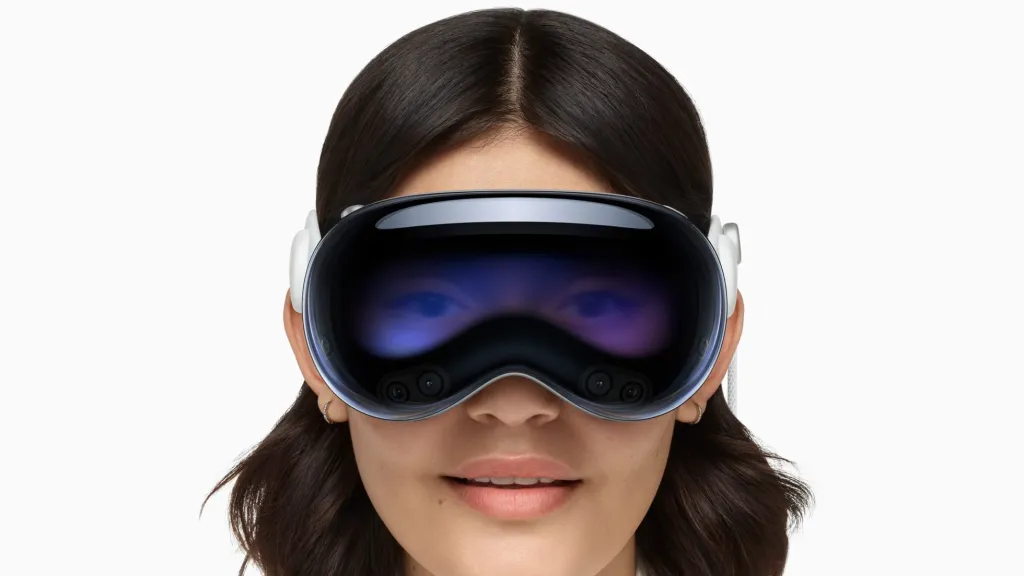
Apple has been rumored to be shutting down its vision headset project. The decision represents a radical change in the company’s future with computers. The Cupertino giant’s core product has been “spatial computing,” an attempt to merge digital screens and the real world, for years. But the new figures indicate that the high-priced gadget had a tough time in the average consumer’s home.
Industry sources say Apple has turned its focus away from a high-end replacement. Instead, the engineering teams seem to be working towards smart glasses that are lighter and more wearable. First released at approximately $3,500, the first-generation Vision Pro was beset early on. The high prices, the weighty design and its “must be” lack of apps was a difficult proposition for anyone who wasn’t really a tech-geek or a professional developer.
Exploring the Legal Labyrinth of Mixed Reality
Quitting a big hardware initiative isn’t as easy as putting down a production line—there’s a web of legal commitments involved. Apple has been building a worldwide patent portfolio and contract with parts suppliers for years. If the project is over, it will result in complicated negotiations of the termination of such agreements. In addition, the firm will have to deal with the issue of protecting the intellectual property rights of the headset’s advanced sensors and lenses, which the company developed during the headset’s development process.
User data and user privacy laws are also a thing. The collection of personal data like how a user’s eyes move and the layout of their home, demonstrates the amount of personal data that devices like the Vision Pro capture. As soon as the project slows down, the legal requirements to safeguard the data already collected do not go away. These high-tech headsets have been the focus of many European and U.S. regulators, who have raised various questions on how this sensitive information is managed and put to use.
A change in AI strategy is underway.There is a shift in AI strategy underway.
The demise of the Vision Pro also alters the way Apple employs AI. The headset was one of the first devices to test what’s known as ‘on-device’ AI, meaning the computer runs the algorithms and logic on the device rather than relaying it to a remote server. This would make things such as Siri more responsive and private. Now, Apple will have to see how to reduce that formidable technology into a more conventional-looking pair of glasses.
The shift implies that Apple feels that the potential of AI is in the future is not in a cumbersome mask, but in something that resembles regular glasses. These “smart” glasses would probably use a camera and microphone to “see” and “hear” the world and then give the wearer helpful suggestions or directions. This shift in business, however, presents its own regulatory challenges. For instance, when one is videoing people in public places, this poses significant issues of privacy for those people involved.
The developer community will be impacted by this change.This will affect the developer community.
Thousands of software developers worked to create apps for the new system, and it wasn’t until the Vision Pro was released that they had to spend time and money doing so. These developers are in a precarious position as a result of a sudden turn in strategy. But lawually, Apple needs to have a good working relationship with its creative partners to make sure that they don’t go away with the apple. If the developer decides that making software for Apple’s other products is a “dead end” as well, he may simply cease to develop software for those other products.
These partners will need to see that the work achieved for the headset can also be translated to the new smart glasses. That means the software tools that are used to create the mixed reality experiences must remain consistent. The transition is crucial to supporting the ecosystem, because a computer will be as valuable as the applications that can run on it.
Regional issues in global trade and supply chains
Apple’s hardware projects are around the world and include factories in a number of countries. Even if production is stopped on a certain model, this can cause a runaway effect in the supply chain. Specialized parts such as the small high resolution screens in the headset may require renegotiation of contracts. This can result in penalty payments or the company must purchase this stock that it no longer uses.
Moreover, the international trade regulations are becoming more stringent on high tech products. Apple, if it turns to smart glasses, will have to make sure that these new gadgets are in line with the export laws of different countries. Advanced sensors and cameras are not popular in some countries due to the possibility of being used for surveillance. For any tech company doing business on an international level, these geopolitical waters can be a constant battle.
What’s the future of wearables?What is the future of wearables?
The Vision Pro may be on the back burner, but the takeaways from the experience are likely to be revealed in future products. The push for “spatial computing” is not over, it’s just taking on a different form. The company is going against what is thought to be a heavy headset, with people wanting to see technology that is invisible, and easy and convenient to use throughout the day. The trend is moving from theoretical to more practical AI in the industry.
These new inventions will be accompanied by the evolving legal and regulatory landscape. The basic issues are the same regardless of the type of headset or even pair of glasses: How can we secure data? How to safeguard public privacy? How can technology be used to benefit us without becoming a way of our life? With Apple entering this next chapter, the answers to these questions will be what will make it a success in years to come.
The Vision Pro is the latest in Apple’s quest for AR/VR headsets, is it a success or is it a failure? (Apple’s Vision Pro challenges & future prospects)
The video delves into the recent media speculation about the future of the Vision Pro lineup and its implications for Apple’s future product strategy.