If there’s a piece of paper from a judge, you’re on your way to walk free. That is the deal. This is the way the law should be. But the State of Rajasthan had other ideas.
The Supreme Court has directed the Rajasthan government to pay Rs 11 lakh in a massive blow to the government’s lethargic machinery. The money is directed towards a convict named Daudayal. Today, it is not his original crime that is the center of attention. What actually happened was that the state had him in a cage for 24 days in a row following a judge’s order to release him.
Why did they keep him? The reason they presented to the court was a joke. They replied to the Supreme Court that they were occupied. They said they were still considering their appeal of the release order.
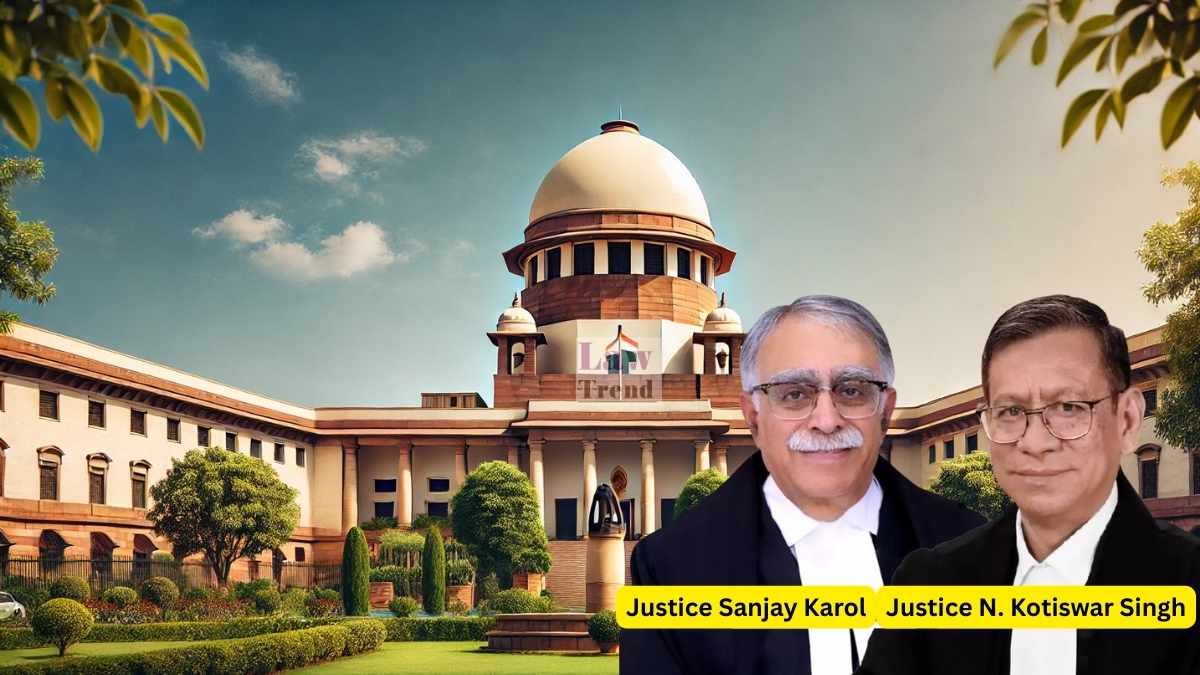
Justices Sanjay Karol, Augustine George Masih were certainly not joking around. They broke through this defense. It’s entirely clear from the bench that a man can’t be locked in jail because some government officials are dragging their feet on getting things done. Freedom is not an administrative add-on.
A Case From 1967 and a Battle for Parole
One has to go back a long, long way to figure out how Daudayal got himself into this ludicrous situation. The first criminal case was in 1967. It encompassed the offences of unlawful assembly, house trespass and culpable homicide not amounting to murder. Decades passed. The legal system continued its usual abysmal performance. They finally gave him in 1988 a four year rigorous imprisonment sentence by the trial court.
He did not go to jail for that particular sentence, however, until much later. In 2021, he was convicted by the Rajasthan High Court. So he went into prison. He was resigned to his fate. He began to serve his prison term.
Daudayal was feeling like he had done sufficient enough to get a break by December of 2023. He applied for permanent parole. The next month he was shot down by the prison authorities. It was a technical reason that drove their motive. He had not completed all the three strict stages of regular parole as envisaged in the old Rajasthan Prisoners Release on Parole Rules, 1958, they alleged.
He didn’t like that reply. He directly filed his apprehension with the Rajasthan High Court.
The 24 Days of Robbed Freedom
One judge of the High Court on November 5, 2024, considered the facts. The judge ruled in Daudayal’s favor. He was released on parole by the court. There was a condition, though. He had to pay a personal surety of Rs 1 lakh. He also had to give security amounting to Rs. 50,000 each.
Daudayal obeyed orders. He was able to raise the funds. Having everything checked and his surety proved was officially done on November 13, 2024.
It should have been at this very moment that the prison doors should have opened.
They did not.
The state government simply ignored his file, instead of allowing him to walk. They left him in his cell. Weeks turned into months.Months turned into years. Every morning he awoke in a jail to which he was permitted.
He ultimately had to file another legal petition. This time it was a habeas corpus plea. That is, asking the state to physically come up with a body and justify its detention. A Division Bench of the High Court intervened on 6th December 2024. They ordered him to be released immediately.
Twenty four days had passed since his sureties were released, and until he was able to walk out, nothing had happened. Almost a month of life had been taken from a man. Why? It wasn’t because the government lawyers were meeting with prison officials to discuss their next move in the law.
What the Supreme Court Actually Said
Daudayal went all the way to India’s Supreme Court. He desired to be paid for the 24 days. Without question, the Supreme Court sided with him.
The State of Rajasthan had made strident efforts to defend itself in the hearings. They said that the High Court’s initial parole was based on a faulty premise. They argued the government was merely giving time to properly consider the wrong order before it officially challenges it.
Justice Karol and Justice Masih dealt that argument a death blow. The government lawyers were told that the instructions of a judge were binding, second he signed. The police and the prison are to comply with that order without delay right away, unless a higher court takes action to grant a stay on it. Obey first. Appeal later.
Justice Karol wrote the judgment. He did not mince words. He said that freedom of a man is no trifling matter. The state cannot just put a man’s freedom on hold because of an administrative brain fade.
If courts let the government act this way, it will be an individual’s freedom being valued lower than a bureaucratic ruling, the judges said. The rights of a convicted person are not lost of erased because of a conviction.
They even referred to George Washington at the court hearing, stating that arbitrary power is easily established over the ruins of abused liberty. But the real point to get across to the state, and to the point, was far simpler and far harsher. Don’t avoid a judge because you are considering an appeal.
The Price of Administrative Laziness
The court ruled that it wasn’t enough to have words of anger. The state had to be taught a lesson, with serious financial repercussions.
They gave Rs 11 lakh to Daudayal. This is a meaningful act of charity. The Supreme Court referred to the previous constitutional cases. The judgment of Rudul Sah and Bhim Singh came up due to the violation of Article 21 of the Constitution, which guarantees the right to life and personal liberty and the proper public law remedy is monetary compensation.