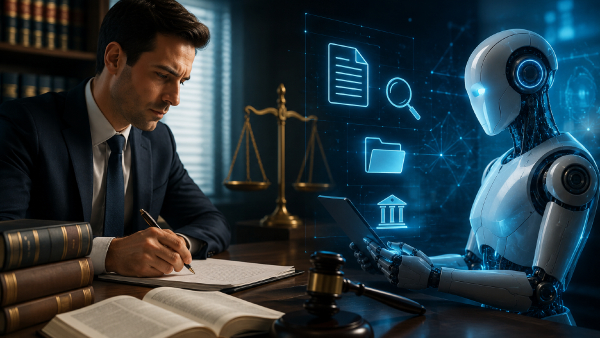
Let’s be brutally honest about the last two years of legal tech. Throwing the acronym ‘AI’ into a pitch deck was practically a cheat code for venture capital. The market was absolutely flooded with thin wrappers. Someone would take a generic large language model, build a moderately sleek user interface around it, and suddenly try to sell it to law firms as a revolutionary associate replacement. It was exhausting to cover. It was even more exhausting to use. But the news dropping out of San Francisco this week shifts the entire baseline. Anthropic just launched Claude for Legal. And they didn’t just tweak a chat window. They actively rewired the plumbing.
This isn’t just another incremental update. It is a massive, coordinated land grab in the professional services sector. Anthropic released over twenty new Model Context Protocol connectors alongside twelve highly specialized practice-area plugins. The sheer scale of this rollout is forcing the entire industry to sit up and take notes. Until now, using generative AI for serious legal work meant constantly jumping between platforms. You had to download massive files from your firm’s secure servers, drag them into a browser, run a prompt, and pray the model didn’t completely fabricate a case citation. That era is effectively dead. Claude is now designed to operate directly inside the software lawyers already use every single day.
Hardwiring the Law
The integrations are the real story here. Anthropic didn’t try to build a new ecosystem. They infiltrated the existing one.
Claude now hooks directly into heavy-hitting document management systems like iManage and NetDocuments. It links up with e-discovery platforms like Relativity and Everlaw. It even talks to DocuSign and Box. You don’t have to move the data. The model goes to where the data lives. It respects existing security protocols and permission scopes. That alone removes a massive layer of administrative friction that previously kept highly sensitive corporate legal teams away from cloud-based AI.
But the real heavyweight move is the integration with Thomson Reuters. Claude now connects directly with CoCounsel, granting users access to Westlaw’s primary law database and Practical Law guides. This is a crucial defense mechanism against the defining flaw of early AI models: hallucinations. When an algorithm hallucinates a recipe, you get a weird cake. When it hallucinates a legal precedent in a federal court filing, you get sanctioned. By tethering Claude’s immense processing power to a fiduciary-grade, verified legal database, Anthropic is essentially putting guardrails on a race car. A user can theoretically ask the system to review a complex commercial contract, pull relevant, verified authority from Westlaw, compare it against internal precedent, and route the finalized document for signatures. All from a single interface.
Custom Playbooks and Editorial Workflows
We have to look at the twelve specific practice-area plugins they rolled out. They cover everything from employment and litigation to corporate governance and commercial counsel. These are not generic, one-size-fits-all prompts. They are designed to be highly configurable
A legal department can feed its internal playbook, specific risk tolerances, and preferred drafting styles directly into the tool. When an NDA hits the inbox, Claude doesn’t just summarize it. It reviews the document against the company’s established escalation triggers. It flags the exact clauses that fall outside the acceptable risk matrix.
Think about the sheer volume of text that moves across an active desk on any given Tuesday. If you are tracking the endless stream of High Court rulings, or compiling deep-dive research on the Bharatiya Nyaya Sanhita for a long-form publishing project, the reading load is completely brutal. A model capable of digesting that raw volume—accurately parsing hundreds of pages of dense statutory language in seconds—fundamentally alters how research is done. It frees up human hours for actual analysis. Yet, there is a distinct friction point here for the digital publishing side of the industry. As tools like this become ubiquitous, the sheer volume of machine-generated legal analysis hitting the internet will skyrocket. Managing how search engines actually index and rank that content is going to become an absolute headache for editorial teams trying to maintain visibility in a highly saturated market
The Squeeze on Legal Tech Startups
There is a palpable anxiety rippling through the legal tech startup scene right now. When Anthropic first teased these capabilities earlier in the year, we actually saw professional information and SaaS stocks take a temporary hit. You can understand why
If a dominant foundation model company like Anthropic starts offering native document review, contract redlining, and verified legal research right out of the box, it completely cannibalizes the business models of dozens of smaller startups. Why pay a premium subscription for a niche AI contract reviewer when your existing enterprise license for Claude does the exact same thing, faster, and with better context windows?
Anthropic explicitly stated that these outputs still require review by licensed attorneys. They are framing this as a workflow assistant, not a lawyer replacement. That is the smart, legally safe way to market the product. But the underlying reality is impossible to ignore. The baseline for what software can do in a law firm just got significantly higher. Routine tasks are becoming heavily commoditized. The models are moving up the value chain much faster than anyone anticipated. It is a messy, deeply fascinating transition to witness.