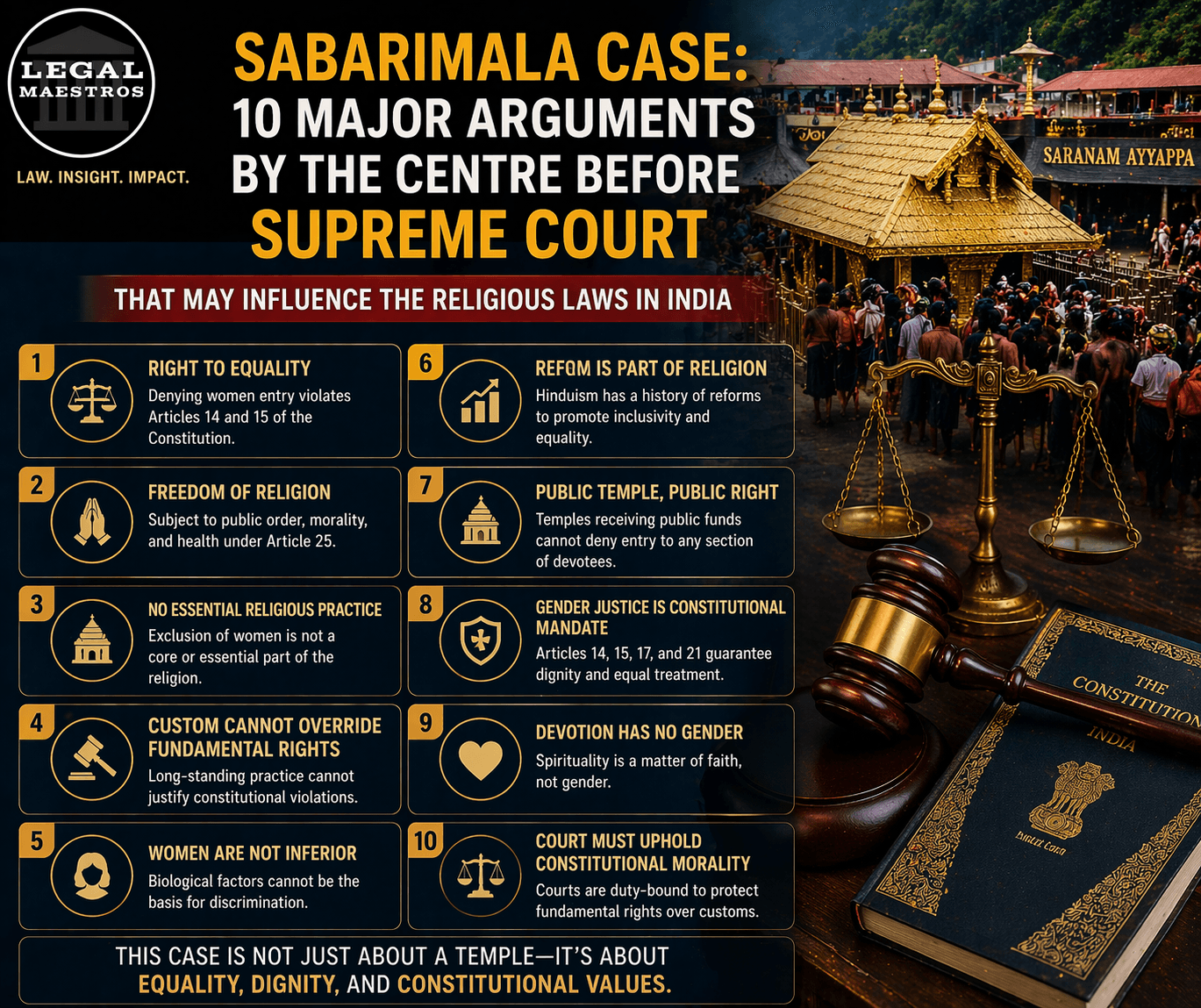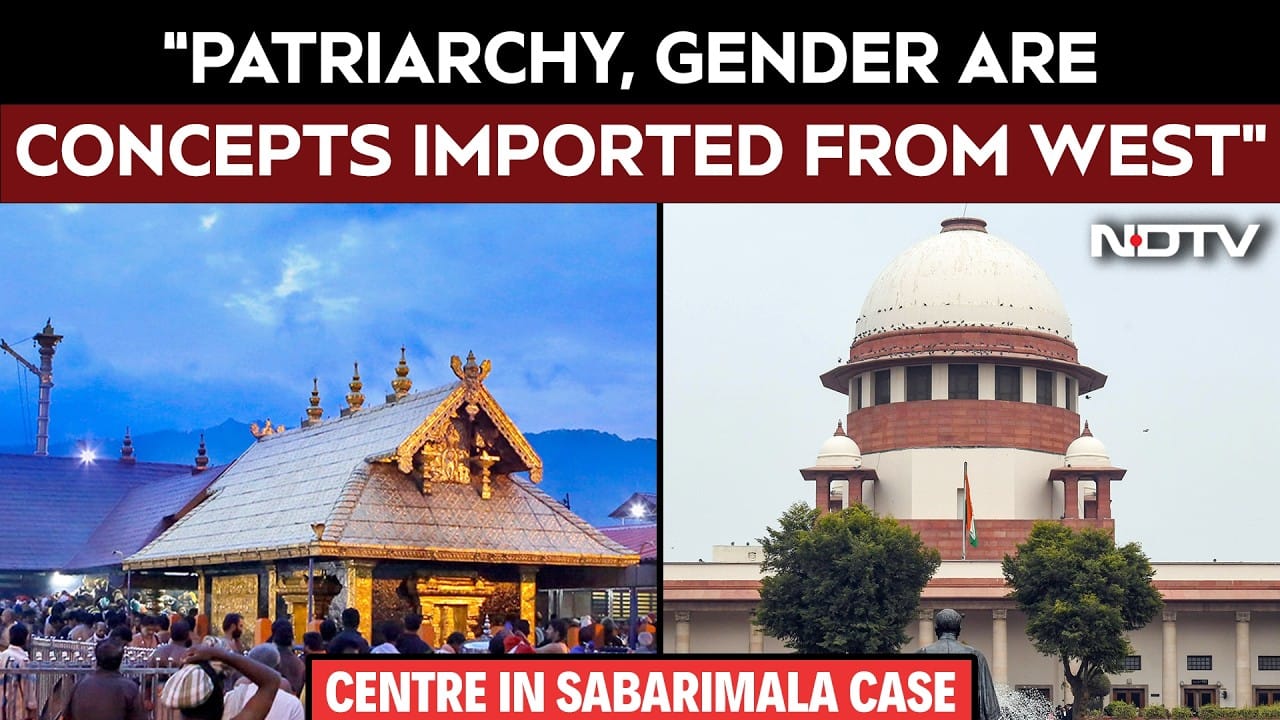
Even Men Do Not Have a Right to enter some Temples: Centre is Before Supreme Court in Sabarimala Reference Case.
. Introduction A reference case involving the Supreme Court of India is the Sabarimala reference case, which is one of…
Keeping Pace with Legal Change
. Introduction A reference case involving the Supreme Court of India is the Sabarimala reference case, which is one of…
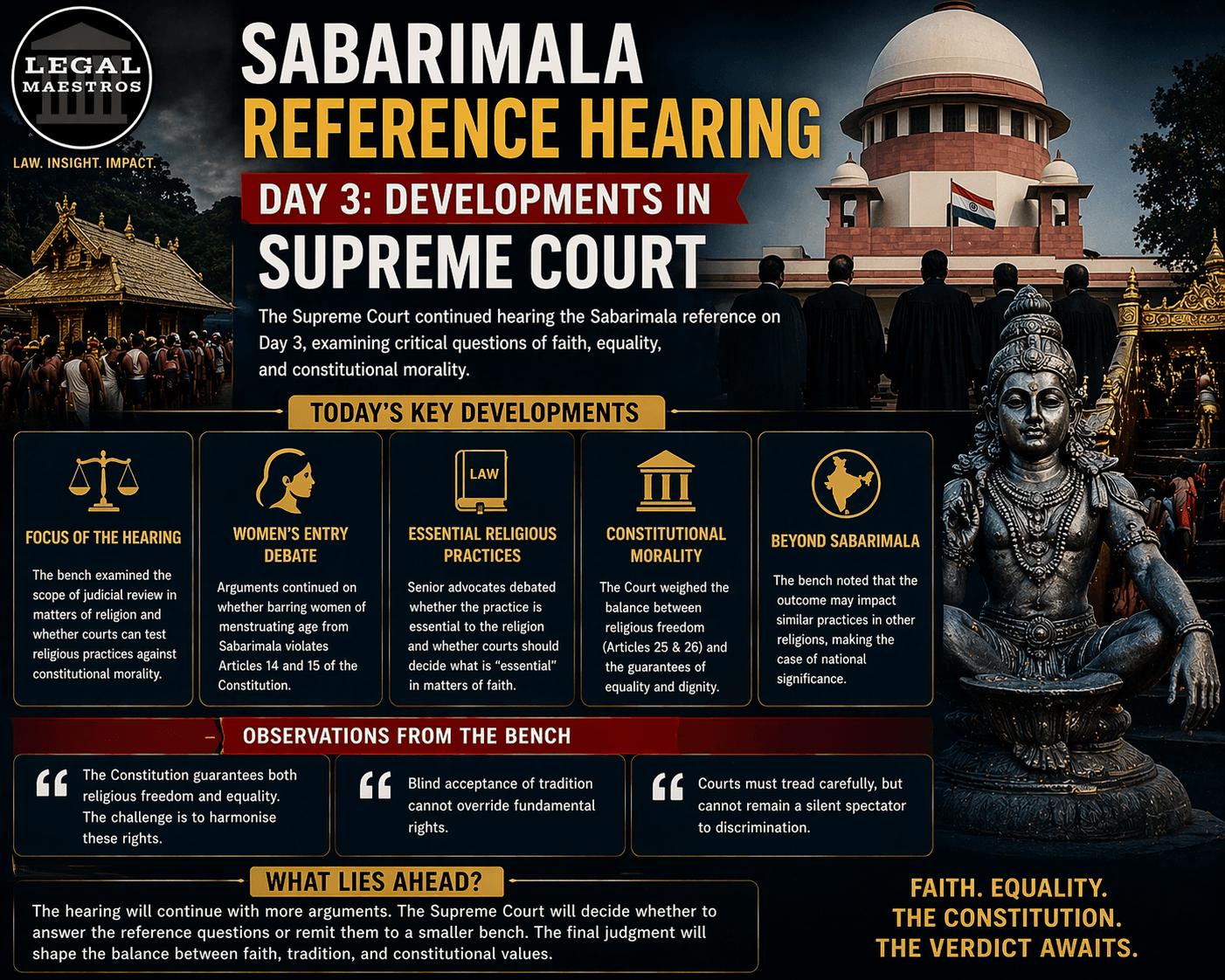
Introduction On Day 3, the Supreme Court of India resumed the long- pending Sabarimala reference issue that has the capacity…
Introduction Sabarimala case is one of the most notable legal struggles in India over religion, equality and constitutional rights. The…
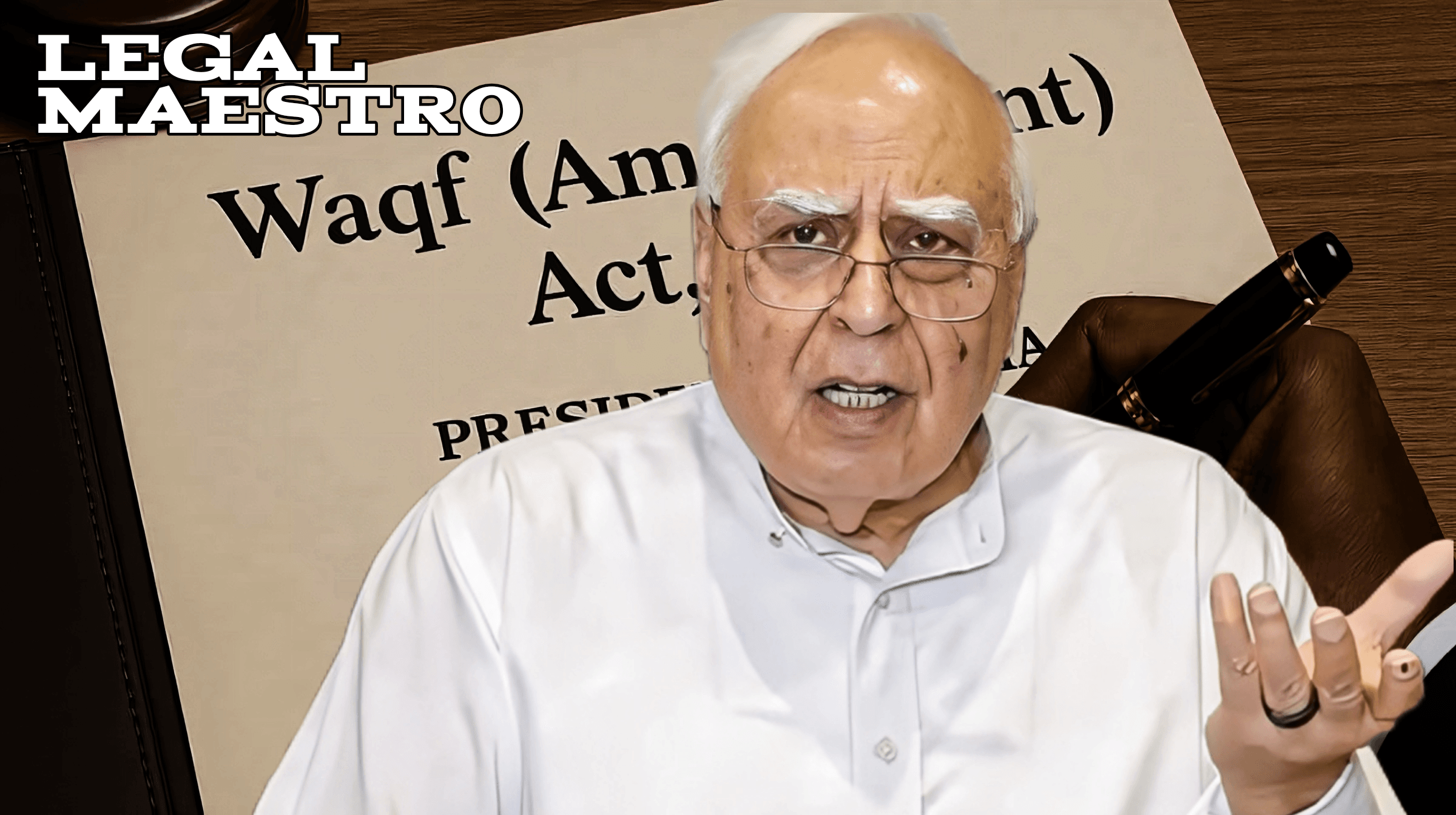
Kapil Sibal urged the Supreme Court to strike down the Waqf (Amendment) Act’s five-year Islam practice requirement, calling it arbitrary and a breach of religious freedom. He warned the clause unfairly bars converts and young Muslims from creating endowments and undermines equality and due process.
The Waqf (Amendment) Bill, 2024, has set off a multifaceted debate at the confluence of law, religion, and administration. While the government’s intention is to increase transparency and efficiency, the suggested modifications have caused widespread concern among Muslim organizations and legal professionals regarding autonomy and minority rights. While the Supreme Court weighs the provisions of the bill, its judgment will not just decide the destiny of waqf administration in India but will also establish a pivotal precedent in the state’s relationship with religious institutions.
To summarize, the issue of whether the Supreme Court can invalidate the Waqf Amendment Act is a complicated constitutional issue relating to how to balance the interests of the state against safeguarding religious and property rights. The Act was intended to modernize the management of waqf properties by instituting more transparency and accountability but has created issues around state overstepping and intrusion into religious affairs. The Supreme Court, with its judicial review power, is responsible for ensuring that the legislature’s enactment of any law is consistent with the Constitution. This implies that if the Waqf Amendment Act violates constitutional protections of religious freedom and equal property rights, the Court has the jurisdiction to strike down those provisions.