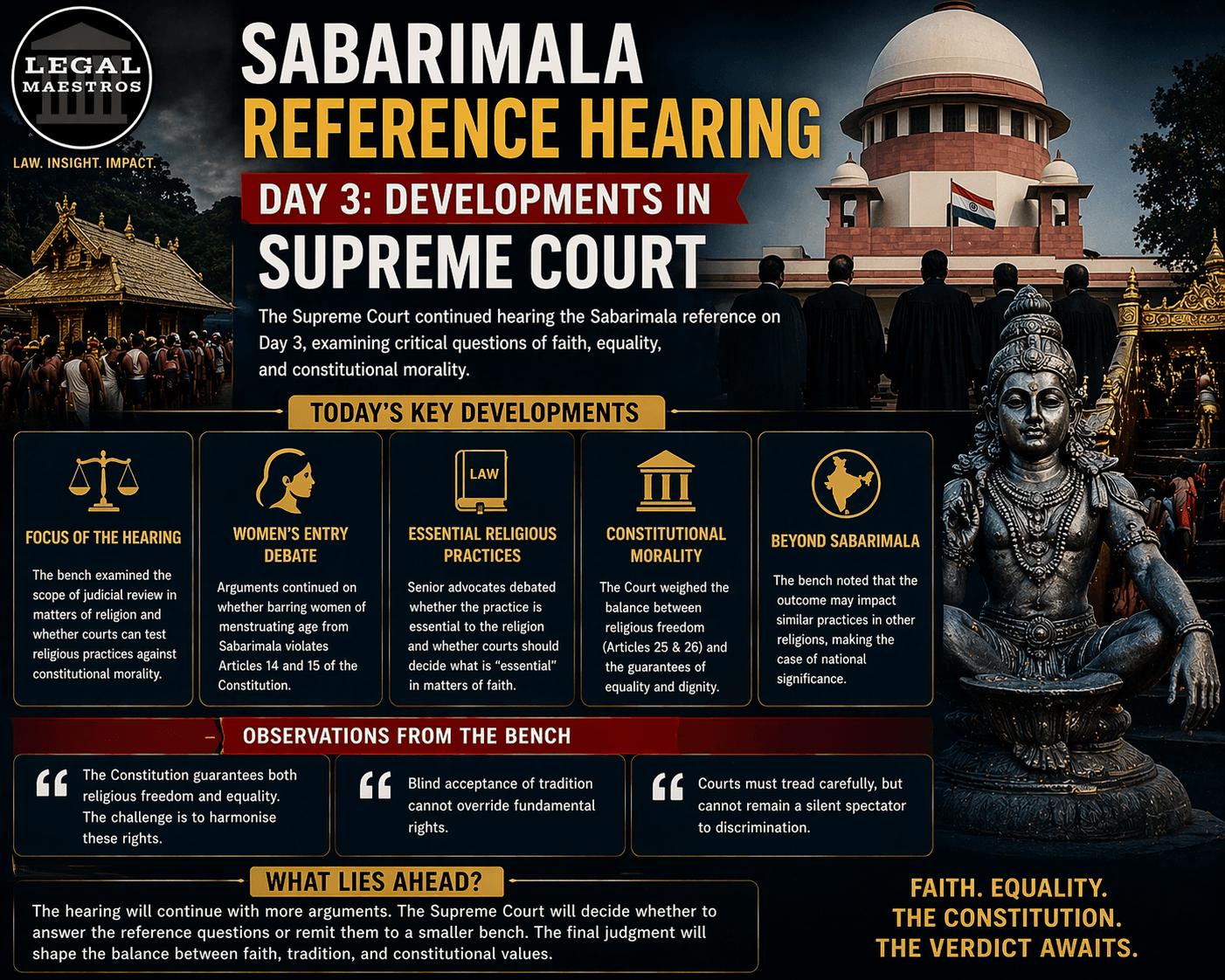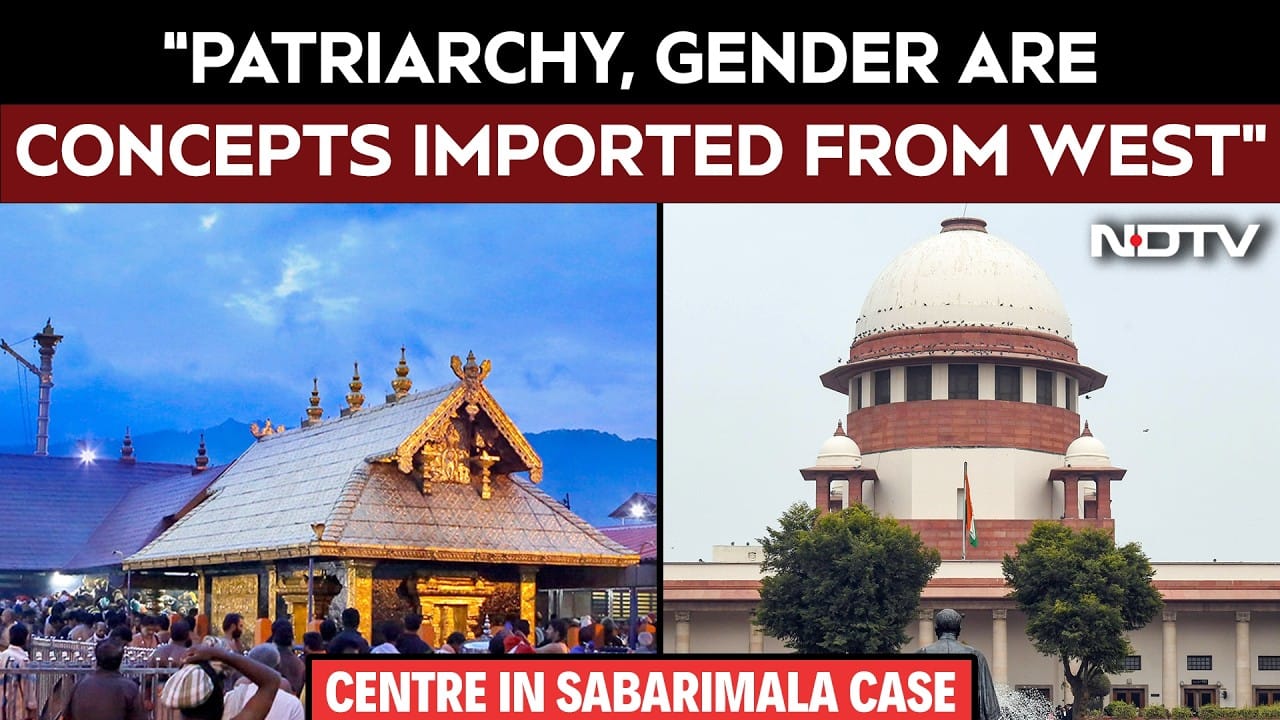
Even Men Do Not Have a Right to enter some Temples: Centre is Before Supreme Court in Sabarimala Reference Case.
. Introduction A reference case involving the Supreme Court of India is the Sabarimala reference case, which is one of…
Keeping Pace with Legal Change
. Introduction A reference case involving the Supreme Court of India is the Sabarimala reference case, which is one of…
Introduction On Day 3, the Supreme Court of India resumed the long- pending Sabarimala reference issue that has the capacity…
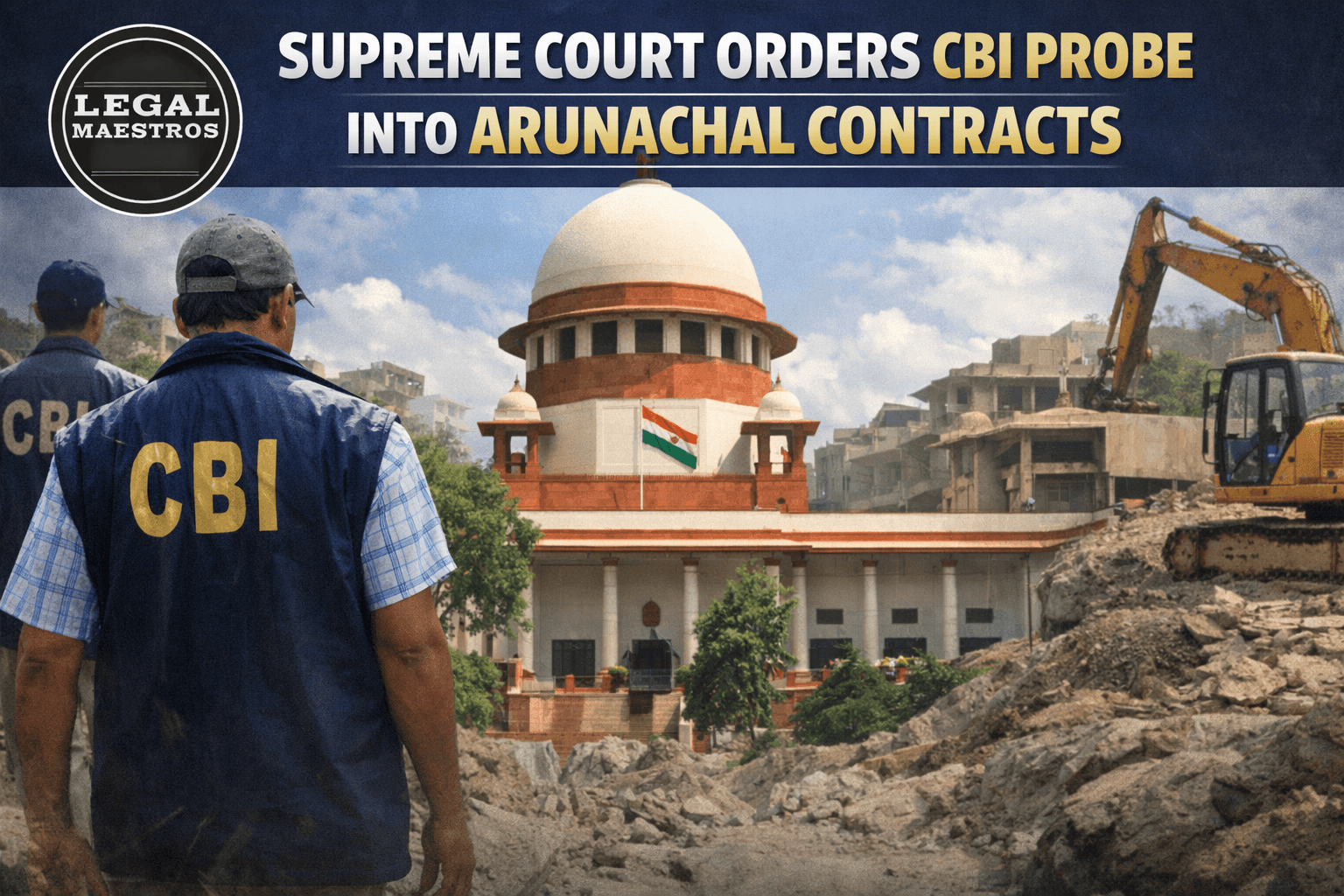
Strong Stance on Transparency: Supreme Court Orders CBI Investigation on Arunachal Pradesh Contracts. Introduction In Save Mon Region Federation vs…
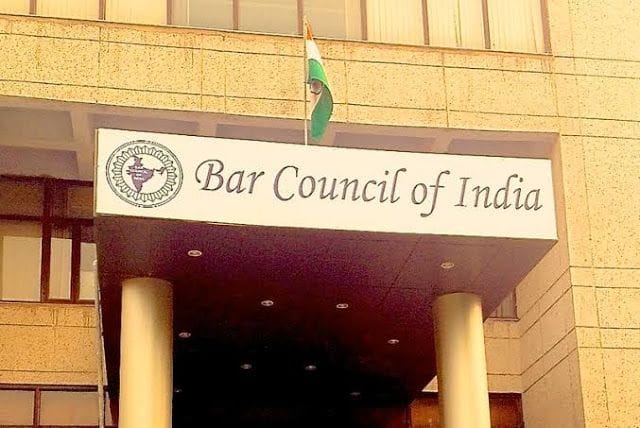
The case of K. L. J. A. Kiran Babu v. The Supreme Court has firmly closed the matter of advocate enrolment fees by settling that the State Bar Councils are bound with very clear restrictions of receiving only the fee as prescribed by the Advocates Act. In throwing out the custom of imposing additional so-called optional fees, the Court has not only given some relief to money-strapped law-school graduates, but has also reflected a vital constitutional truth that the path to any profession must not be cluttered with extraneous financial requirements that are arbitrary and unlawful.
Recently, the Supreme Court of India passed an important verdict in a matter of Ram Charan & Ors. v. Sukhram…
This article focuses on rhetoric used by leaders of MNS based on language in Maharashtra that presents a challenge over constitutional rights, that is, freedom of speech versus freedom of order. It outlines the existence of Indian laws that bear relevance to hate speech and examines past and contemporary examples with attention to the damages on the basic rights and the position of the regulators to maintain conformity to the constitutional ideals.
This paper will analyse a ruling of the Supreme Court that was given against a ruling of the High Court in a case that concerned cancellation of a government tender. It notes how the Court has attached importance to issues of public interest, administrative discretion and little judicial review in contractual circumstances, particularly in the event of the unavailability of mala fides.
The open confessions by Deepika Padukone about women in Bollywood being offered meager pay and poor working conditions continue to indicate gender discrimination. Such problems pose a great concern in the eyes of the Constitution and labour laws of India, which need alarming modification, legal consequences, and sensitization.
On May 23, 2025, the Supreme Court held that denying disabled employees in supernumerary posts benefits like probation, seniority, and promotion violates Article 14 of the Constitution. The Court ruled that while there was a distinction, it lacked a rational link to the law’s purpose, making the government’s order discriminatory and restoring equal rights to these employees.
Following a determination that the case could not be reopened in accordance with Article 32, the Supreme Court of India reaffirmed the constitutionality of the Himachal Pradesh government’s decision to repeal the pension program that was implemented in 1999. The importance of judicial decisions being final was highlighted throughout the document.