Current Legal Update

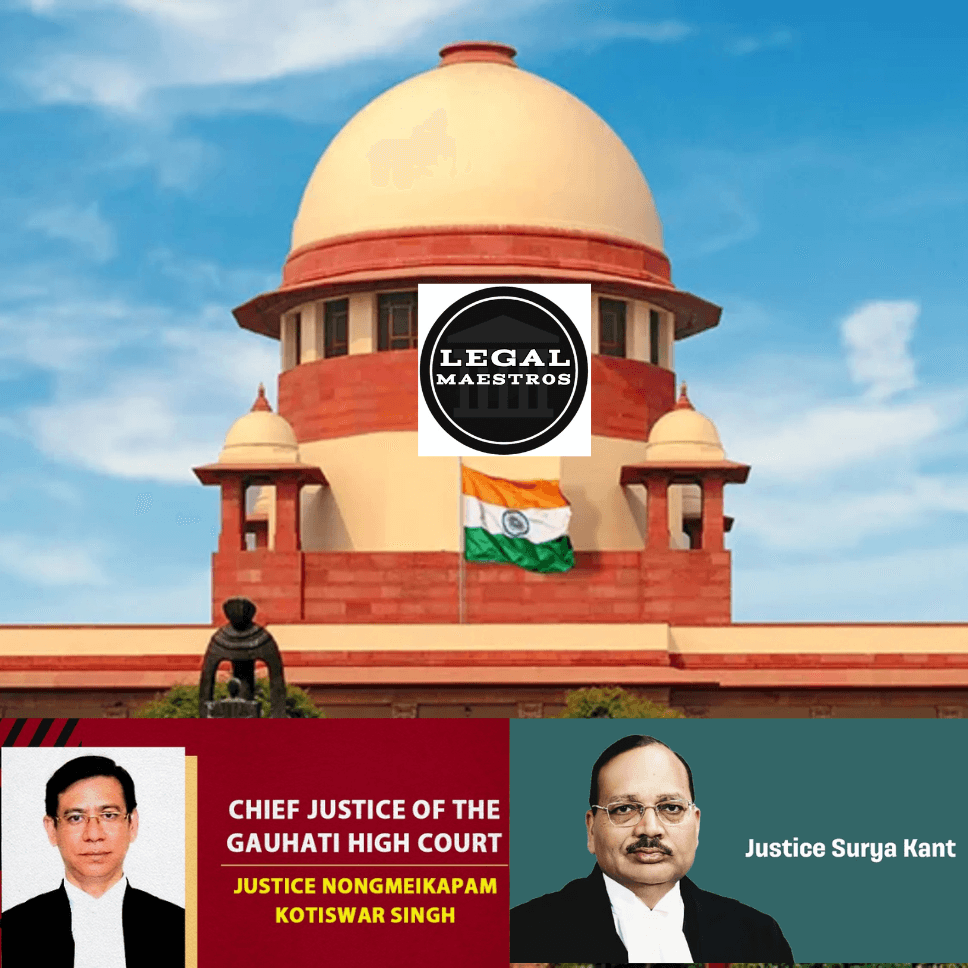
Justice Surya Kant and Justice Nongmeikapam Kotiswar Singh Uphold Section 498A as a Vital Protection for Women

The Supreme Court, led by Justices Surya Kant and Nongmeikapam Kotiswar Singh, upheld Section 498A of the IPC, emphasizing its role in protecting women from domestic cruelty. The court dismissed claims of unconstitutionality, advocating case-by-case scrutiny of misuse allegations, reinforcing gender-specific safeguards under Article 15.

Supreme Court

Justice Sanjiv Khanna Explains When to Cancel Entire Recruitment in West Bengal SSC Scam Case

As a result of rampant fraud, the Supreme Court of West Bengal decided to cancel the entire school recruiting process for the year 2016. Additionally, the ruling places an emphasis on maintaining the integrity of public employment, as well as fairness and accountability. It establishes explicit guidelines for the manner in which whole recruitments must be canceled.

Current Legal Update

NEET-PG 2025 Controversy & Article 14: Supreme Court Tackles Two-Shift Exam Fairness Under Indian Constitution

The Supreme Court mandated a single-shift NEET-PG 2025 exam, addressing fairness concerns over the two-shift format. The decision ensures equitable competition, upholding Article 14’s right to equality, as varying question paper difficulties and normalization issues risked arbitrariness, impacting candidates’ rankings and rights.

Current Legal Update

Equal Pensions for Equal Service: Supreme Court’s Clarification on High Court Judges’ Post-Retirement Benefits

The Supreme Court of India, in a landmark ruling on May 19, 2025, mandated equal pensions for all retired High Court judges under the ‘One Rank One Pension’ principle, regardless of their entry route or tenure. The decision eliminates disparities between permanent and additional judges, ensuring a uniform pension of ₹15 lakh annually for Chief Justices and ₹13.5 lakh for other judges. It upholds Article 14’s equality clause, reinforcing judicial independence by standardizing post-retirement benefits. The ruling also extends family pension rights, addressing long-standing inequities.

Current Legal Update

The Rise of Bulldozer Justice in India: Legal Analysis, Supreme Court Rulings, and Constitutional Concerns

Bulldozer justice has caught on in India because of its instant effect and powerful political statement. Its deployment, however, is problematic with serious legal and ethical implications in terms of due process and constitutional rights. Again and again, the Supreme Court has held that demolitions must not be applied as a mode of punishment and must adhere to proper legal formalities. While the call for rapid action against criminals is understandable, it should not be at the expense of core legal principles. Guaranteeing fair trials, bolstering the judiciary, and upholding the rule of law are important to avoid the abuse of power and ensure justice for all citizens.