Background of the Case
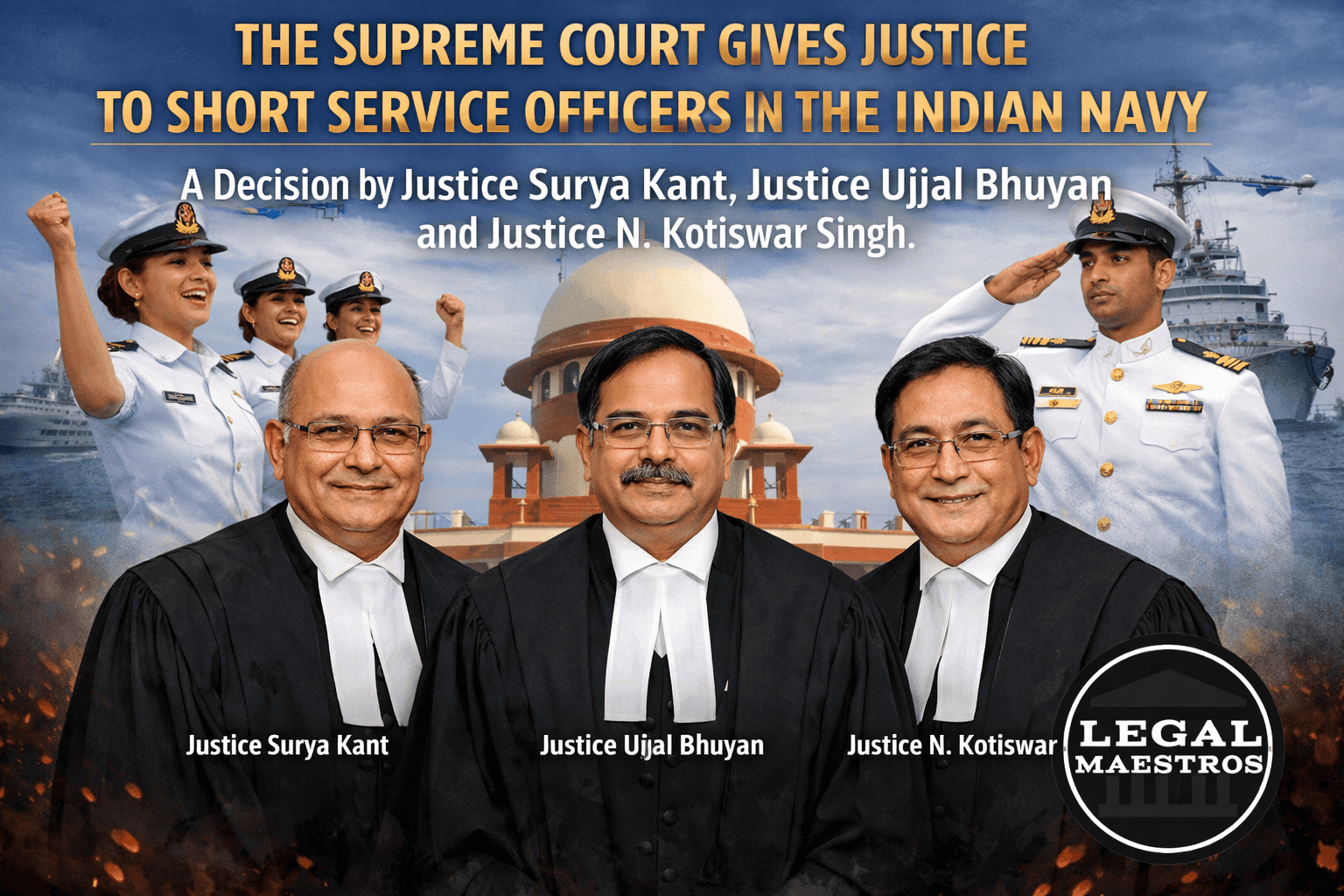
Some Short Service Commission Officers went to court because they were not given Permanent Commission in the Navy. Many of these officers served the country for a time but were not allowed to stay in the Navy permanently.
In the past women officers were not allowed to get Permanent Commission in parts of the Navy. When the rules changed they were not applied to officers who were already serving. This was not fair. Led to legal problems.
Main Issue Before the Court
The main question for the Supreme Court was whether the process of choosing officers for Permanent Commission was fair and open.
The officers said they were judged on their work but this was done at a time when they were not even allowed to apply for Permanent Commission. They also said the selection process was not transparent because the rules and scoring system were not clearly explained.
Facts of the Case
The officers were hired by the Indian Navy between 1999 and 2011 under the Short Service Commission. Many of them women officers, were not given the chance to apply for Permanent Commission at first.
After some court decisions the Navy was told to consider them for Permanent Commission. A selection board was held in 2020. Again in 2022 but many officers were still not chosen.
These officers went to the Armed Forces Tribunal, which said there should be a selection process.. The problem was not solved and it went all the way to the Supreme Court.
Issues in the Selection Process
The Supreme Court looked closely at the selection process. Found many problems.
The Court saw that the officers performance reports were not fair because at the time nobody thought these officers would be considered for Permanent Commission.
The Court also found that the Navy did not clearly say what the selection rules were, how the scoring would work or how many spots were available before the selection process. This made the process unfair.
Findings of the Supreme Court
The Supreme Court said the officers were hurt by rules that did not give them equal chances.
The Court agreed the selection process was not fair or transparent.. It also said the Navys way of calculating available spots was reasonable and not arbitrary.
Final Decision of the Court
The Supreme Court decided not to make the officers go through another selection process. The Court knew the officers had already waited a time and gone through many processes.
Instead the Court gave Permanent Commission to officers who were eligible as a one-time thing.
For officers who had already retired or left the Navy the Court said they should be treated as if they had served for 20 years and should get a pension and other benefits.
The Court also told the Navy to be transparent in the future by saying what the rules are before any selection process.
Importance of the Judgement
This decision is very important because it gives justice to officers who were treated unfairly because of rules.
It makes sure everyone is treated equally and that decisions are transparent in the armed forces.
The decision also supports the rights of women officers. Helps make the military more equal for men and women.
The Supreme Courts decision ends an hard fight for Short Service Commission Officers in the Indian Navy. By giving them relief the Court made sure justice was not delayed any more.
This decision is an example of fairness, equality and justice in public service.
Keywords
Permanent Commission, Indian Navy, Short Service Commission, Women Officers, Supreme Court judgement, Justice Surya Kant, Justice Ujjal Bhuyan, Justice N. Kotiswar Singh, equality, transparency, service law, Indian Navy, Permanent Commission, for Short Service Commission Officers