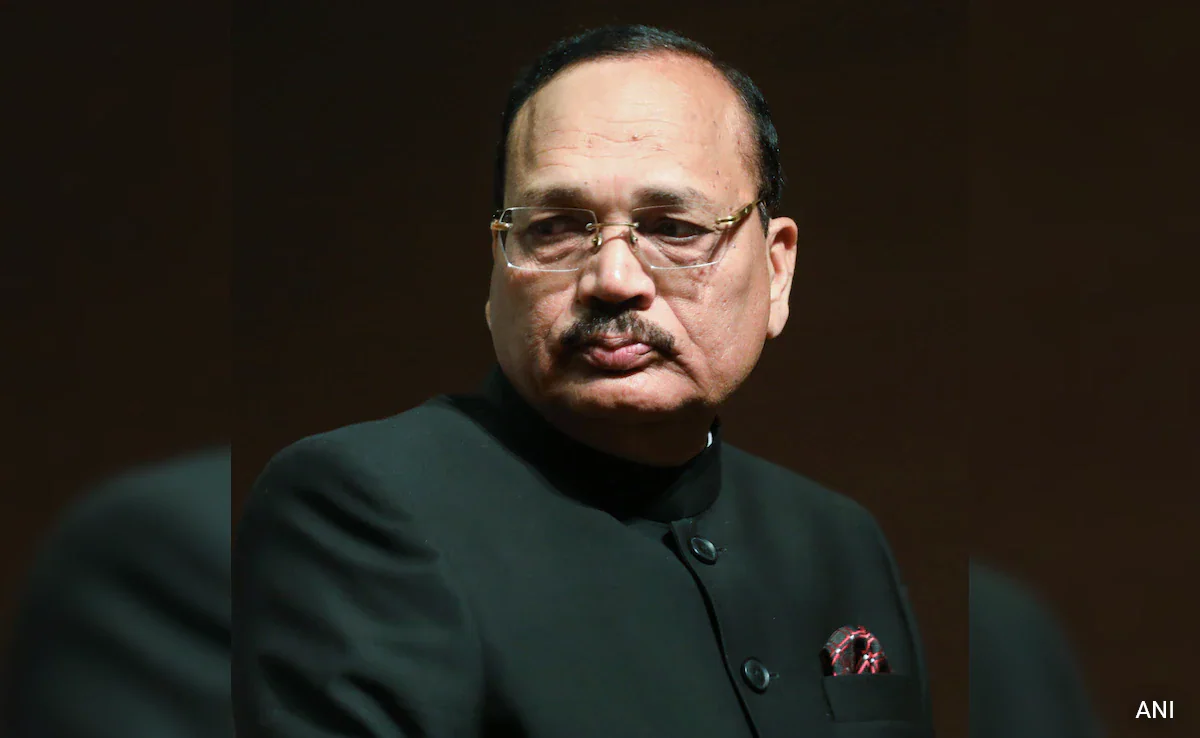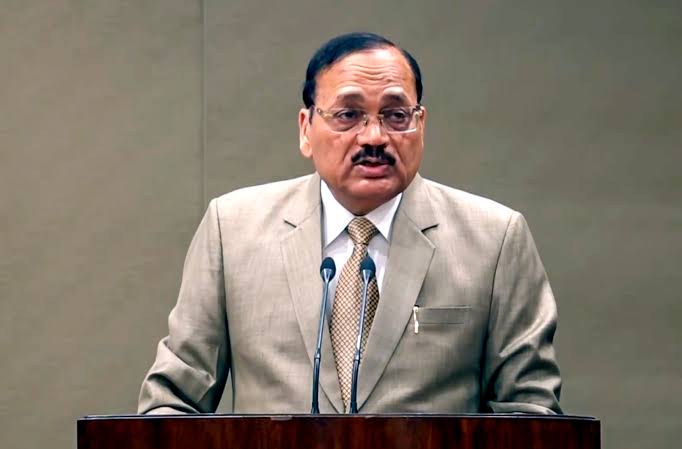
The simmering student protests just outside the parliament building resulted this week in an immense shutdown on access across the capital – to one of our basic rights, the right to move. After several days of chaos, India’s Chief Justice Surya Kant gave security agencies and the metro administration a firm verbal dressing-down on Thursday morning: “Let them just open the station just outside of the Supreme Court by noon. I’ll look into it. I will do it my way. Let them just open it by afternoon lunch time.”
This abrupt demand came after the Delhi Metro Rail Corporation, in a decision that seemed designed to prevent an onslaught by angry protestors seeking to breach Jantar Mantar, cordoned off over a dozen major stations on the capital’s underground network – from Connaught Place, the heart of the city’s financial and commercial activity, down to Janpath, right next to Parliament and Jantar Mantar, to stations near the top offices of state and central government. The operation trapped thousands, some caught on the train while others are at various points, unable to reach work.
And the shutting down of transport arteries shut off this highest court of law and the capital city. As many as15 metro stations in the centre were still closed for the third consecutive day Friday, leaving the heart of Delhi looking like a besieged fortress. Even judicial employees were unable to make it to the top court, with one lawyer noting that it was “simply unprecedented.”
The Supreme Court’s Bar Association President Vikas Singh interrupted proceedings early in the morning to convey to judges that his fellow advocates were unable to get access to court to argue their clients’ cases.
“Even lawyers are stranded, they’re asking us where to go?” he said. The registrar office too was shut. “Please, ask the metro guys, ask them, our own legal professionals were stopped a few steps away,” Singh implored Justice Kant.
“I can walk to the court from here, Sir, and from where I’m staying there isn’t a single public facility open,” added Singh to describe the scene outside and the utter mayhem within the city that continued. “We have not seen such closure in a very, very, very long time. It is just absurd to find such level of blockage.”
He added that a significant number of ordinary people including court clerks were simply “dumped” as their trains just wouldn’t halt at their usual stations while the alternative to a train journey could be a ride on a taxi/auto, but as we know how expensive is a trip on them.
‘
To address this, CJI Kant issued a special, protective directive on Thursday afternoon: judges present in court must suspend any adverse proceedings against lawyers for their inability to attend scheduled court hearings over the next two days. Normally, for lawyers and their clients, absence from court leads to penalty, even termination of case. This is obviously in place in extraordinary times such as these when access is beyond one’s control.
“They will not suffer even for a single minute due to this,” Kant told lawyers before passing the order after Bar Association President Singh pointed out, “Our cases will also suffer because lawyers aren’t able to reach on time.
Many lawyers have already missed court since earlier this morning.”
The metro administrator assured the court, however, that efforts were on, and that this could easily be solved. “We have requested our legal teams too,” said, senior advocate Rakesh Kumar for the metro operator, who was present in court. “It’s simply for administrative reasons and to secure those points which are critical… what we’re planning on for our side is to ensure that the trains keep running and that they can at the exit take only those individuals who has legitimate access, security cards and so on.
And that anybody else who has boarded can proceed and get off at the next suitable station,” Kuma told Singh.
“We have also tried to communicate this to our counterparts in the metro administration as well.”
And lo and behold, within a few hours the lockdown was somewhat lifted. The metro, after hours of shutdown of all of them, finally opened at Mandi House and Central Secretariat station by Thursday evening, both vital transit arteries for employees and lawyers. These were the two main central locations that had suffered from total closure from both ends of underground transport at those points for a long time.
Though limited, this allowed a modicum of movement.
Many metro stations in the capital’s center remain cordoned off though as of Friday, impacting tens of thousands of daily commuters. For example, as of Saturday afternoon Lok Kalyan Marg is not open. Janpath metro stations entry/exit gates have been taped over with newspapers to block the view of protest-related graffiti.
Public transport grinds to a halt
Despite the limited eased in access to metro around the government hub, as many as15 other Metro stations were still completely inaccessible Friday for a third day in a row, including those around government buildings at Patel Chowk, ITO, Janpath. Incredibly, all metro lines except two (Line2: Jahangirpuri – Huda City Centre; and Line 6: Badarpur – Jahangir Puri – Delhi College) had had parts of it cut-off at all, as of Friday afternoon as the protest marches swelled towards parliament. “What do they expect us to do? Should we all just walk?”, asked an angry commuter while waiting outside the Lok Kalyan Marg station.
Students representing the Cockroach Janta Party along with student unions have been staging relentless protests over the last two days near Jantar Mantar, demanding the resignation of the Union Minister of Education, Dharmendra Pradhan, citing alleged irregularities, examination paper leaks and rampant mismanagement at the National Testing Agency. On Friday, they threatened to march down towards the Parliament buildings, in response to which police erected additional barriers and sealed off large portions of the district. Security agencies strategically shut down metro lines to curtail the size of the protests, preventing students and activists from converging in central Delhi, or accessing any public spaces, in particular the areas around the Parliament complex and PM’s residence.
Political campaigners and activists, however, criticized the closures as an unfair move, punishing average citizens, particularly low-wage workers and small businesses, for political demonstrations.
“Closing the transport system in central Delhi just punishes and inconveniences innocent civilians,” argued an activist.
The impact of the shutdowns was palpable in streets. The metro’s closure pushed commuters to use taxis or buses, but surge prices made the alternatives unaffordable for many. Traffic was severely congested as routes were diverted to avoid barricaded streets, leaving many stranded on the sidewalks unable to reach their destination.