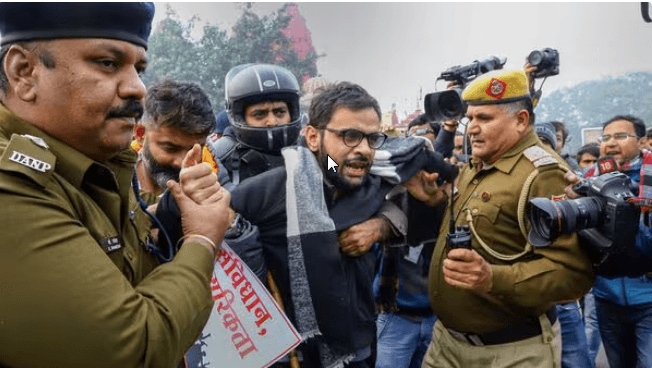
Activist Umar Khalid is set to stay in prison and the future is predictable. His most recent request on bail was just recently denied by the Supreme Court of India. They rejected a petition requesting the top court to hear its own January decision. The previous decision had categorically denied him bail in the enormous conspiracy case connected to the 2020 Delhi riots
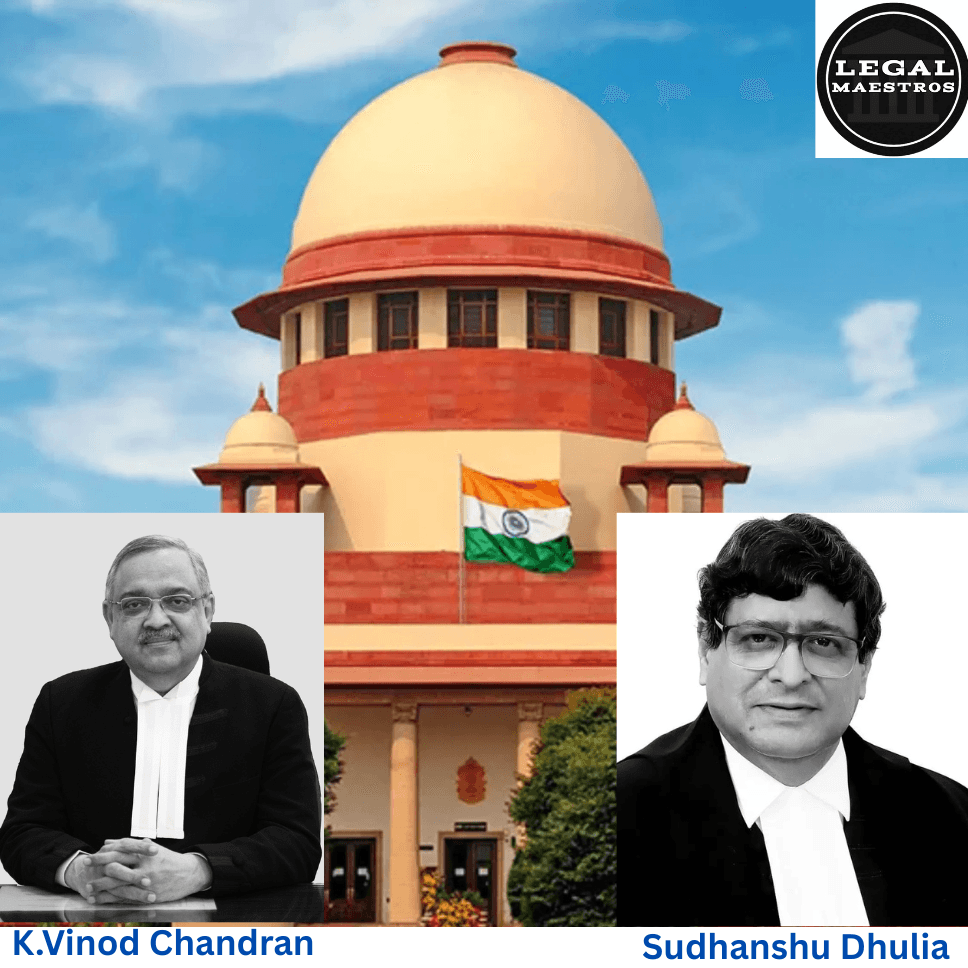
The review was done by Justices Aravind Kumar and NV Anjaria. They looked at the documents and soon concluded that they had no motive to doubt the decision in January. They were written down on April 16 and it was not until a Monday a little later that it came to the attention of the masses. They simply said that they saw no reason to appeal the previous decision. Khalid has been imprisoned in a jail cell since September 2020. This recent legal game never helped him in altering his present situation.
A Closed-Door Affair
The lawsuits at this level are usually associated with certain procedural peculiarities. Supreme Court review petitions tend to occur without fanfare. The judges are in their closed rooms, out of sight of the people and they are going through the files to determine whether they made a glaring error in their first decision. The legal team of Khalid attempted to reverse that build up
Khalid was represented by senior advocate Kapil Sibal. He personally requested an open-court hearing of the review. He took the case to the bench where he wished the judges to grant oral arguments in which the defense would be able to drive its point home. The justices heard the plea but ended up dismissing it. They denied the request to have an oral hearing flat. The bench adhered to the usual chamber circulation and made up their mind about the petition by simply looking at the written documents before them.
The January Benchmark
To understand why the court denied the review, you need to go back to January 5, 2026. It was the day when the Supreme Court gave a significant split decision about the accused persons in the conspiracy in the Delhi riots.
Five other activists caught in the same investigation were given bail by the court. Gulfisha Fatima, Meeran Haider, Shifa-ur-Rehman, Mohd Saleem Khan and Shadab Ahmed were permitted to walk out. They were free and were subjected to a series of strict conditions to their freedom. The judges believed that they were mostly involved as participants or facilitators
But the line taken by the bench was very severe in the case of Umar Khalid and Sharjeel Imam. The decision made by the court was that these two men were not in the same footing with the others. The judges reported that there was evidence of structural difference in the participatory hierarchy. The January decision reiterated the fact that it would be arbitrary and unfair to the judicial process to treat the alleged masterminds and the low level participants similarly. Thus, as five individuals were filling their bags to come out of prison, Khalid and Imam remained right where they were.
The Anti-Terror Law weight.
The accusations which hold Khalid in custody are most bitter. He is charged with Unlawful Activities (Prevention) Act. This particular law renders it extremely hard to bail out any defendant. The statute requires the court to refuse the bail in case there are reasonable grounds to suspect that the charges are prima facie true.
The prosecution created a very narrow image of the involvement of Khalid in the violence. They claimed that he did a lot more than just turn up to localized protests. The Delhi Police alleged that he was one of the key and influential figures in an ingrained conspiracy. They showed content about his speeches, his online communication, and other confidential conferences that were organized immediately after the controversial act of Citizenship Amendment passed in parliament.
The police judgment was supported by the Supreme Court. The judges pointed out that the material on record showed that Khalid had been involved in the top-levels of planning, mobilization, and strategic direction. Since the prosecution account had fixed him as an ideological motivator of the atrocity, the court found that the high bar to deny bail due to the UAPA had been achieved in full.
Time in Prison.
The primary defense of Khalid that has been brought up by his defense over the years revolves around the sheer length of time he has already served without being tried. At this decision, he has served about five and a half years in prison. The court proceeding is as slow as a snail and he is left waiting endlessly.
This was dealt with directly by the Supreme Court but did not provide any relief. The bench realized the length of imprisonment but did not allow it to supersede the gravity of the charges. The judges have decided that the long detention cannot be a trump card to obtain bail in cases where charges implicate the state sovereignty and state security. Although they acknowledged a long delay caused an increased judicial examination, they ruled that the mere inherent complexity of the evidence and the character of the crimes with which he was charged were enough to keep him behind bars.
What Lies Ahead of the Defense.
With the rejection of the review petition, there are still a few exits in the legal road beyond. The January decision by the Supreme Court did not send the concept of bail away forever. The judges put down a schedule by which Khalid and Imam would be able to re-attempt.
The bench mentioned that the two men were to make new bail applications after the trial court is done investigating the guarded witnesses. Should that process come to a halt, they can reappear before the court after a year of the January decision. This allows the defense a daylight but at a very high cost. Until the time when these witnesses can appear in court, or the calendar turns to 2027, the legal team of Khalid can do little to negotiate about his immediate release.
Tracing Back to the UnrestThe legal endless loop is based on a very dark period in the history of the capital of the country. In northeast Delhi, in February 2020, there was a violent communal riot. The riots erupted amidst a series of massive and angry demonstrations against the Citizenship Amendment Act and the planned National Register of Citizens. The conflicts soon turned into systematic violence that lasted several days.The human price was terrible.
The riots claimed 53 lives and over 700 injured. Companies were incinerated, houses were demolished and complete communities were torn apart. After the bloodshed, the Delhi Police initiated a huge investigation to discover a bigger plot that they felt provoked the bloodshed. They also claimed that the riots were not a spontaneous display of anger, but a planned effort that was meant to embarrass the nation at the time the then-US president Donald Trump was visiting India. This particular larger conspiracy case saw 18 people arrested by investigators. With the years passing, 11 of them have been able to get bail. Umar Khalid is one of the few who continue to rebel against the state on the inside of a prison cell.