Actor-turned-politician Vijay has a huge legal obstacle ahead of him only days prior to the Tamil Nadu assembly elections. On Monday, the Madras High Court gave notices to the founder of Tamilaga Vettri Kazhagam, the Election Commission of India and the Income Tax Department. He has a week to clarify a huge discrepancy in his election documents. Two different constituencies. Two hugely dissimilar net worth statements. There is a gap of more than Rs 100 crore
This comes as a shock to the season of campaigning as a whole. Elections are on April 23. Vijay is a candidate in two seats, hoping to be making a good electoral debut in his new party. The candidates must submit a sworn affidavit outlining financial assets, criminal history, and educational history by the law. It is called Form 26 and is presented to the returning officer of the concerned constituency. You are not allowed to submit conflicting papers. However, the court documents show that the value of the assets provided in Chennai and Tiruchirappalli do not correspond in any way.
The substance of the Legal Challenge.
It was challenged in court by a Chennai resident, V Vignesh. He is a Vyasarpadi, Perambur area, registered voter. His appeal presented the striking figures side by side. The court records indicate that Vijay had provided an affidavit to the returning officer in Perambur stating that he had a total of 115.13 crore in assets. In the meantime he filed a second affidavit to the Tiruchirappalli East constituency. According to that document, he had a total of 220.15 crore
The math sounded instant red flags. It is difficult to dismiss a discrepancy of about Rs 105 crore between two affidavits filed in the space of a few days. These documents are used by the voters to make informed decisions. It is the Election Commission that posts these filings on a public portal so that citizens could analyze the background of the candidate. When the reality of the financial situation of a candidate is presented in the public in two different variants, the transparency system fails.
Vignesh told the court that when these public records are examined sequentially, one can see several levels of inconsistency. His law team claimed that such a huge discrepancy cannot be swept away as an oversight or a clerical oversight. The petitioner contended that such loss of high value assets in the Chennai filing amounts to suppression of material facts. He insisted on a complete investigation of the case. The petition cast solemn doubts upon the beneficial ownership and in the routing of funds. When an asset is no longer mentioned in a statutory declaration, the community is entitled to know of its location. Vignesh requested the court to direct the Director General of Income Tax to carry out an inquiry to the letter and release the results before the voting day
What the Bench Averred at the Hearing.
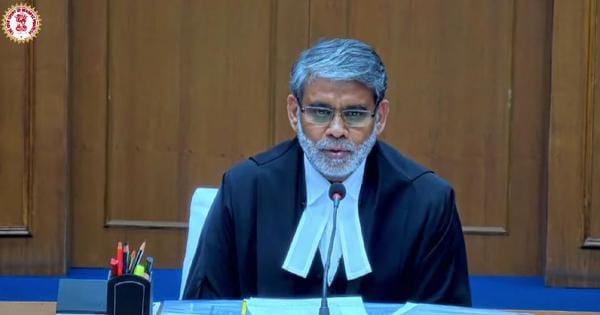
The case went to the first bench of Madras High Court. On Monday afternoon, the arguments were heard by Chief Justice SA Dharmadhikari and Justice G Arul Murugan. They cross-examined the conflicting asset statements and took vigorous oral observations in the courtroom.
The bench was not language-lovers. They referred to the difference as an anomaly which needs to be explained. The Chief Justice did point out that over 100 crores had not been declared in one of the constituencies. The court accepted the plea because of the prima facie that the petitioner provided.
Word was soon spread. Vijay, the Director General of Income Tax Investigation, the Election Commission of India and the respective returning officers of Perambur and Tiruchirappalli East were ordered by the court to present their responses. The next hearing was set to be conducted the next week by the judges. This leaves the respondents with a very short time to explain the Rs 105 crore discrepancy to the court who will then determine the next course of legal action.
Potential Consequences of an Election Law.
Statutory records registered under Rule 4A of Conduct of Elections Rules, 1961, bear a lot of weight in law. These affidavits are signed by the candidates. Filing incomprehensive or misleading information is against the Representation of the People Act, 1951.
In case the Election Commission or the court finds out that a candidate deliberately concealed assets, the implications are dire. Criminal actions can be taken against the individual. An established instance of false declaration may result in fines or even incarceration. More so as a political candidate, it can immediately disqualify a candidate out of the election altogether.
Inclusion of the Income Tax Department is an added jeopardy. Tax authorities are now officially brought on board in the court process. Lapses of crores of hundreds of crores of undisclosed or mismatched assets are naturally within their jurisdiction.
The tax department will investigate the corporate reports linked to the actor to find out which of the two affidavits concurs with his real financial statements. In case they find out about tax evasion or concealed wealth, Vijay will be subject to hefty fines and be prosecuted on tax offenses without any reference to the election laws. At least one of the affidavits is misleading or he has lied on his corporate tax filings. The two scenarios are subject to stringent regulation.
Political Stakes in Tamil Nadu.
A high stakes tussle is in progress in Tamil Nadu politics. The state is going to vote once in which they will elect all the representatives in the 234 assembly constituencies. The voting will be done on May 4. The Dravida Munnetra Kazhagam, headed by Chief Minister MK Stalin is the main constituent of the Secular Progressive Alliance, also including the Congress and the VCK. They are engaged in a struggle to cling to power against the National Democratic Alliance headed by the AIADMK locally with the backing of the BJP and PMK.
Vijay was supposed to destroy the traditional voting blocks after joining this fray. His party has its first electoral appearance. His strategy of having two constituencies has been under observation by political analysts. He is running against a sitting DMK candidate, Inigo S Irudayaraj, in Tiruchirappalli East.
At Perambur, he goes against another sitting DMK leader, RD Sekar, the sitting MLA. Vijay is attempting to make his new party a clean alternative to the old alliances. A financial concern with a huge amount of money complicates that very messaging.