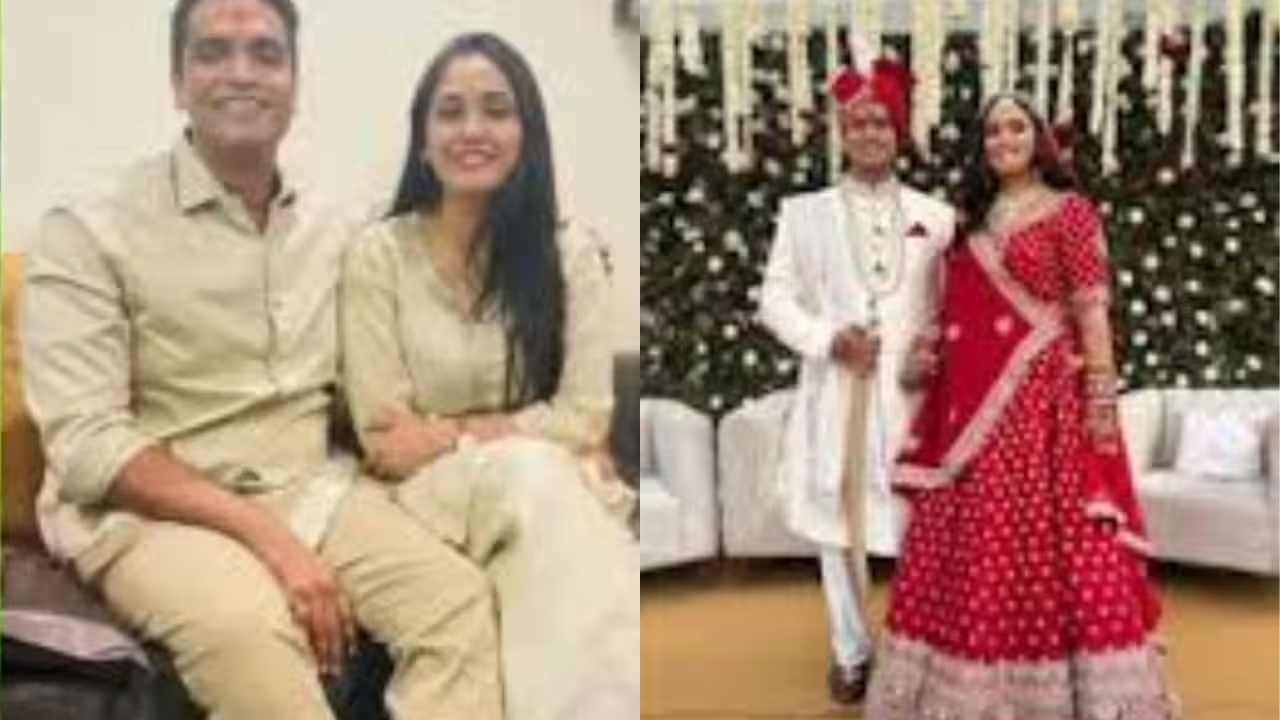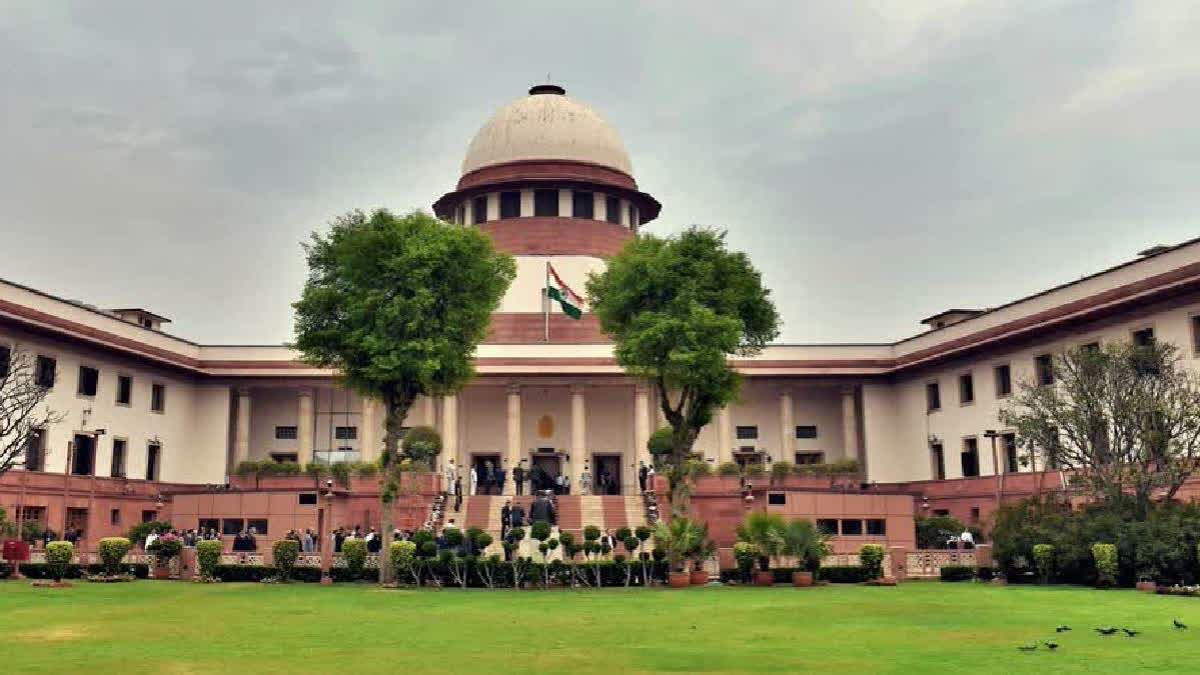
22 years is a lot of a life. Time for a whole generation to grow up, before whole cities can redesign their skylines, and even whole governments can rise and fall. The exact time Rohit Chaturvedi found himself gazing at the walls of a prison cell. That countdown came to a close on Friday. The Supreme Court of India rendered a judgment which has transformed the attitude of the state towards life sentences. Justices B V Nagarathna and Ujjal Bhuyan paved the way for Chaturvedi’s early release
One of the main accused in the gruesome killing of poet Madhumita Shukla in 2003. The murder was vicious. It struck the nation and brought down strong politicians. But the nation’s supreme court just drew a big, uncrossable line between the evil of a previous crime and the need for future reform.
The Jurisdictional Nightmare
The fight for Chaturvedi’s freedom wasn’t just a simple plea filed in a lower court. The battle of jurisdiction started out a messy, multi-year thing. The crime took place in the state of Uttar Pradesh. However, due to the political furore in the region where the main accused lived, the Supreme Court had shifted the trial to Uttarakhand in 2007 to ensure that the trial was conducted in a free environment. The geographic move made a complete absolute administrative mess 20 years later. What is the authority of the person granting remission? Is it the place of the blood shed or the place of the gavel
In recent years, the Supreme Court has vacillated on this particular matter, and the Bilkis Bano remission case has been an influential factor in this debate. One time the supreme court ordered the UP government to take charge of remission in Chaturvedi’s case. UP subsequently tried to legally recall that order. This was a most unromantic political deadlock. Finally, when Uttarakhand State government recommended his release, the Union Ministry of Home Affairs closed the door on 9th July 2025.
Constructing the Ministry’s Disassembly
On seeing that MHA order, the Supreme Court virtually tore it to pieces. The Home Ministry was not the only one who opposed the Justices’ stance. They systematically took down all of its legal architecture. They described the government’s rejection as “entirely arbitrary and hopelessly cryptic.
The heart of the ministry’s argument was simple, yet woefully misguided. They said that the 2003 killing was so incredibly awful that it didn’t deserve to be remediated. The Supreme Court did not buy into that argument. They were very clear that a liberal constitutional order cannot operate based on mass anger. Yes, there is a lot of executive discretion. But it isn’t uncanalised. A bad crime should not give rise to an indefinite incarceration. The bench explained that “it is not a mere formality to record specific reasons for denying liberty. This is the only true protection we have from an arbitrary State machine. Executive orders have no effect if they are without any reasoning
The Philosophy of a Second Chance
This was when the ruling on Friday turned from a routine judicial decision into a full-fledged lecture on the nature of criminal justice. The judges even dragged the Greek philosopher, Plato, into court. No legal system can have means to prevent injustice perpetrated by a criminal, but not a blind, unending reaction.
Remission is not a continuation of the sentencing. It is an entirely new executive function. It should reflect the current situation and the future trend. How is the prisoner behaving? Has there been any solid proof of a true change of heart? Are they able to be re-integrated into society without being a threat? If remission of punishment is denied, solely because the first offence was so serious, this distinction is totally lost. It makes the remission journey a ‘re-trial of the past’. He was already convicted of his guilt 20 years ago by the justice system. His leaving him in a cell forever under the shadow of his worst act is a clear violation of the reformative ideal on which the Indian penal system is supposed to be based. Crime is one thing. Reformation is a different ball game. The State’s emphasis needs to be on the latter.
The Echoes of a Sensational Murder
It’s impossible to talk about this ruling without talking about the lurid but dark history with which it’s associated. But Madhumita Shukla was not only a local tragedy. This was a huge political scandal that captured national TV news coverage. The shooting of Shukla in broad daylight in her house in Paper Mill Colony, Lucknow, was in May 2003. She was a mere twenty six. At the time she was 7 months pregnant.
Amarmani Tripathi, a very powerful Uttar Pradesh former state minister, and his wife Madhumani were caught by the police investigation. Tripathi’s nephew is Chaturvedi.Chaturvedi is the nephew of Tripathi. The Central Bureau of Investigation was later on forced to conduct a fresh investigation to uphold a measure of fairness. In October 2007, a trial court in Dehradun gave life sentences to the whole team. It was upheld by the high court in 2012. In 2013, the Supreme Court found the sentences in favour again. The finality of the law was allegedly established. The timelines of who really walked free, however, became very confused and decidedly political.
The difference in the scales
This is the obvious context in this entire legal situation. Amarnath Tripathi and his wife left prison in August 2023. Uttar Pradesh Prisons department in a shroud of secrecy released them under a remission policy implemented in 2018, which stated that older inmates who have served more than 16 years would be released. They were able to go back home. The same criminal conspiracy was the charge against which Chaturvedi was convicted, and he was left sitting in a cell.
He had to take a huge, last-ditch legal battle to receive the same basic treatment as his uncle who is politically connected. The Supreme Court pointed to this huge disparity in its decision. It is not possible to let the main political organizers of the murder go free and keep another conspirator in prison for an indefinite period. It’s a travesty of equal justice.
Chaturvedi is actually out on interim bail since August 2025 while his plea is pending for the final hearing. The court took his current physical status into account on Friday. It was a firm final order from the bench. He doesn’t have to turn himself over to police. Long legal process is finally grinding to a halt. The debt of 22 years is considered settled.