There was a lot of weight hanging from the sentence. It’s better for parents to have a divorced daughter than a dead one, it’s that easy. It was his words on Monday afternoon that were spoken by Solicitor General Tushar Mehta. He was in the Supreme Court of India. He was present in the name of Madhya Pradesh government. The bench was hearing Twisha Sharma’s case. She was married at 33. She used to be a model and an actor. Now she is dead.
Mehta didn’t mince her words. The opposing arguments in court were temporarily suspended. He highlighted the stark fact of the tragedy. One young female was killed. So, it would be suicide or a crime, either way, the same results. The family lost their child forever. He lifted far above the customary legal jargon that typically abounds in the Supreme Court’s chambers. A telling statement to society about the huge stigma attached to failed marriages. Get your daughters home. Don’t be concerned about the words of the relatives or neighbors. Bring them back alive, just that’s it
Five Months from a Winter Wedding to Tragedy
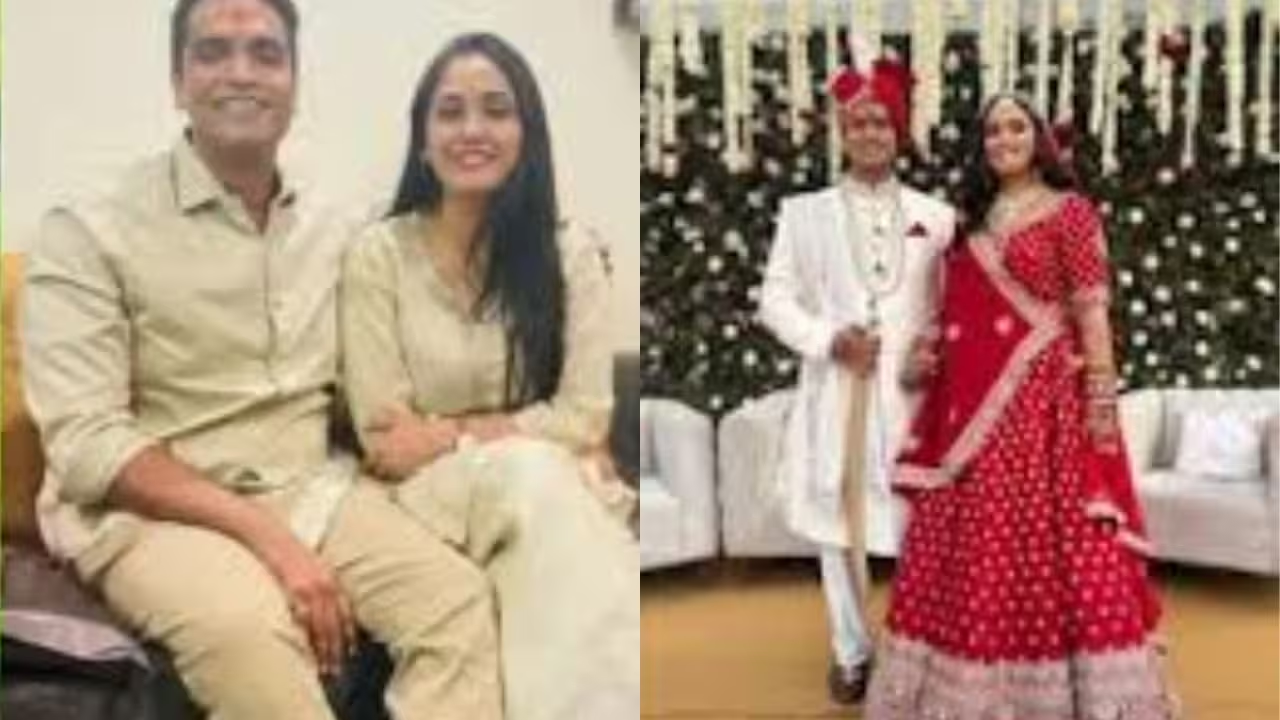
Twisha was wed on December 25 last year to Samarth Singh. Singh is an Advocate of the bar. The couple settled in Katara Hills area of Bhopal. Less than 5 months after the marriage, it was a bad marriage. Twisha was discovered hanging in her conjugal home on the night of May 12th
The consequences were immediate and was severe. When Twisha’s family realized the situation, they immediately went to the police. Samarth and his family were found guilty of continuing mental harassment. There were seemingly never-ending financial demands. The main offence was dowry harassment. A First Information Report had been made to the local police. They used the provisions of Section 80(2), 85 and 3(5) of Bharatiya Nyaya Sanhita. They also imposed severe penalties on Dowry Prohibition Act.
But the accused family fought back hard. They also had their own side of the story. They have said to the police and to public that Twisha was suffering from the severe drug addiction. There was blatant false and malicious accusations on both sides. It became quite a mess. It was no longer just a local tragedy. In a few days, it was a national sensation. Earlier, the National Commission for Women had also noticed the incident. They described the death as suspicious and warned of a local authorities’ report.
Power, Optics and the Television Circus
As the accused were so, the situation became very complicated. Samarth Singh is a lawyer. His mother, Giribala Singh, was once a district judge. When a former judge has been accused in a dowry death case, people begin talking. Rumors of a huge cover-up began to ignite in Bhopal. From there, rumours of this began to circulate around the country
There was plenty of scope for the media to make a big splash in the news. The news channels placed their cameras outside the homes of both families. Tushar Mehta told Supreme Court that the media frenzy started when Twisha’s mother-in-law got herself seen on TV. She did interviews with the reporters. She made very public statements about her dead daughter-in-law. After this, the floodgates were completely opened. The media received a response from Twisha’s family. In a few days it would be a prime time television debate about the very personal facts of a five-month-old marriage.
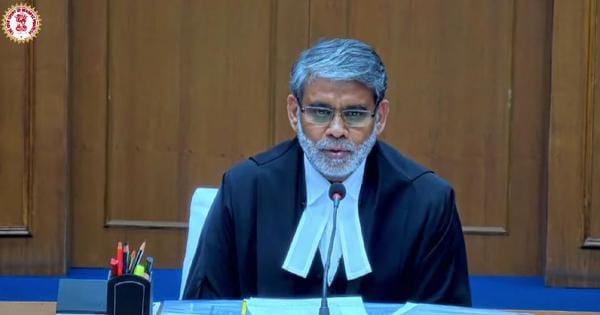
Eventually the Supreme Court suo motu considered the matter. This means that the judges took it upon themselves. They did not wait for a formal petition to be filed. The case they registered was an ‘In Re. Alleged Institutional Bias and Procedural Discrepancies in the Unnatural Death of Young Woman at Matrimonial Home’. The local police were alleged in a media report to be compromised. It alleged that the local authorities were doing what they were doing “solely” on the basis of the legal background of the accused. The Chief Justice of India, Surya Kant and Justice Joymalya Bagchi were present in the bench. They weren’t very pleased with what was happening on the story.
A change in how the investigation and evidence will be conducted.Change in the way evidence and investigation will be handled.
The investigation is no longer being conducted by the local police. The government of Madhya Pradesh realized that the game was up. They addressed a letter to the central government, requesting the help of the Central Bureau of Investigation. On Monday, the Supreme Court agreed to this. At the end of the hearing, the CBI team was already packed and sent to Bhopal to formally assume charge.
Senior advocate Siddharth Luthra represented Twisha’s family. He explained to the court of some serious problems with the early police conduct. The family felt there was inadequate preservation of forensic evidence. They raised the issue of the delayed registration of the FIR. They voiced serious concerns with the treatment of the footage taken by the CCTV cameras at the house. The dispute was so much that the Madhya Pradesh High Court stepped in over the weekend. The High Court ordered a second autopsy to be conducted. It was done by a medical team of AIIMS-Bhopal on Sunday, hours before the Supreme Court hearing.
Senior advocate Siddharth Dave appeared for the accused. He had other grievances. He has told the courts that the statements made before the magistrate are somehow leaking under Section 164 of the CrPC. In the morning newspaper, they were printing them word for word. All this investigation was becoming public.
Restraint and the Road Ahead for the CBI
The Supreme Court made a hard decision to put an end to the turmoil. Chief Justice Surya Kant has emphasized on the faith the court reposed in the state agencies as well as the CBI. It was only that a very dangerous narrative was developing that prompted the suo motu action, he said. People were beginning to think the judiciary was serving a retired judge.
The bench issued very strict instructions. They observed the attorneys for both the family and the family. The message was clear and straightforward. Don’t talk to the media. If any one of the families has any evidence or statement, they should bring it to the CBI. The court cautioned that making public comments could seriously taint the on-going investigation.