Numbers are completely out of the norm. Next year, Salesforce is set to spend $300 million on something most people can’t see. These are Anthropic tokens they are purchasing. For people not involved in software, a token is akin to a ticket at an arcade. This is a little bit of text in this business. Each time a computer model reads a prompt or writes a line of code, it consumes some tokens. And when you manage to put enough of those tokens together, you’ll have a functional software program.
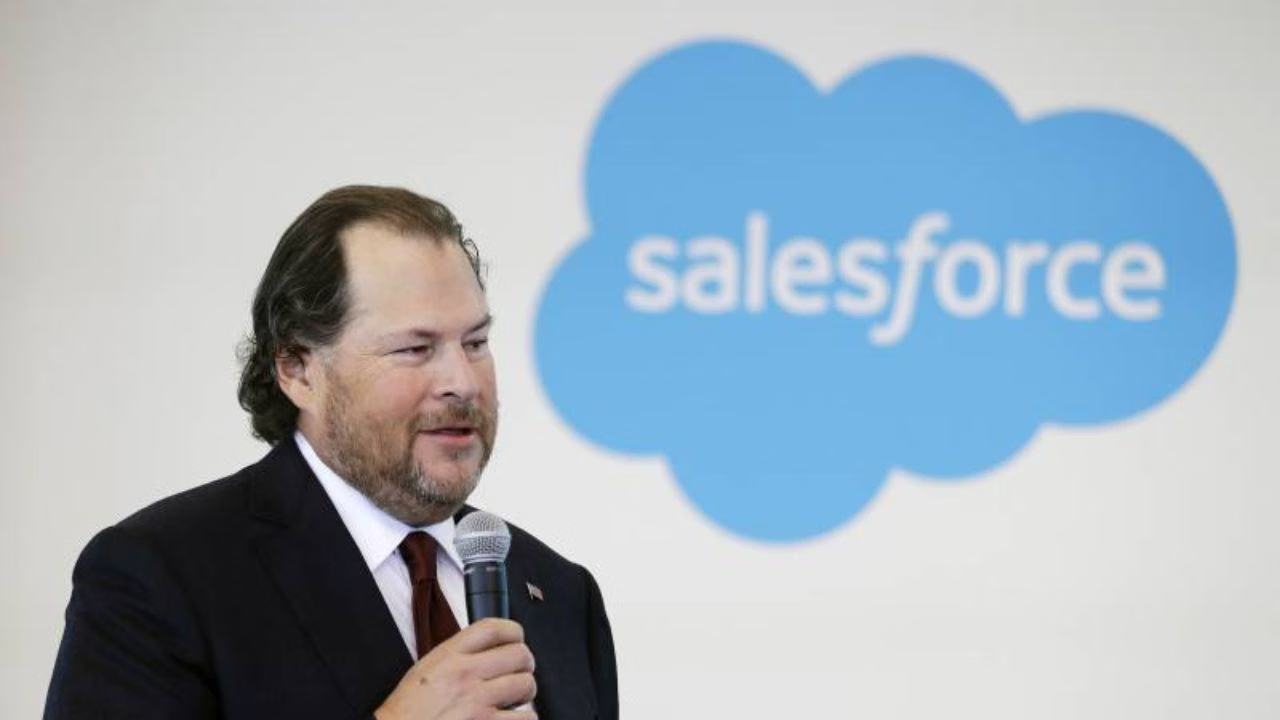
Recently, Marc Benioff was appearing on a podcast, and he spilled the beans. The Salesforce chief was not concerned about the price in any way. He sounded excited, in fact! He said the new coding tools were “awesome”. Salesforce is one of the world’s largest purchasers, with a yearly spending budget of $300 million for these tiny pieces of text. In essence, they are leasing access to a giant brain machine, which they’re paying to do the grunt work that people did in the past. It’s a huge change in the spending of a legacy tech company. They’re putting the money that would otherwise be used for payroll into server farms.
Engineer Pipeline kill switch.
This massive acquisition can’t be divorced from the activities in the company’s HR department. Salesforce put the brakes on hiring new software engineers. The freeze ended in late 2024 and is still in place in 2026.
The math they are using is very basic. “Our internal engineering staff is now 30 percent more productive,” management says. Basic code is being written by tools such as Agentforce and Anthropic’s Claude. The 15,000 human employees at the company won’t be fired at this time. But the jobs are very different from what they were 2 years ago. They are turning into supervisors. Rather than type in each line of a new program, they check over what the machines output. They look for insects. They ensure that the general design is coherent. What this translates to is that the company no longer requires a steady stream of fresh graduates to perform the menial tasks. The machine does it quicker and doesn’t demand a coffee break.
How to get humans at the front lines of the war.Getting humans at the front lines of the war.
This doesn’t mean that the whole company is frozen. The hiring signs are still up but in entirely different departments. Salesforce is on the lookout for talkers. They are looking to recruit as many as 2,000 sales associates.
Selling enterprise software is becoming quite a complex business. A brochure alone is not enough to get a client a million-dollar contract. The new computer models are baffling to corporate clients. They are concerned about data loss. They are concerned about violating privacy regulations in case their client information goes into a public server. Salesforce must have real human beings in conference rooms to tell people the benefits of these products. A machine may be able to write the code, but it’s unable to read a room. It cannot assure an over-worked executive that his secrets will be kept by it. This is a Digital Labor Revolution, according to Benioff. It implies that humans will deal with the dirty dealings while machines will do the typing.
The Automation messiness,
There are no easy days. The switch is really quite hard when you’re in the bedroom. Those were some tough lessons learned recently, when the company attempted to automate too much, too soon.
Over the past few years Salesforce reduced their customer support and marketing team by thousands of employees. They thought that the bots would be able to do angry customers and analyze marketing data without losing their stride. They were dead wrong. Without those employees, a tremendous amount of institutional memory was lost. Those who had known how the company did business were no longer in the picture. Customers started complaining. If they could reach a real person for tech support, they wanted to.If they could contact a real person instead of some chat bot repeating the same basic apology, they wanted to. Trust was dealt a serious blow. The company learned the hard way that the efficiency of a machine does not necessarily mean it is the answer to a client’s problem. At times, it simply puts more work on the shoulders of those humans left behind. They refer to this as operational debt. Before the computer can read all your dirty company information, you need to arrange it. Salesforce was ahead of the game, and it led to a lot of headaches for them.
The Looming Legal Fights
No one will miss the replacement of the whole department. Labor and law makers are beginning to pay close attention to this situation. Firing workers in the name of saving money for the corporate bottom line while investing hundreds of millions into automation is a red flag to workers’ rights advocates.
There are protests taking place throughout the nation. Anti-developmentalist groups are calling for a halt to this type of development. They say that businesses are killing off entry-level career paths. How can a fresh college graduate become a senior engineer if no job at the junior level exists where a computer can do the job for pennies?
The pressure of the law will only intensify. The regulators are considering whether these mass replacements infringe on the labour agreements or give them an unfair advantage in the market. Politicians are beginning to raise a raucous chorus of questions regarding corporate tax breaks. Does a company qualify for tax breaks for hiring people in a certain city if the company is generating the jobs but the people are working at a server farm in another state? Local governments lose their shit. They wish for their money to be returned.