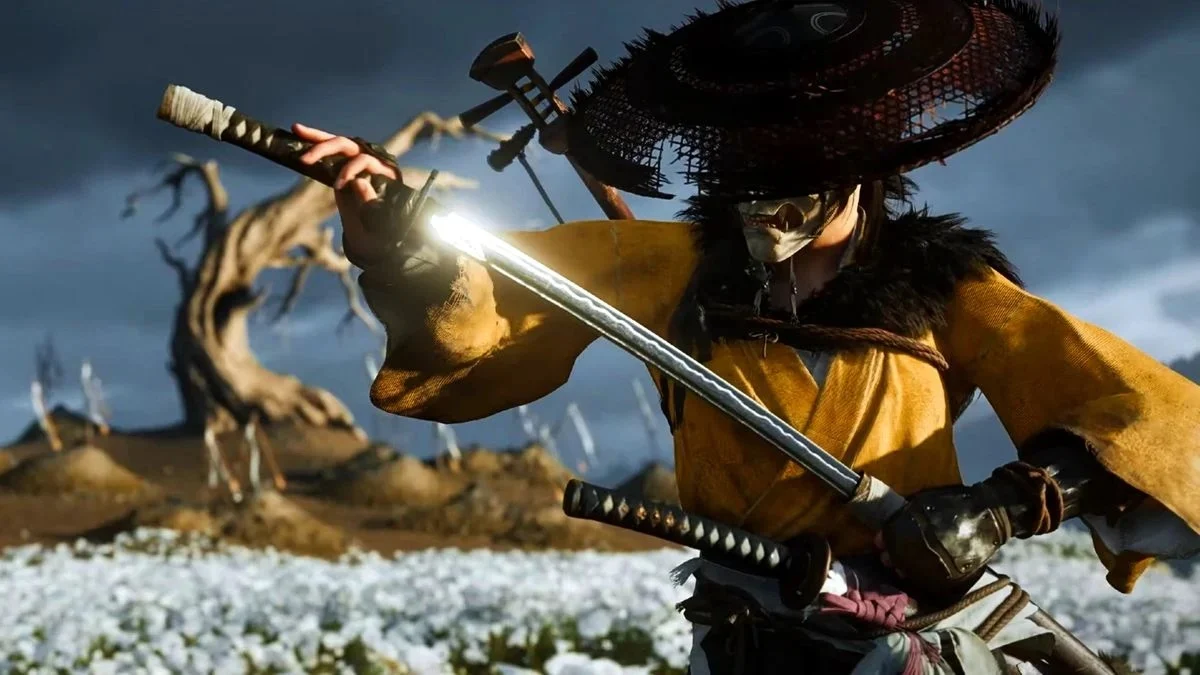
Players who log in Tuesday were anticipating a new content roadmap. They were, instead, given a parting letter. Sony has decided to stop major updates for Ghost of Yotei Legends. Sucker Punch’s multiplayer spin-off, set in the world of samurai, is just one year old. Servers stay online. Security patches will continue to occur. However, the heavier stuff? The maps, the character classes, the events that are seasonal and keep the live service game alive? Gone.
It’s a quick turn. The sales of Ghost of Yotei were far ahead of the mark. The single player campaign sold millions of copies from the off. The plan was to use Legends as a hook to get the disc to stay in the console. The multiplayer feature was sold separately by Sony. They had high-end battle passes for sale. They promoted paid cosmetic tiers. Investors entered a business plan which now appears to stall. The abrupt halt is a blow to the community. It also invites into a very dirty can of worms about the concept of digital ownership and consumer rights.
The living game of the moment: the promise of a living game.
Ten years ago, you purchased a game, beat it and tossed the plastic case on a shelf. The money exchange was at the cash register. Now, what you spend the first day is just the cover charge, seventy dollars. You are buying a future from the publisher. You purchase the assurance the game expands.
This is what Ghost of Yotei Legends capitalized on. The shop sold armor sets and weapon skins that were strongly associated with future seasonal events.Armor sets and weapon skins were heavily promoted in the store that strongly correlate with future seasonal drops. A publisher who eliminates support this early, is breaking an unwritten contract. The question is, if the contract goes to a real courtroom, will that catch. The game industry dredges up massive arbitration clauses in the fine print of their Terms of Service. Nobody reads them. You simply click accept and you are able to proceed past the title screen and play. That is typically included in the pacts that will say the publisher may cancel the service whenever it pleases. Local consumer protection groups are beginning to turn down that blank check.
The Legal Grey Area
The situation gets murky at the border. The United States Federal Trade Commission typically doesn’t pay much attention to video game server shutdowns. No, Europe doesn’t play that way. The digital goods laws are strict in the European Union. You can’t provide a digital product and expect people to sign on, turn a key, and forget about it if you don’t provide payment.
Australia has also become a big thorn in Sony’s side at the moment. Bethesda was previously ordered to pay in refunds for Fallout 76 by the Australian Competition and Consumer Commission, which was done a couple of years ago. They also sued Sony for “digital refunds when games are broken. With Yotei Legends halted, they’re right in the crosshairs again. Players have purchased top-quality battle passes and hoped they would receive drops for a full year. A short roadmap means that people are holding dead high-value currency. Suppose one player had purchased a virtual sword for a future raid.Suppose one player purchased a virtual sword just for a future raid. If this raid is cancelled, the buy becomes useless. This is considered a “defective product” in many countries’ consumer laws.
Following the Microtransactions
The thought of money alters the entire discussion. Sony, if Legends was simply an add-on for fun, could walk away clean. They did just that with the original Ghost of Tsushima. However, they altered math for Yotei. They established their own economy.
Real money was dropped into an environment constructed upon a “longevity” assumption. If you don’t think that the servers will be dead in six months, you don’t spend twenty dollars on a skin for an actual horse. That’s where class-action lawyers begin digging. If a live service game dies out too early, the money for the micro-transactions remains in the publishers bank account. There are certain players who are already preparing to file chargebacks with credit card companies via the internet. If a digital good doesn’t provide the features that were promised, banks often want to be on the side of the buyer. If there are too many people who make the chargebacks, then Sony will incur heavy processing charges from payment networks. The company will have to determine whether to pay for angry fans or to keep just a skeleton crew on the game to drip-feed tiny updates.
Behind closed doors, a quiet shift occurred.A quiet shift took place behind closed doors.
The actual reason for the shutdown isn’t very interesting. It’s too expensive to produce games. SuckerPunch has the limited number of engineers. In an almost certain move to a third large single-player project, the studio is shifting all of its human resources. After reading about the player retention of Legends, doing the math, and seeing it was a money pit, Sony decided to end their title.After seeing the player retention of Legends and after doing the math, Sony decided to end their title.
After the third month, the number of players plummeted. When it comes to keeping a multiplayer audience when you’re playing against free titans such as Fortnite and Call of Duty, it’s a tough slog. Sony went with a cold corporate call. Their goal is to cut the cord and avoid wasting money. “They are just doing their work, going to their next spreadsheet due to management.” Since this particular choice could end up costing Sony more than they’re saving. Regulatory authorities are monitoring. When a government body forces Sony to make partial refunds for a broken live service promise, it permanently changes the manner of game publishers marketing their multiplayer games.