.
Introduction
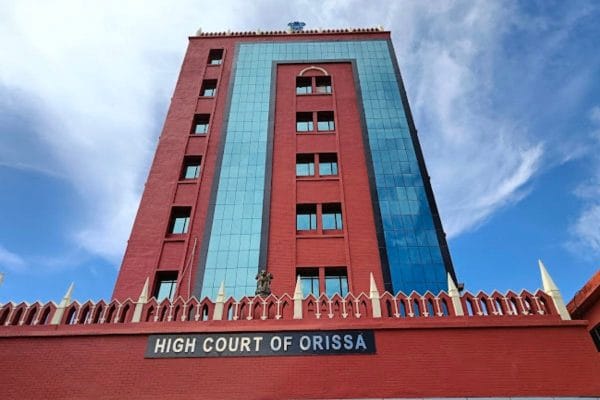
Orissa High Court gave a significant ruling that no employee can be denied promotion even after retirement.
This decision strengthens the equality in the service law and it also shields the retired workers against any form of arbitrary decision made after they quit service.
Background of the Case
The case was about a government worker who was given a promotion in service.
The employee served in the advanced job and retired.
Upon his retirement, the authorities tried to revoke the promotion, perhaps due to the irregularities in the procedures or mistakes in administration.
This move had an impact on the pension and retirement benefits of the employee.
Issue Before The Court.
The question before the Court was whether the government is entitled to cancel or withdraw a promotion once such a promotion has been issued to the employee but the employee has already retired.
The Court was forced to review the legality and fairness of such an action.
Court’s Observations
The Orissa High Court came up with some powerful remarks in favour of the employee.
It held that:
The promotion is now part of the employee service record once a promotion is allowed and taken action on in service.
Once the employee retires, then he/she cannot defend or correct any alleged irregularities.
Revocation of promotion at that point would be unfair and arbitrary.
The Court pointed out that administrative authorities have to be responsible and reasonable in time.
Law of Fairness in service.
The Court highlighted that service law is based on fairness and certainty.
It observed that:
Decisions made by employer determine how employees will plan their careers and retirement.
Such decisions lead to financial and emotional distress when due to sudden reversal after retirement.
The law prohibits authorities to reopen settled cases after a long time.
Impact on Pension and Benefits
The Court also took into account the effects of cancellation of promotion in terms of retirement benefits.
It noted that:
Depending on the previous drawn salary, pension and other benefits are calculated.
Removal of promotion has the direct negative impact of cutting down these benefits.
This would be unjustly denying the employee his or her dues.
The Court believed that this would be against the principles of natural justice.
Delay and Administrative Lapses.
The Court criticised the delay in taking action.
It observed that:
In case it was a wrong decision to give the promotion, it should have been rectified by the authorities even when the employee was serving.
Latitude can not be used as a reason to take negative action in the future.
Administrative inefficiency cannot be allowed to harm employees.
Final Judgment
The Orissa High Court set aside the decision to withdraw the promotion.
It believed that the employee could enjoy the benefits of the promotion even after retirement.
The Court saw to it that the pension and other benefits of the retired employee are not at risk.
Importance of the Verdict.
The importance of this judgment is that it:
Guarantees teachers against administrative whims and fancies.
Affirms that settled service issues cannot be re-opened.
Maintains equity in computing pension and retirement benefits.
Promotes responsible decision making by authorities in a timely manner
The Orissa High Court’s decision is a strong affirmation of fairness and justice in service law.
The Court made sure that administrative mistakes do not turn into sources of injustice by safeguarding the promotion of a retired employee.
Such ruling is more empowering to the rights of employees and enhances responsibility in governance.
Keywords
Orissa High Court, promotion withdrawal, retired employee, service law, pension benefit, administrative law, natural justice, right of the employee, Indian judiciary.


