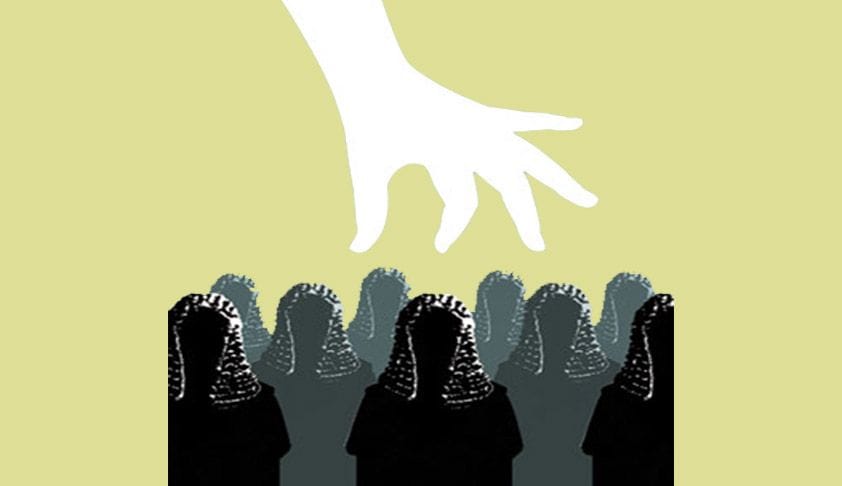
An administrative decision was taken by the President of India regarding the appointment of new Chief Justices to the five High Courts of Madhya Pradesh, Jharkhand, Karnataka, Gauhati and Patna. Four sitting Chief Justices have also been reallocated to new High Courts and a gigantic reshuffle has led to the transfer of 19 High Court judges across the country. These appointments effected on the recommendations of the Supreme Court Collegium and are expected to have a significant impact on the Indian judiciary and add to the robustness of the higher judiciary.
New Appointments: Who Are the Five New Chief Justices?
The new appointments have been made by the Ministry of Law and Justice and are historic in nature. The following is a table listing the new Chief Justices:
| High Court | Name of Chief Justice | Previous Position |
| Madhya Pradesh | Justice Sanjeev Sachdeva | Acting Chief Justice, Madhya Pradesh |
| Karnataka | Justice Vibhu Bakhru | Judge, Delhi High Court |
| Gauhati | Justice Ashutosh Kumar | Acting Chief Justice, Patna High Court |
| Patna | Justice Vipul Manubhai Pancholi | Judge, Patna High Court |
| Jharkhand | Justice Tarlok Singh Chauhan | Judge, Himachal Pradesh High Court |
Transferred Chief Justices: Jurisdictional Shifts Explained
At the same time as the new appointments, four serving Chief Justices have been transferred in the exercise of a countrywide transfer of judiciary leadership. The following table summarizes these notable transfers:
| Name of Chief Justice | Previous High Court | Transferred To |
| Justice Manindra Mohan Shrivastava | Rajasthan | Madras |
| Justice Aparesh Kumar Singh | Tripura | Telangana |
| Justice MS Ramachandra Rao | Jharkhand | Tripura |
| Justice K.R. Shriram | Madras | Rajasthan |
Transfers are made frequently to ensure area balance, introduce new thoughts and protect the sanctity of seniority and specialization in the judicial system.
The Landscape of Transfers: 19 High Court Judges Affected
Apart from Chief Justices, the relocation of 19 judges in the High Courts is a massive exercise, a pointer to the government’s intent to speed up and rationalize the judicial process. Judges from a number of High Courts, for example Delhi, Punjab & Haryana and Bombay have been redeployed, some to resume previous postings or to move to balance regional workload.
These transfers and appointments are due to constitutional necessities cited under Article 217(1) and Article 222(1) of the Indian Constitution. The Supreme Court Collegium, comprising the Chief Justice of India and seniormost judges, make recommendations for appointments and transfers. The President, after necessary consultation with the Chief Justice of India, sanctions these appointments by notification.
Context
The timing and haste of such steps are set against the immediate context of tensions between the executive and judiciary. Delays in examining collegium recommendations have already sent the ghost of imbalance of powers and the shadow of “selective action”. Chief Justice BR Gavai, who chaired the collegium meeting on May 26, 2025 emphasized that piecemeal implementation undermines both the seniority system and public confidence in judicial appointments.
Significance of these Alterations
1. Judicial Administration and Efficiency
The judiciary and government aim to plug leadership vacancies, uphold impartial administration and handle rising caseloads in significant High Courts with fresh Chief Justices and the relocation of experienced judges. Various High Courts, including Delhi have seen massive arrivals of new judges to clear pending backlogs.
2. Consolidation of Rule of Law
Broad-based reshuffling aims to uphold the purity of the concept of judicial independence and to prevent vested interest or the concentration of power. Rotational transfers and new appointments also help to merge regional legal perspectives within the overall national picture.
3. Case Flow and Citizen Impact
The appointment of capable judges and chief justices aims to reduce delays, speed up high-value cases and improve citizen’s access to rapid justice across the country.
Reactions and Looking Ahead
Legal circles have welcomed the appointments but called for more openness and quicker action by the executive and judiciary to keep public confidence intact. The reforms reflect the iterative and dynamic nature of judicial administration in India, where striking a balance between consistency and innovation is a perpetual challenge.
Conclusion
With the approval of these wide-ranging transfers and appointments by the President, India’s judiciary is set to usher in a new era of revitalized leadership and functional vigour. With incoming and transferred Chief Justices assuming posts, stakeholders expect smoother functioning, greater impartiality and a fresh effort towards clearing judicial arrears. The measures are a sign of the ongoing evolution of India’s judiciary to meet contemporary expectations of efficiency, as much as justice.
Sources
- President Appoints New Chief Justices to 5 High Courts Including Karnataka, Patna, Madhya Pradesh (News18, 15 July 2025)
- President Appoints Chief Justices of 5 High Courts (SCC Online Blog, 15 July 2025)
- Government Appoints Chief Justices of 5 High Courts, Transfers 4 Others (The Times of India, 15 July 2025)
- SC Collegium Recommendations: Five Judges Appointed (The Indian Express, 15 July 2025)
- Press Information Bureau Notification on Judicial Appointments (PIB, 15 July 2025)
https://www.pib.gov.in/PressReleaseIframePage.aspx?PRID=1685148