Current Legal Update

Massive Judicial Reshuffle: President Appoints 5 New Chief Justices, transfers 4 CJs and 19 Judges on SC Collegium’s Advice

The President of India appointed new Chief Justices to five High Courts and transferred four others, alongside relocating 19 High Court judges. This is based on the Supreme Court Collegium’s recommendations. This major reshuffle, grounded in Articles 217 and 222 of the Constitution and aims to ensure efficiency, uphold judicial independence and reduce pendency. The move reflects ongoing reforms in judicial administration, balancing transparency, regional equity and institutional integrity amid growing demands for timely justice.

Current Legal Update

Supreme Court Streamlines Multi-State FIRs: Ravinder Singh Sidhu Case and Principles on FIR Clubbing

The Supreme Court’s 2025 ruling in Ravinder Singh Sidhu vs. State of Punjab (2025 INSC 727) establishes principles for clubbing multi-state FIRs, enhancing judicial efficiency. Addressing multiple FIRs filed across states for related offenses, the Court emphasized consolidating cases to prevent procedural abuse and ensure fairness, as seen in Sidhu’s case involving Punjab and Haryana. The verdict aligns with Article 21’s right to a fair trial, streamlining investigations while safeguarding defendants’ rights. It sets a precedent for handling cross-jurisdictional disputes, reducing redundancy.

CRIMINAL LAW

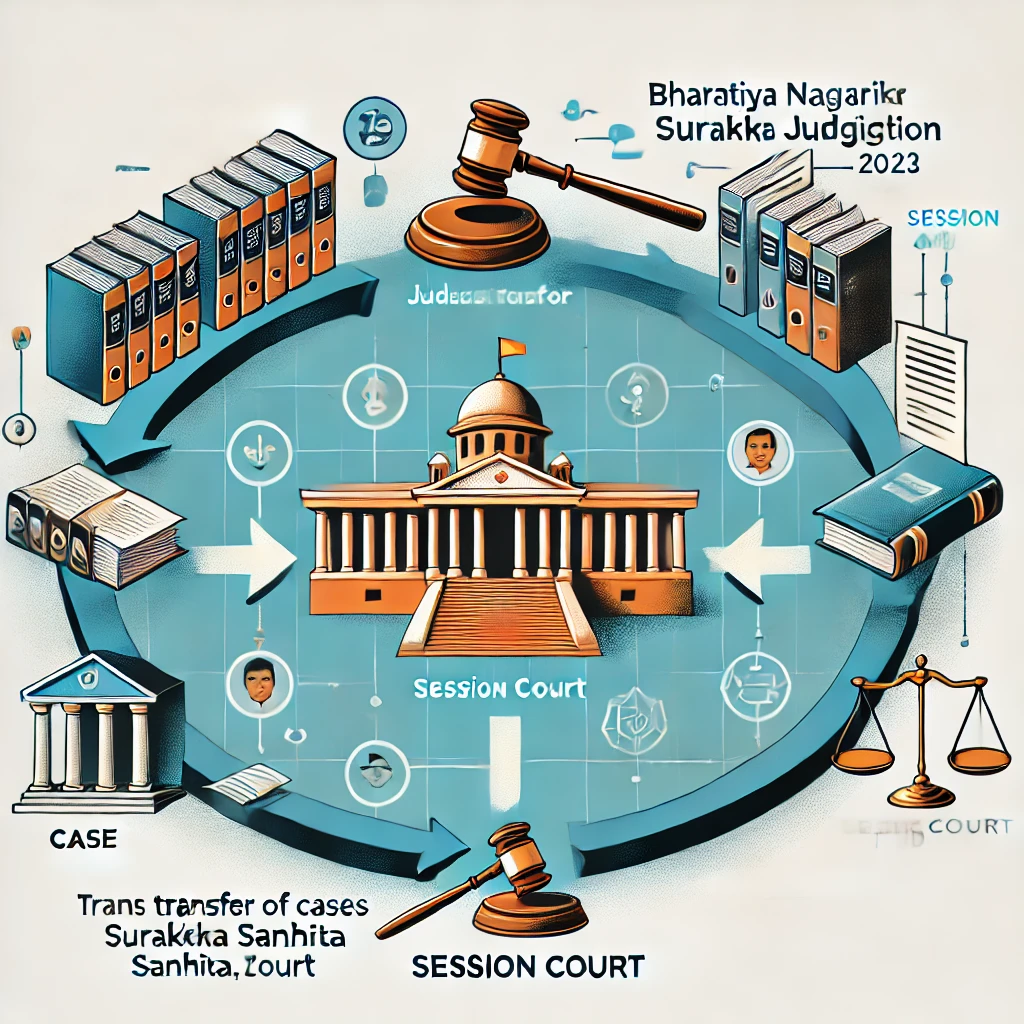
Judicial Transfer of Cases and Session Court Jurisdiction under Bharatiya Nagarik Suraksha Sanhita, 2023

The Bharatiya Nagarik Suraksha Sanhita (BNSS), 2023, improves judicial efficiency by streamlining case transfers and Sessions Court jurisdiction, superseding the Criminal Procedure Code, 1973. Section 406 authorises High Courts and the Supreme Court to transfer cases from one court to another for equity or public interest. Sessions Courts under Section 26 deal with grave offences tried only by them, with enhanced powers to determine complicated cases. The BNSS harmonizes electronic case management processes to facilitate quick transfers and trials. These provisions seek to eliminate jurisdictional overlaps and accelerate the delivery of justice in India’s criminal justice system.

CRIMINAL LAW

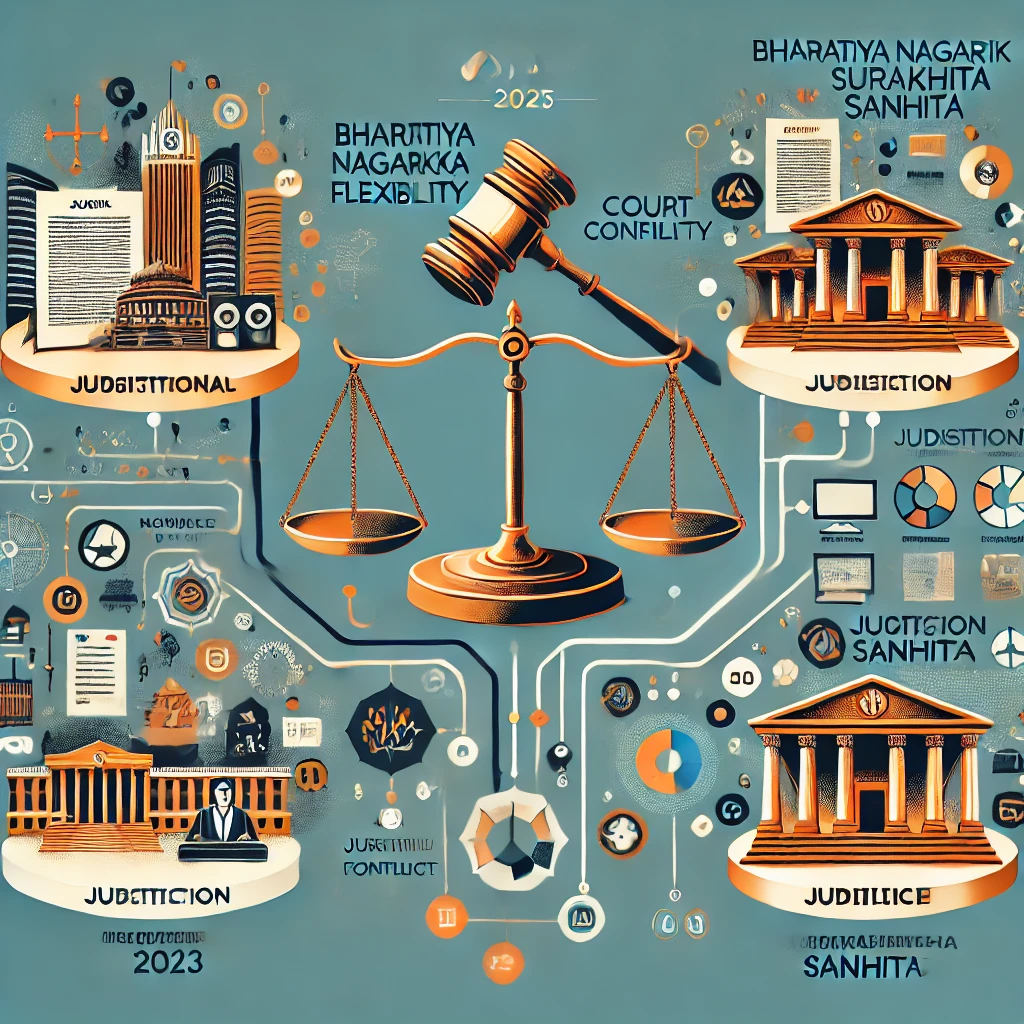
Jurisdictional Flexibility and Resolving Court Conflicts under the Bharatiya Nagarik Suraksha Sanhita, 2023

The Bharatiya Nagarik Suraksha Sanhita (BNSS), 2023, extends jurisdictional versatility within India’s criminal justice system by substituting the Criminal Procedure Code, 1973. The provisions in Sections 187 and 188 make courts’ jurisdictions versatile to hold offenders responsible for offences performed outside or even inside their jurisdictions for extraterritorial offenses if associated with India. To settle court disputes, BNSS authorizes the superior courts, like High Courts or the Supreme Court, to transfer cases under Section 406, ensuring objectivity and efficacy. These measures tackle complexities of multi-jurisdictional crimes, including electronic evidence and contemporary legal issues, with an eye towards a united and responsive judiciary.

CRIMINAL LAW

Provisions for Trial of Multiple Offences under Bharatiya Nagarik Suraksha Sanhita, 2023

The Bharatiya Nagarik Suraksha Sanhita (BNSS), 2023, updates the trial of more than one offence by substituting provisions of the Criminal Procedure Code, 1973. BNSS Sections 218 to 223 enable courts to try connected offences collectively if they are part of the same transaction or series of acts, minimizing judicial delays. Courts can consolidate cases between jurisdictions or order separate trials if justice requires. Particular focus is given to victim rights and speedy trials, with electronic evidence integration provisions. These reforms seek to streamline adjudication to make the criminal justice system in India efficient and fair.

CRIMINAL LAW

Jurisdiction of Courts for Specific Offences under Bharatiya Nagarik Suraksha Sanhita, 2023

The Bharatiya Nagarik Suraksha Sanhita, 2023 (BNSS), which replaces the Criminal Procedure Code of 1973, clearly outlines the jurisdiction of courts for various offenses, ensuring that legal processes are well-defined. Sections 187-189 specify both territorial and hierarchical jurisdiction, determining where cases are tried based on the location of the offense or its seriousness. For example, Sessions Courts are designated to handle serious crimes (Sections 225-237), while Magistrates deal with less severe offenses (Sections 190-199). Additionally, special provisions like Section 198 address offenses related to marriage, customizing jurisdiction according to the nature of the crime. This organized framework aims to improve judicial efficiency and clarity, contributing to the modernization of India’s criminal justice system.

CRIMINAL LAW

Understanding Joinder of Charges under Section 244: Flexible Charging in Criminal Trials

Section 244 of the Bharatiya Nagarik Suraksha Sanhita, 2023 (BNSS) allows flexibility in joinder of charges so that courts can frame charges for offenses revealed by evidence even beyond the first accusations. Substituting CrPC, 1973 provisions, it allows for adaptation during trials so that all offenses germane to the case are covered without requiring distinct proceedings. This discretion is intended to promote judicial effectiveness while protecting the right of the accused to a fair defense, with courts having the authority to modify charges if justice demands. Section 244 demonstrates a dynamic criminal procedure approach

CRIMINAL LAW

Understanding Section 243: Joint Trial for Multiple Offenses in the Same Transaction

Section 243 of the Bharatiya Nagarik Suraksha Sanhita, 2023 (BNSS) provides for concurrent trials for more than one offense in a single transaction, making criminal trials more efficient. Following CrPC, 1973, it provides for a trial of connected offenses by courts in a common trial, given that they are factually connected, making judicial efficiency better. The provision does not prejudice the accused, with courts still having the liberty to direct trials separately if fairness is otherwise affected. This chapter illustrates a pragmatic response to complicated cases, reconciling procedural consolidation with delivery of justice

CRIMINAL LAW

Joinder of Charges: Understanding Sections 241 and 242 of the Bharatiya Nagarik Suraksha Sanhita, 2023

Sections 241 and 242 of the Bharatiya Nagarik Suraksha Sanhita, 2023 (BNSS) regulate joinder of charges in place of CrPC, 1973 provisions. Section 241 authorizes trying several offenses in one trial if committed in one transaction or series, for judicial efficiency with fairness. Section 242 enables joinder of charges against several accused if offenses are part of the same incident, subject to not prejudicing their defense. These provisions reconcile speedy trials with accused rights, allowing courts to order separate trials if justice requires.