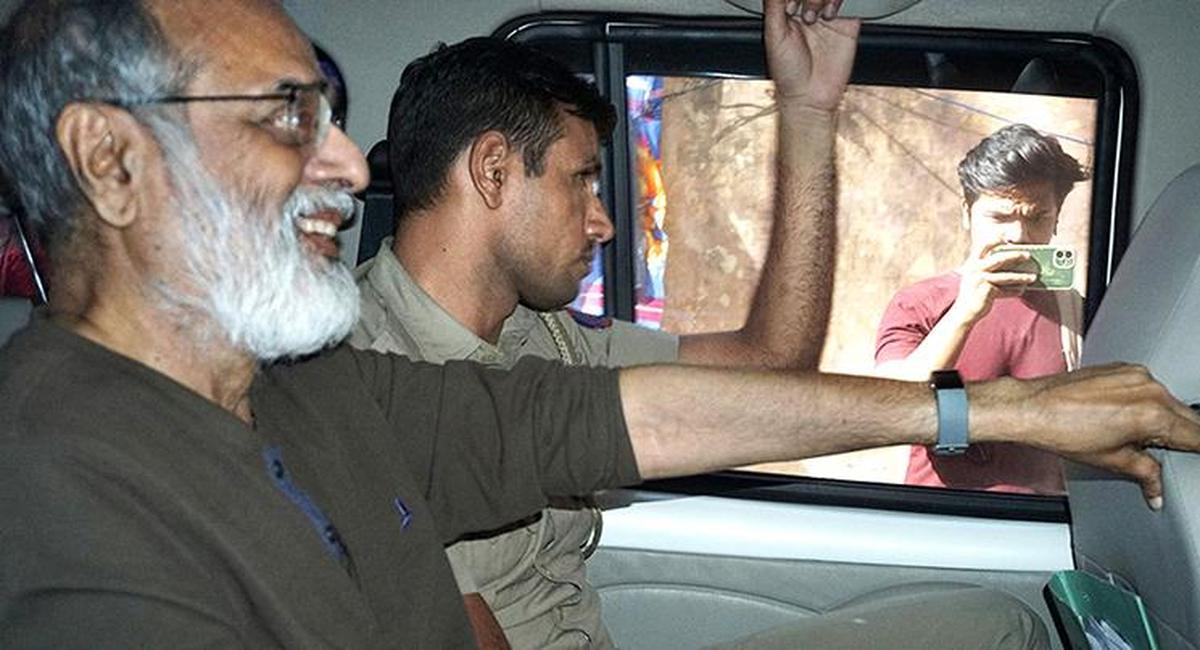
The Delhi High Court just threw out the cases against NewsClick and its founder, Prabir Purkayastha. The dismissal was not a normal or routine one. The investigating agencies’ script was being torn to shreds by Justice Neena Bansal Krishna. She said the whole thing was “a travesty of the rule of law. Take a moment to consider that expression. No sitting judge can use such an uncompromising language against the state machinery, it is very rare. But here we are
The mountain of papers accumulated over the years after raids, interrogations and unceasing financial investigations was examined by the court and nothing was found. No cheating. No offence of misappropriation of money or property. There was no big scheme to defraud the state. It’s a digital newsroom simply looking to balance the books and pay the bills. It’s a huge relief to the portal, legally speaking. But it also raises many questions about the human and monetary expense of the process. A media company was looming towards closure for more than three years. This Wednesday’s verdict, which was originally scheduled for May 29, turns everything upside down.
Anatomy of the Allegations
Let’s go back some steps to see how this mess got so complicated. In August 2020, the Economic Offences Wing of Delhi Police had filed a First Information Report against the news portal. In fact the complaint came from the Ministry of Information and broadcasting. The problem was foreign funds: More specifically, an investment of around 9.59 crores of rupees
The money was provided by a company based in the United States called Worldwide Media Holdings LLC. The police said it was a “shady deal on purpose”. They said that the news portal has overvalued its shares to circumvent the strict foreign direct investment regulations in India. But the Enforcement Directorate came in. At that point, it’s usually pretty challenging for anybody under the scanner. The ED had initiated a money laundering case. They advanced the theory that a significant portion of this overseas money was diverted for other purposes, without notice. The story was downbeat. It seemed like a big corporate scam to defraud the government treasury.
The Timeline Problem
Courtrooms are not made up of heavy narratives, however. And the facts presented by the state here had a massive glaring issue. There just simply was not enough time in the time line. Foreign investment came in in the month of April 2018. There was indeed no cap on foreign investment in digital news media in India at that particular time. The restriction wasn’t implemented by the government until 2019, when it was only 26 percent
It’s not hard to watch the problem while you’re at it and don’t need to be a lawyer. No company can be punished for a rule that they haven’t published yet today. The court made this clear – in a way. A 2019 restriction is not applicable to a 2018 business transaction. In addition, the stock was not a back-room deal. This is a task performed by professionals who do valuations. They applied standard methods which are accepted by the international community and acknowledged by the finance ministry. The deal was agreed upon by two private firms, both of which had economic reasons to make it. When is negotiating a good share price a criminal act?
Normal Business is Not a Crime
The other was the siphoned funds, which were alleged. NewsClick directed the foreign money toward paying salaries, rent, and fees for consultancy services, the investigating agencies said. This seems like an odd line of reasoning to anyone who’s ever operated a successful enterprise. If you have a digital publication, then you need to pay your writers. There is a cost of office space. So, you must pay your technical team consultants. These are routine, normal expenses of operation.
This simple calculus apparently seemed to have been accepted by the High Court judges. Even if a company overspent on these things, it doesn’t automatically mean a crime, Justice Krishna remarked. Not to mention, if there is a case of cheating, someone must be cheated, under the Indian Penal Code. There must be an abused victim. In this case, Worldwide Media Holdings, the people who put the millions into it, never complained. They did not allege to be defrauded. The complaint was made by an informant. The state therefore constructed a “cheating case” with no “cheated party.The state therefore created a “cheating case”, with no “cheated party”. The legal situation is a curious one.
The enforcement directorate is facing an unprecedented situation with the Domino Effect.
When the High Court saw that there was a complete lack in the foundations, the entire structure fell. The sequence of events the law is very clear on. The money laundering case cannot stand alone if the primary police case – the predicate offence – is dismissed. It’s a no-brainer domino effect. The entire case of the Enforcement Directorate was wiped out and the next day.
But the court did not just stop at the technicalities. The judgment went much further than that, and it was a very critical judgment of the nature of the investigation itself. The agencies caught up with no one in the end, after spending a year and a half and sending endless summons and holding multiple employees in for multiple interrogations, they didn’t come up with a single piece of concrete incriminating evidence. It was a “fishing and roving inquiry,” the judge said.
The final judgment is an interesting statement in its wording. The court said the actions were not “in bad faith.” They were an arbitrary attack and abuse of power against free and fair journalism. The agencies attempted to paint the regular acts of business as an enormous criminal enterprise, and had not been able to demonstrate an unlawful purpose.
Looking at the Bigger Picture
This is no victory for one man, one website – it’s a victory for everyone. It showcases the enormous scope of the investigative power. The last several years have been marked by the use of financial crime agencies to target media houses, thus creating a very different environment. First, you take care of basic survival when your office is raided, your devices taken, and your bank accounts investigated, and then you do real journalism.