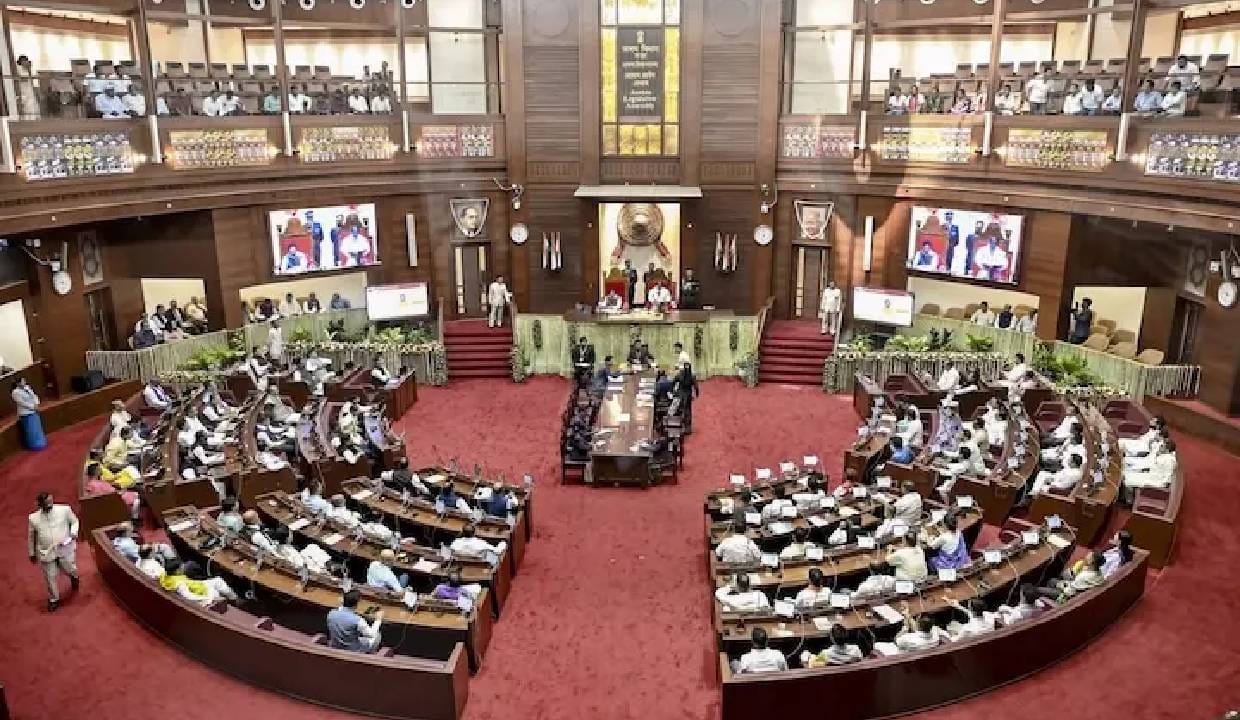
The day was a busy one at Guwahati.It was a busy day at Guwahati.
The Assam Legislative Assembly was very noisy on Monday. The state government introduced a massive bill which would make a significant impact on the way people marry, divorce and leave their estate. Parliamentary Affairs Minister Atul Bora got up to introduce The Uniform Civil Code, Assam, 2026 Bill. He did this inside the formal premises of Chief Minister in the name of Himanta Biswa Sarma. The timing is huge. It’s at the end of the first session of the new 16th assembly, which was elected this past April.
As soon as the bill got to the floor, the opposition was extremely virulent. Congress party, Raijor Dal and Trinamool Congress lawmakers began to protest right away. They said that such a law takes a lot longer. They wanted more consultation with other communities before the final paper was out. The government went ahead with the move anyway, however. Their explanation of this bill is that it’s intended to make incredibly complex personal laws, which are decades old, easier to understand. The official announcement accompanying the bill states it intends to “streamline the laws relating to family structures
Changing the Rules of Marriage
The section of this new legislation that’s garnered the most attention is the full prohibition on polygamy. The law is that it shall be the rule of the land that everyone in the state shall be monogamous, irrespective of their faith. Now marriage is set at a legal age at the national level. Men should be at least 21 years old. The age of women is 18.
The government is not going to interfere in the actual ceremonies, however. However, people are still free to marry as they wish. The bill makes clear that there will be no restrictions on traditional or religious rituals. One can still perform a Vedic Bibah, an Ahom Chaklong, a Saptapadi, a Nikah or an Anand Karaj. The ceremony doesn’t change in any way. The paperwork is changing. All marriages and divorces are now required to be registered throughout the state. Within sixty days of the day of marriage, the marriage memorandum should be taken to the Sub-Registrar of the area where the marriage took place. Without registration, you will be in grave trouble later on
The bill also specifies the grounds for divorce. Rights such as cruelty, desertion and mutual consent are now standard law in all communities. The mother will usually keep custody of the child if the couple separates, if the child is under the age of five.
Tracking Live-In Relationships
Assam government’s approach to live in marriage is very aggressive. For the first time in the state’s history, the new bill places these unmarried couples within the legal context. When a man and a woman decide to live together in the nature of marriage, they can’t just move in without making it a public decision. They have one month to formally register their relationship with government.
The Chief Minister has stated in the bill’s briefing that it is, indeed, for the protection of weak persons. He said that registration is an important safety net, and that it is unavoidable. Where a live-in relationship ends and one person simply leaves, the other person now has a legal right to take the other person to court and request financial support. It’s a major change in the approach of the law to unmarried couples. In addition, any child born to a couple who are living together will be considered to be fully legitimate in the eyes of the law. They enjoy the same rights as the child of a legally married couple. The State will designate certain registrars to process all this new paperwork. You may be fined funds or sentenced to several months’ jail time if you conceal a live-in relationship and do not register
https://www.psuindia.com/top-news/assam-assembly-introduces-uniform-civil-code-bill-547352
Allowing the Tribal Communities to be left alone.
There is one giant exception in this giant document. The Uniform Civil Code will not apply to any of the Scheduled Tribes living in Assam. The government decided to completely ignore them in these new rules.
As per the census, the tribal population comprises about twelve percent of the state’s population. They will continue to practice and have the same customary laws as they do now. The government was certainly not going to risk the delicate social balance that existed between the indigenous tribes. So, they just excised them from all the bill. The law applies to everyone else, including the Muslim population which constitutes approximately one-third of the state.
This is the inheritance and heavy penalties.This is the inheritance and heavy penalties.
The bill also overturns the existing antiquated and religious doctrine regarding inheritance. It brings about a complete uniformity and genderless system of succession. When someone passes away without a will, their property is distributed equally among their “Class-1” heirs. This includes the surviving spouse, children, and the parents of the deceased. Whether you are a son or daughter, it doesn’t matter. This share is the same.
The state is also threatening stiff penalties against anyone attempting to “game” the new system. Second marriage to anyone, when the first spouse lives is now a big crime. Section 82 of the Bharatiya Nyaya Sanhita can lead to up to seven years imprisonment for bigamy and polygamy. Any marriage of someone who is forced into by fraud or coercion is subject to the same seven-year penalty. Even an illegal divorce of one of these marriages may put you in jail for three years.