I have repeatedly said that our national aim must be to transform India from a relatively backward country into a modern industrial giant, like China, for unless we do that we will never be able to abolish our huge socio-economic evils of massive poverty, massive unemployment, appalling level of child malnutrition ( every second Indian child is malnourished, according to Global Hunger Index ), skyrocketing prices of essential commodities like food and fuel, almost total lack of proper healthcare and good education for the masses, etc.
I have also said that this historical transformation cannot be achieved within the framework of our present Constitutional system but will require a mighty protracted people’s struggle ( jan sangharsh ), lasting for 10-15 years, led by patriotic, selfless, modern minded leaders, in which tremendous sacrifices will have to be made, culminating in a historical people’s revolution ( jan kranti ), after which a political and social order will be set up under which there is rapid industrialization and steady rise in the standard of living of the people.
https://indicanews.com/justice-markandey-katju-the-coming-great-revolution-in-india
https://indicanews.com/justice-markandey-katju-independence-day
https://indicanews.com/justice-markandey-katju-a-call-to-indian-patriots
https://www.linkedin.com/pulse/india-heading-revolution-markandey-katju
So the beginning of the process leading upto the people’s revolution has to be a mighty people’s struggle. Without this jan sangharsh, we can achieve nothing. Even if we have patriotic modern minded leaders, they will be like generals without an army.
For the people’s struggle it is absolutely essential that there is unity among our people. However, today we are unfortunately divided on religious, caste, lingual or racial lines, which division, hatred, and polarization was started by our British rulers by their policy of divide and rule, and was continued after 1947 by our political leaders for vote banks. Till this state of affair ends, there can never be a genuine people’s struggle which will lead to our emancipation from our great socio-economic ills.
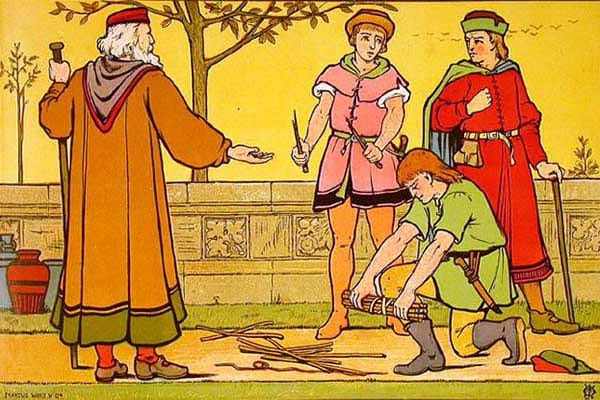
It is here that Aesop’s fable of the bundle of sticks, as given below, becomes important :
https://www.thoughtco.com/aesops-fable-the-bundle-of-sticks-118589
India has tremendous diversity—so many religions, castes, languages, regions, ethnic groups, etc. So to remain united we must know what our forefathers have taught us in this connection.
In the Shantiparva of the Mahabharat, Bheeshma Pitamah tells Yudhishthir
” Bhedey ganaa vineshyanti, bhinnaastu sujayaah parah
Tasmaat sanghyaatayegen prayateran ganah sada “
i.e.
” Republics have been destroyed only because of internal divisions among its people.
It is only when there are internal divisions among the people that
an enemy can destroy it.
Hence a Republic should always strive to achieve unity and good
relations among its people “
Bheeshma Pitamah also said :
“Teshaam ayonyabhinnaanaam swashaktim anutishthataam
Nigrahah panditaih kaaryah kshipramev pradhaanatah”
which means :
” Therefore the wise rulers in a republic should crush the wicked persons who try to divide the people”
( Bheeshma Pitamah’s upadesh to Yudhishthir in Shantiparva of Mahabharata, Chapter 107/108, shloka 14 )
In the Pali Buddhist work ‘The Mahanibbana Sutra’ the importance of unity among the people is mentioned. When King Ajaatshatru of Magadha was planning to attack the Vajjian republic he sent a messenger to the Buddha for his opinion. Instead of speaking to this messenger, the Buddha said to one of his disciples ” Have you heard Anand that the Vajjians foregather often and frequent the public meetings of their clan? So long Anand, as the Vajjians so foregather, and so frequent, the public meetings of their clan, so long they may be expected not to decline, but to prosper”. In other words, the Buddha said that the Vajjians cannot be defeated since they are united.
When Alexander the Great invaded India, his army faced its fiercest resistance from the armies of republics which had unity among their people, e.g. the Mallas, and gained victory over them only after suffering huge casualties.
It was disunity among our people which enabled foreigners to conquer us
https://www.hastakshepnews.com/2023/11/justice-katju-says-indians-will-have-to.html
In recent times, the best demonstration of the strength which unity gives, has been given by Iran, which could not be defeated by the most powerful military nation of the world, the USA, because the Iranian people are solidly united.
Unity of our people does not mean that they must give up their religion, language or culture. It means that despite our diversity we must not have hatred against other religions, communities, etc, and instead have brotherly/sisterly relations with each other, and must help each other
In this connection I have written the article below :
https://www.hastakshepnews.com/2026/07/what-does-har-quom-raast-raahe-deen-e.html
So Hindus, please realise that Muslims are not your enemies, nor are they anti-national, and similarly, Muslims, please realise that Hindus are not your enemies. The real enemies of all of us, and the real anti-nationals, are those who seek to polarise society and incite religious, caste or racial hatred among us for getting votes, and acquire power and pelf.
The story of the bundle of sticks is hence extremely important at this crucial stage of our country’s history, and must always be kept in mind.
Attachments area