Current Legal Update

Does India Have Robust Laws to Regulate Online E-Gaming and Gambling ?

The environment of online gaming and gambling in India is undergoing a substantial upheaval. In response to the rapid expansion of digital platforms, the government has enacted a number of rules and regulations which are intended to regulate and control this industry. Among the goals of these measures are to differentiate between games of skill and games of chance, to guarantee equitable taxation, to safeguard users from potential hazards, and to encourage responsible gaming activities. The regulatory structure, on the other hand, continues to be complicated because of the fact that there are overlapping jurisdictions between central and state agencies. This results in difficulties in terms of enforcement and compliance. This article goes into the existing legal landscape, recent changes, and ongoing efforts to create a cohesive regulatory environment for online gaming and gambling in India. It also discusses the current state of the legal landscape.

Current Legal Update

Ali Khan Mahmudabad Controversy: Why His Operation Sindoor Remarks Sparked Nationwide Debate

Ali Khan Mahmudabad, a professor at Ashoka University, has recently become the focal point of a national debate as a result of his comments regarding Operation Sindoor, which is a military operation that India carried out in response to the Pahalgam terror incident. His remarks, which called into question the manner in which the government handled the operation and brought attention to concerns with the rights of minority groups, resulted in his imprisonment and triggered a widespread debate on the subject of freedom of expression, national security, and the relationship between academics and political discourse. In this article, the specifics of the dispute, the responses it provoked, and the broader consequences for Indian society are discussed in depth.

Supreme Court

Court Says RBI Right to Set Pension Start Date: M.T. Mani v. RBI – Justices Oka and Justices Masih Rule

In the case of M.T. Mani v. RBI, the Supreme Court maintained the 2020 pension system of the Reserve Bank of India (RBI), stating that the denial of retrospective payment was justifiable owing to financial constraints. In topics pertaining to policy, it highlighted the importance of judicial restraint and prohibited selective approval of scheme terms.

Supreme Court

Who Can Be Punished for Pollution? Supreme Court Answers in Dr. I.S. Tomar Case: Justices Oka and Justices Masih JJ

In the case of Dr. I.S. Tomar v. Invertis University, the Supreme Court of the United States ruled that public officials cannot be punished without evident authority or evidence, while at the same time affirming institutional culpability for environmental damage caused by municipal mismanagement. This decision established liability under the National Green Tribunal Act.

Supreme Court

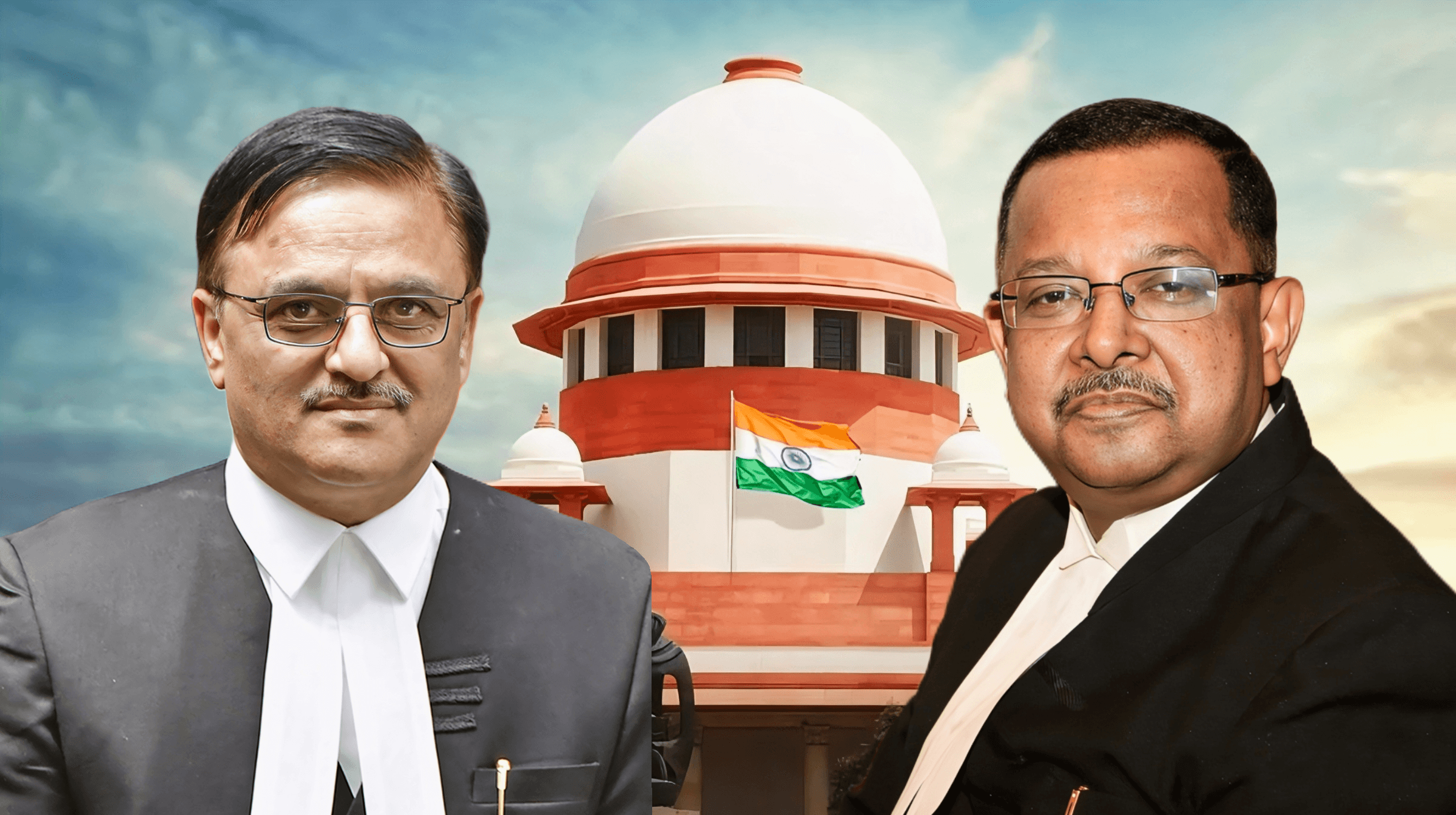
Supreme Court Ends Long Legal Battle in Sulthan Said Ibrahim v. Prakasan : Judgement by Justices Pardiwala and Justices Mahadevan JJ

In the case of Sulthan Said Ibrahim v. Prakasan, the Supreme Court supported the principle of res judicata, rejected claims of belated tenancy, and required possession delivery in accordance with a specified performance judgment. This decision strengthened the concept of finality in litigation and reduced the amount of procedural abuse that occurs in persistent property disputes.