It’s a strange thing about technology, it’s what makes us lazy just at the right time. It’s something we’ve all experienced in some form. You enter a complex query into a new digital domain and it returns a well-formatted and highly articulate answer. It looks confident. It sounds authoritative. You believe it on your own without any doubt. Now what if that unquestioning, reflexive trust carries over to the courtroom?
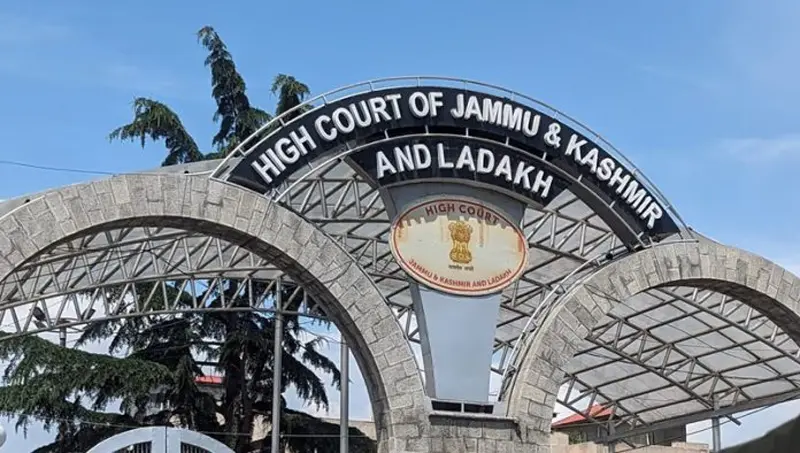
The Jammu and Kashmir and Ladakh High Court just gave the legal fraternity a big slap in the face. On 6th June 2026, Justice Wasim Sadiq Nargal gave a judgment that transcends the case his desk had just before him. He roosted a rising, somewhat frightening phenomenon in the lower federal courts, one that could not be stopped. Judges are using AI and untested digital research tools blindly in writing their legal orders. And sometimes, the machines are simply making things up out of thin air.
The matter was, however, a routine, old controversy between Woodland House School, Srinagar and Shakeel Ahmad Malik, a former employee of the school. It was a challenge on an execution order for payment of salary. There’s no real big deal on the outside. However, on examining the papers of the trial judge, Justice Nargal detected something very amiss in the precedents cited by the trial judge. The citations appeared authentic. They were structured in the typical legal format. They simply didn’t really exist.
The pursuit of a ‘Diligent Search for Nothing’
Courtrooms rely exclusively on precedent. Today you deliberate what the higher powers did yesterday, and what they decided was a way to resolve similar, difficult conflicts. The trial court ruling in this employment case, therefore, was very dependent on two main findings which the presiding officer had taken the trouble to include in his decision and which he could be proud of. The glaring problem? Justice Nargal did an independent verification of these supposedly foundational cases. The entire argument of the trial court was a house of cards.Immediately on a casual reading, the argument of the trial court was a house of cards.
In one case, the high court pointed out the citation was merely a minor error or included a mistype. No trace of the title of the decision could be found. The higher court’s desk staff conducted a careful investigation, but the judgment wasn’t found in the official records as presented. This was a fake case. A legal-oriented hallucination. In the second case a decision of similar title was ultimately found in the archives but the reference given with it led nowhere close to the decision itself.
The series of events is very easy to follow. The heavy workload of a judicial officer, overwhelmed with an overwhelmingly large number of cases from the day-to-day grind, resorts to a digital research database or an AI tool to look up relevant case law in a timely manner. The software is only too willing to give what the user wants: a nice and convincing extract. The officer copies, pastes and signs. But plausibility is not a synonym of truth. Algorithms are basically designed to provide you with an answer, whether it has to use scraps of information that have nothing to do with the question.
Need Help With Your PhD or LLM Thesis?
Explore our thesis and dissertation writing support services for PhD and LLM students. Get subject-specific academic assistance for your research project.
Explore Our Services →Slavish to Man’s Judgement
If Justice Nargal was not averse to a direct reference to the issue, he was not going to be restrained in doing so. The court officially recognized the ubiquitous and growing role of digital platforms in law practice. It’s certainly not a call to return to manual library searching with dusty index cards. These are fantastic pieces of technology for fundamental work. However, the judge drew an extremely firm line, which was inviolable. You cannot replace the need for assistance. A machine cannot be used to resolve a complicated human disagreement.
Overall, it was apparent from the bench that the message was one. All propositions of law, factual statements and extracts produced by an artificial intelligence platform are to be checked by a human being. One has to make sure that the right and reliable sources are consulted before entrusting the computer to write an order which could impact an individual’s life, salary or freedom.
This warning is not just in isolation, either. The Supreme Court AI Committee made a preliminary draft of court rules governing the use of such technologies just a day or two before this decision. The official position of the top court is quite a reflection on Justice Nargal’s impatience. The draft clearly states that AI systems are to be used “in an assistive manner. They have no substitute for the independent power of a properly established judicial officer. Humans have the final say over determining facts and delivering justice.
The Authoring Judge Holds the Bag
Thus, when a robot hallucinates a Supreme Court decision, who is to blame? The Jammu and Kashmir High Court and the Ladakh High Court have said that the authoring judge has “the bag” in his hands. You sign it, you own it. You are signing to confirm that the above is true.
As a result of this embarrassing fiasco a directive was issued by the High Court for the State of Uttar Pradesh. It’s so simple the instructions had to be spelled out, but that’s a sign of how poorly digital literacy is going within the legal system. All precedents cited in the judicial order must be complete, accurate and verifiable. Moreover, given that a previous judgment has actually been the basis of a subsequent judgment, judges are now encouraged to quote the material from the previous judgment, without merely copying and pasting what an algorithm summarized for them. Cross-verification is no longer merely a law-school ritual. It’s a mandatory and strict protection.
A Necessary Friction
The two forces collide in obvious ways because of the fast pace of technology and the slow pace of the law. AI is designed from the beginning to streamline the process. It provides answers within seconds which you can use for your daily routine. But the justice system is built on the very friction that is the foundation of that. Arbitrary decisions are prevented by the slow grinding of facts being verified, full judgments being read, and agonizing over the precise wording of a statute.