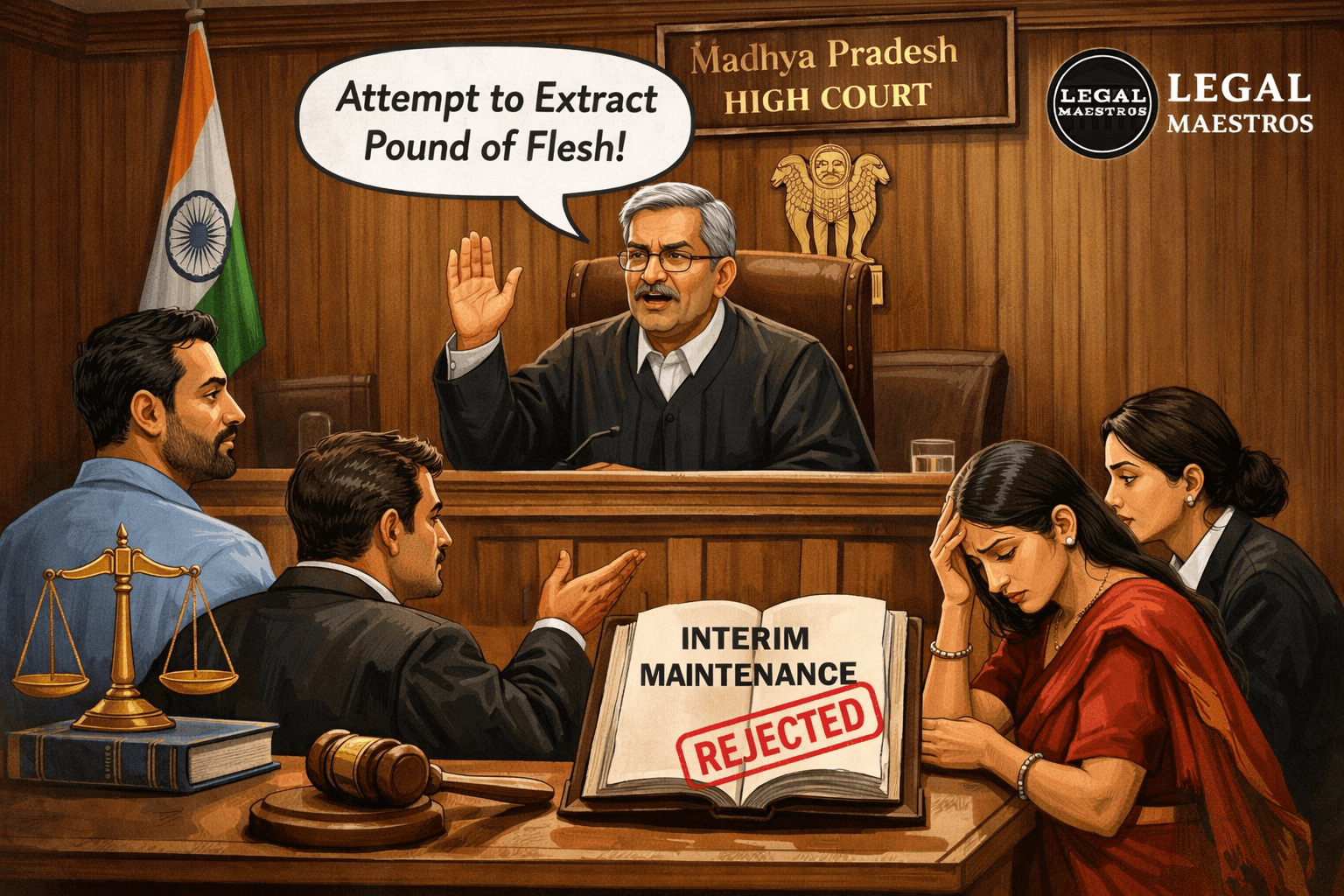
“Attempt to Extract Pound of Flesh”: Madhya Pradesh High Court Rejects Woman’s Plea for Interim Maintenance from Husband
Introduction A recent case in the Madhya Pradesh High Court, where a woman petitioned to obtain an interim maintenance payment…
Keeping Pace with Legal Change
Introduction A recent case in the Madhya Pradesh High Court, where a woman petitioned to obtain an interim maintenance payment…
Introduction The Madhya Pradesh High Court recently gave an important decision clarifying the position of law regarding marriage under Muslim…
Ban to be enforced Strictly Directs High Court. The Madhya Pradesh High Court at Indore has made a very tough…
The Madhya Pradesh High Court has made a scathing remark about the recent cough syrup tragedy that had claimed the lives of many children in the state. During a recent hearing, the court called the incident one of the most shocking cases in the history of medicine.
A new Bollywood courtroom film, ‘Haque’ has been embroiled into a severe legal tussle just days before its release. The daughter of the deceased Shah Bano, Siddiqua Begum Khan, has petitioned the Madhya Pradesh High Court to stop the film without any delay
Recently, the Madhya Pradesh High Court discussed whether or not evidence that was collected unlawfully might be admitted into court in cases involving marital conflicts. It found that WhatsApp communications, even if they were purportedly obtained without authorization, are admissible in Family Courts if they are significant. This decision upheld Section 14 of the Family Courts Act, which relaxes rigorous evidentiary requirements for the sake of effective conflict settlement.
A swift legal and judicial backlash was sparked as a result of the insulting remarks made by BJP minister Kunwar Vijay Shah against Colonel Sofiya Qureshi. These remarks were made in accordance with the Bharatiya Nyaya Sanhita, 2023. The authorities brought attention to the serious nature of communalized and defamatory speech by invoking Sections 152, 196(1)(b), and 197(1)(c). This speech poses a threat to national security, public tranquility, and integration. The First Information Report (FIR) and the subsequent judicial inspection both serve to convey the message that political speech is associated with significant obligations and that the new criminal code will not hesitate to penalize instances of transgression. As India continues to negotiate the issues of diversity and democracy, the Qureshi case stands as a landmark in terms of defining the boundaries of what constitutes acceptable public debate and protecting the dignity of its individuals and institutions.