CRIMINAL LAW

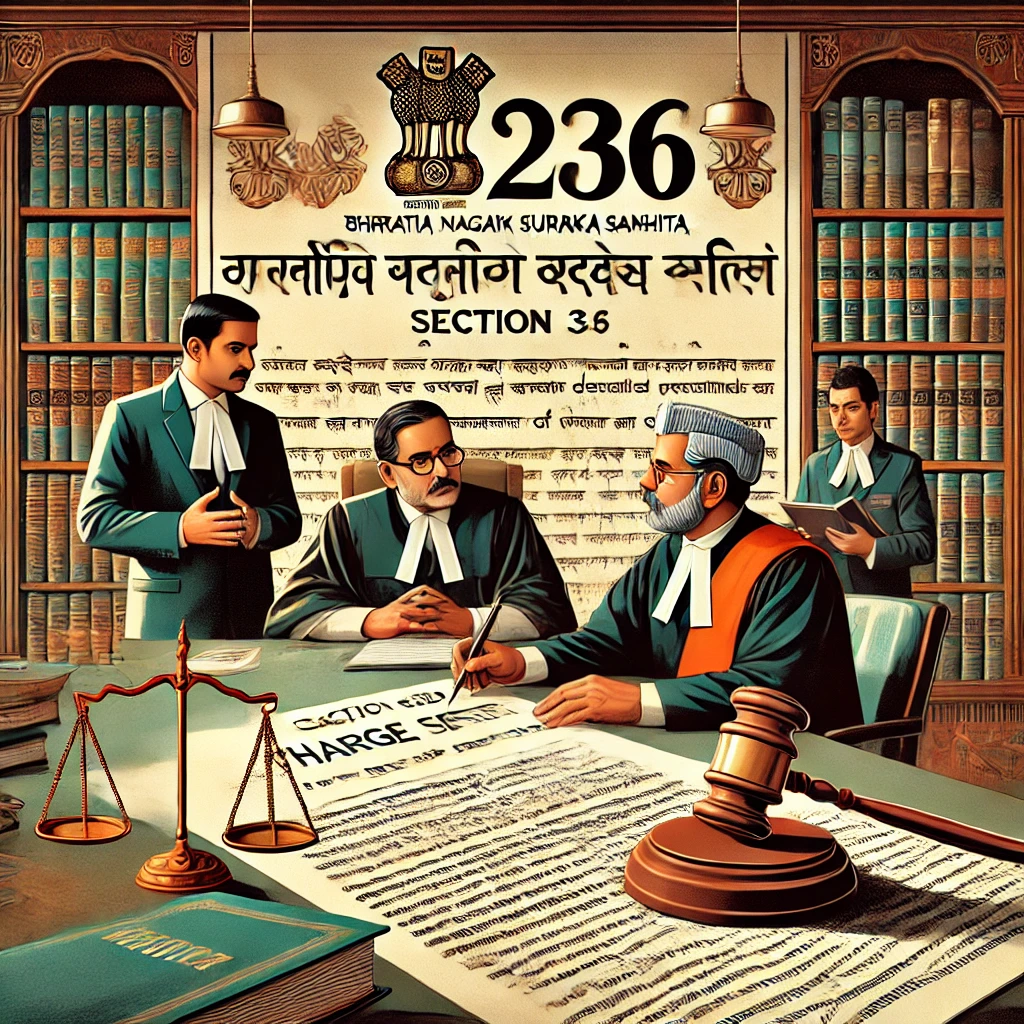
Section 236 of the Bharatiya Nagarik Suraksha Sanhita, 2023: Detailed Particulars for Clear Charges

Section 236 of the Bharatiya Nagarik Suraksha Sanhita (BNSS), 2023, directs specific details in criminal charges for the sake of clarity and transparency, overriding the CrPC, 1973. Prosecutors must state definite facts—such as the mode, means, or circumstances of the offence—beyond minimum legal references. The provision is designed to banish uncertainty so that the accused may fully grasp allegations and mount a defense. By imposing detailed charge framing, Section 236 promotes judicial effectiveness, minimizes trial mistakes, and maintains justice, representing a progressive development in India’s criminal justice reforms.

CRIMINAL LAW

Practical Implications of the Charge Provisions in the Bharatiya Nagarik Suraksha Sanhita, 2023

The provisions for charges in the Bharatiya Nagarik Suraksha Sanhita (BNSS), 2023, have important practical effects on India’s criminal justice system. By requiring specific framing of charges under Section 234, the BNSS ensures the accused knows what is alleged against them, minimizing vagueness and trial delays. Joinder of charges simplifies multiple-offence cases, improving judicial efficiency. Courts can correct mistakes without prejudicing rights, striking a balance between fairness and expediency. These provisions enhance prosecution clarity, enhance defense readiness, and facilitate speedier delivery of justice, keeping pace with contemporary legal expectations in place of the CrPC, 1973.

CRIMINAL LAW

Handling Complaint Cases and Police Investigations: A Deep Dive into Section 233 of the Bharatiya Nagarik Suraksha Sanhita 2023, 2023

Section 233 of the Bharatiya Sakshya Adhiniyam, 2023, deals with the management of evidence in police investigations and complaint cases, with the purpose of updating India’s evidentiary system. It provides procedures for the admission of electronic records, statements of witnesses, and forensic evidence in the course of inquiry or trial, ensuring their authenticity and reliability. The section authorizes courts to consider evidence from investigations with strict compliance with standards of fairness and admissibility. It substitutes provisions of the Indian Evidence Act and is compatible with technological advancements and judicial efficiency.

CRIMINAL LAW

Dismissal of Complaint by Magistrate: An Analysis of Section 226 under Bharatiya Nagarik Suraksha Sanhita, 2023

This discussion examines Section 226 of the Bharatiya Nagarik Suraksha Sanhita (BNSS), 2023, dealing with the rejection of complaints by magistrates. Replacing the provisions of the Criminal Procedure Code, 1973, Section 226 authorizes magistrates to reject complaints that are not made with proper grounds after preliminary scrutiny, for judicial efficiency and avoiding frivolous litigation. It weighs access to justice against the necessity of sifting out frivolous claims, providing magistrates with discretion according to evidence and legal merit. This research analyzes the procedural requirements, implications for complainants, and its place in India’s developing criminal justice system.