BNSS

Sentencing Powers Under the Bharatiya Nagarik Suraksha Sanhita, 2023: An Overview of Sections 22 to 25

In accordance with the Bharatiya Nagarik Suraksha Sanhita, 2023, this article provides an explanation of the sentencing powers that are held by several criminal courts in India. It examines the limits and jurisdiction of High Courts, Sessions Judges, and Magistrates in the process of imposing punishments, including procedures for defaulting on a fine and multiple convictions.

CRIMINAL LAW

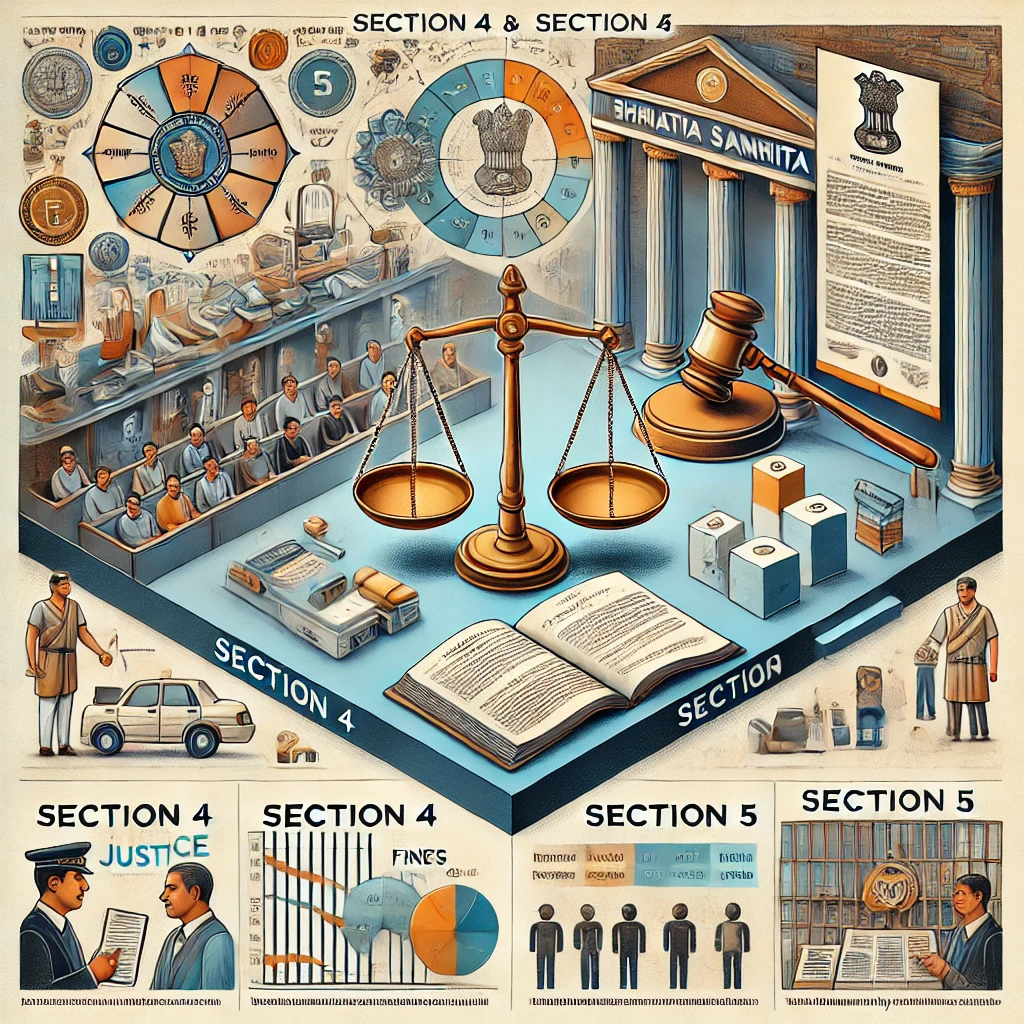
Section 4 and Section 5 of the Bharatiya Nyaya Sanhita 2023 Explain Different Types of Punishments and Their Commutation

The Bharatiya Nyaya Sanhita, 2023, provides a systematic framework of punishments to deliver justice. It harmonizes harsh punishments with equity by enabling the government to alter sentences when needed. With provisions covering punishments from death penalties to community service, the law seeks to deliver justice to match the crime’s gravity as well as permit mercy and reconsideration in meritorious cases.

CRIMINAL LAW

The Legal and Constitutional Framework of the Death Penalty in India

This abstract discusses the legal and constitutional framework of death penalty in India, tracing it through judicial interpretation and legislative amendment. It outlines key Supreme Court decisions such as Bachan Singh v. State of Punjab which established the doctrine of ‘rarest of rare’ for the capital punishment case and delves into the tension between justice and human rights. The paper also takes into account the public opinion, the role of executive clemency and the influence of international human rights norms, on Indian law.