Introduction
A major ruling that was made by the Supreme Court of India in the case of State Bank of India vs Amit Iron Private Limited and others was on whether or not borrowers should be accorded a personal hearing prior to their accounts being termed as a fraud.
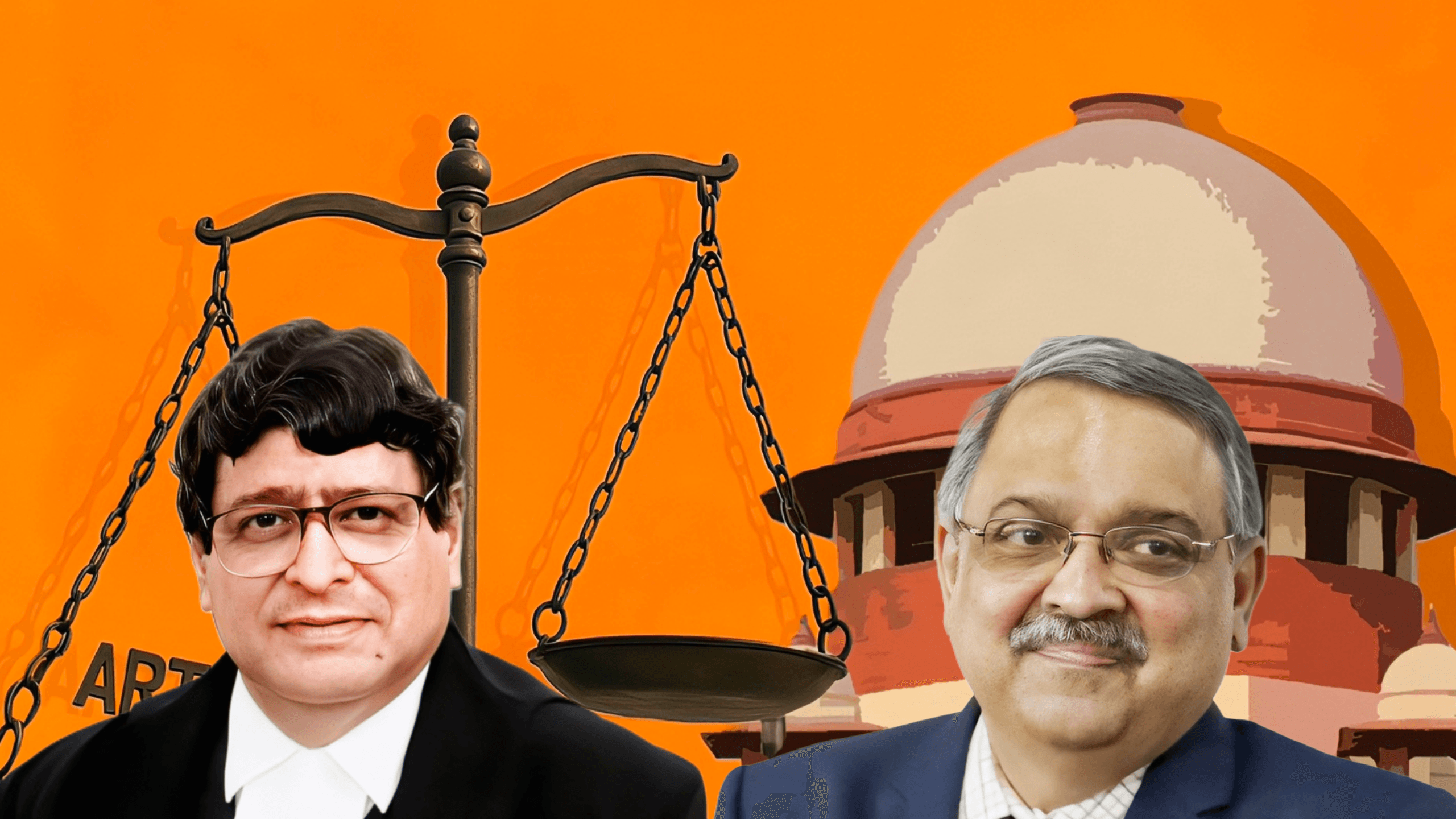
This decision was made by Justice K. V. Viswanathan and was very sensitive in balancing the rights of the borrowers and the necessity of safeguarding the banking system.
Background of the Case
The case was occasioned when the banks such as the State Bank of India categorized some of their loan accounts as being classified as fraud according to rules issued by the reserve bank of India.
Borrowers objected to such practices in the various High Courts on the basis that:
They were not even accorded a personal hearing when such a heavy decision was made.
They too were not given full forensic audit reports.
The High Courts sided with the borrowers and ruled that one had to hear them personally and fully disclose before the declaration of an account as defrauded.
The banks were dissatisfied with such rulings and they turned to the Supreme Court.
Key Legal Issues
The Supreme Court had three significant questions to be addressed:
The question of whether the borrowers have the right to a personal hearing before their account is pronounced as fraud or not.
Whether it is sufficient to provide a show cause notice and to take into consideration a written reply to meet the natural justice.
The question of whether the banks are obliged to avail the complete forensic audit report to the borrower or not.
Understanding RBI Guidelines
The Court reviewed Master Directions of RBI of 2016 and 2024, the directions that regulate the classification of fraud.
These guidelines require banks to:
Issue comprehensive show cause notice.
Allow the borrower time to react.
Consider the reply.
Grant a rational order to justify the decision.
These rules are meant to bring about equity and at the same time allow timely identification and reporting of fraud.
Arguments of the Banks.
The banks contended that:
There is no necessity of personal hearing according to the principles of natural justice.
Fairness is adequate in written responses.
Personal hearing in each case would slow down the detection of frauds.
These delays may enable fraudsters to conceal evidence or misuse money.
They reiterated the fact that the classification of fraud is done according to documents and financial records, not on oral arguments.
Arguments by the Borrowers
The borrowers contended that:
This is because fraud declaration has severe repercussions, such as reputation loss and financial market ban.
They argued that natural justice should have a personal hearing.
They also claimed that the complete forensic audit audit report ought to be provided to them.
In their opinion, in the absence of these provisions, the procedure is not fair.
Supreme Court’s Analysis
The Supreme Court cited its previous ruling in the case of State Bank of India vs Rajesh Agarwal that had already brought the element of natural justice in classifying fraud.
The Court explained that natural justice is not an absolute notion and relies on the circumstances.
It observed that:
Delivering a show cause notice, taking into account the response of the borrower and a reasoned order is enough to meet natural justice.
The phrase hearing is not always used to refer to a personal or oral hearing.
The requirement of being heard can be met through a written representation.
On Personal Hearing
The Court explicitly believed that:
They are not subject to any compulsory provision of a personal or oral hearing before an account is declared as fraud.
It argued that personal hearings were to be made mandatory, which would slow down the process and be detrimental to the interest of the people, considering that the banking system had a high number of fraud cases.
Another worrying fact highlighted by the Court was the increasing number and worth of banking frauds in India.
On Forensic Audit Reports.
The Court determined that:
Banks will not be expected to deliver the complete forensic audit report.
It is enough to provide the relevant findings or conclusions.
This is fair and at the same time keeps the information confidential and efficient.
Mistake in Supreme Court Decisions.
The Supreme Court held that High Courts misconstrued the former case of Rajesh Agarwal.
It clarified that:
The previous ruling did not require individual hearings.
The High Courts had increased the need of natural justice beyond what was required.
Final Judgment
The banks had appeals that were permitted by the Supreme Court.
It held that:
Personal hearing is not obligatory.
It is enough to have show cause notice, written reply and reasoned order.
There is no need to publish full forensic audit reports.
This reinstated the legitimacy of the banks in the categorization of the accounts as fraud.
Implications of the Judgment.
This ruling is significant to banks and borrowers.
It makes sure that banks are able to respond promptly to fraud without having to jump through unneeded hurdles.
Concomitantly, it defends the borrowers because they are accorded a reasonable right to respond.
This decision creates a balance between the banking system and efficiency and fairness.
The ruling of the Supreme Court supports the idea that the natural justice is not necessarily the one that involves oral hearings. In most instances, it suffices to have written procedures that are just and open.
This ruling will long-term influence the banking regulation and prevention of fraud in India.
Keywords
Justice K V Viswanathan, Supreme Court, banking fraud, RBI guidelines, fraud classification, natural justice, personal hearing, forensic audit, State Bank of India case, Rajesh Agarwal judgment.