The Morning of the Re-Test
The National Testing Agency organized a massive re-examination for NEET UG candidates on June 21. Everyone knew the stakes were incredibly high. The original May 3 exam was ruined by widespread allegations of leaked question papers and compromised test centers. The board canceled those results and scrambled to set up a new test day. They promised the public that security would be tighter than ever before. They deployed extra guards and installed strict screening measures. But this obsession with locking down the testing centers created immediate chaos at the front gates. Students arrived stressed about physics and chemistry. Instead of finding their desks quietly, they walked straight into loud confrontations over religious clothing and confusing dress codes. The rules existed on paper. The security teams on the ground had no idea how to read them.
The Standoff in Rajasthan
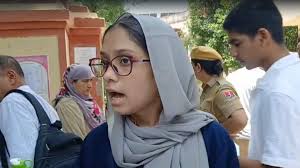
Things unraveled quickly in Ajmer. The city hosted 15 different examination centers for the re-test. Nine were located right in the city and six were out in Kishangarh. A young candidate named Kulsum Bano traveled from her home in Beawar to take her test at one of the Ajmer locations. She arrived at the gates wearing a burqa. The local security personnel blocked her path. They flatly told her she could not enter the premises in that attire. They demanded she take off her burqa and her dupatta before they would even consider letting her through the metal detectors.
She stood her ground. It was an incredibly tense standoff. Kulsum pointed out that she wore the exact same burqa when she took the first version of the exam weeks earlier. The guards at that previous center never said a word about it. She made it clear to the reporters milling around outside that her identity was not up for debate. She told them she would simply walk away and skip the test entirely if they forced her to remove her religious clothing. The local cops watched the argument unfold. CO North Shivam Joshi eventually had to step in as the crowd outside started paying closer attention.
Her father was waiting near the perimeter. He realized the security guards were just blindly enforcing a dress code they didn’t fully understand. He pulled up the official NTA information bulletin on his phone. He scrolled down and shoved Rule 18 in front of the officials. That specific rule explicitly allows candidates to wear traditional and religious clothing. The only strict requirement is that female candidates wearing such attire must be thoroughly checked by female security staff in a completely private enclosure. The guards looked at the rule. They realized they were in the wrong. The higher authorities at the center gave the green light. Female staff frisked Kulsum and finally allowed her to walk into the examination hall wearing her burqa.
Ahmedabad Sees Similar Chaos
While Kulsum was fighting to get inside her center in Ajmer, a completely different dress code disaster was playing out in Gujarat. The Vastrapur area of Ahmedabad was hosting thousands of nervous students. Around 10,445 candidates were scattered across 23 centers in the city. The exam was scheduled to run from 2:00 PM to 5:15 PM. Parents dropped their kids off and waited nervously near the barricades.
Security guards at the Vastrapur center were aggressively frisking candidates. Following NTA guidelines, they allowed several Muslim girls wearing hijabs to enter the building after completing the required security checks. But the guards suddenly changed their approach when Hindu students approached the gates. Many of these candidates were wearing traditional sacred threads around their wrists and necks. These threads are known locally as kalava or kanthi. The security staff decided on the spot that these threads violated the dress code. They pulled out scissors and started physically cutting the sacred threads off the students’ wrists. They forced others to remove their kanthi before stepping inside.
Crowds Gather at the Gates
The parents watching from the street exploded in anger. They saw a blatant double standard playing out right in front of them. Guards were letting students in hijabs walk through the doors while aggressively stripping religious items off Hindu students. The shouting started immediately. The parents demanded to know why the rules were being applied differently based on the religion of the teenager taking the test.
Word spread quickly through the neighborhood. Members of a local Hindu organization rushed to the Vastrapur exam center to confront the security teams. At the exact same time, members of the All India Majlis-e-Ittehadul Muslimeen arrived at the location. The exam center gates turned into a flashpoint for a massive religious and constitutional argument. The shouting matches got louder as the clock ticked closer to the start of the exam.
Assistant Commissioner of Police Jayesh Brahmbhatt got the call and rushed to the scene with a heavy police presence. His officers had to physically separate the two groups. The cops grabbed two individuals from the Hindu organization who were actively causing a disturbance near the gates. They threw them in a police vehicle and took them to the station just to defuse the immediate threat of violence. They held them for a while to let tempers cool and released them later without filing charges.
Brahmbhatt then had to mediate the core issue. He sat down with the furious parents and the clueless security personnel. He explained that the National Testing Agency has a massive list of rules regarding what items can enter the building. The private guards hired to watch the doors had simply misunderstood the briefing. They applied the rules inconsistently out of pure ignorance. The police officers walked the security staff through the actual NTA rulebook. They managed to get the guards to apply the guidelines uniformly. The tension slowly drained away and the testing finally began.
Alwar Center Mix-Up
The administrative mess was not just limited to clothing disputes. In Alwar, another candidate almost missed the re-test entirely because of terrible communication from the board. A young girl showed up at the exact same testing center she used back in May. She handed her old admit card to the verification staff. They looked at it and told her she was at the wrong building. The NTA had completely changed her roll number and her designated exam center for the re-test without making it obvious.
The staff checked the live online database. They realized her actual testing center was located in Rajgarh. That was roughly 40 kilometers away from where she was currently standing. Her family had already dropped her off and driven away. She was stranded at the wrong center with the clock ticking down. The local school authorities had to scramble. They grabbed a vehicle and rushed the frantic student across the district to get her to Rajgarh before the doors locked.