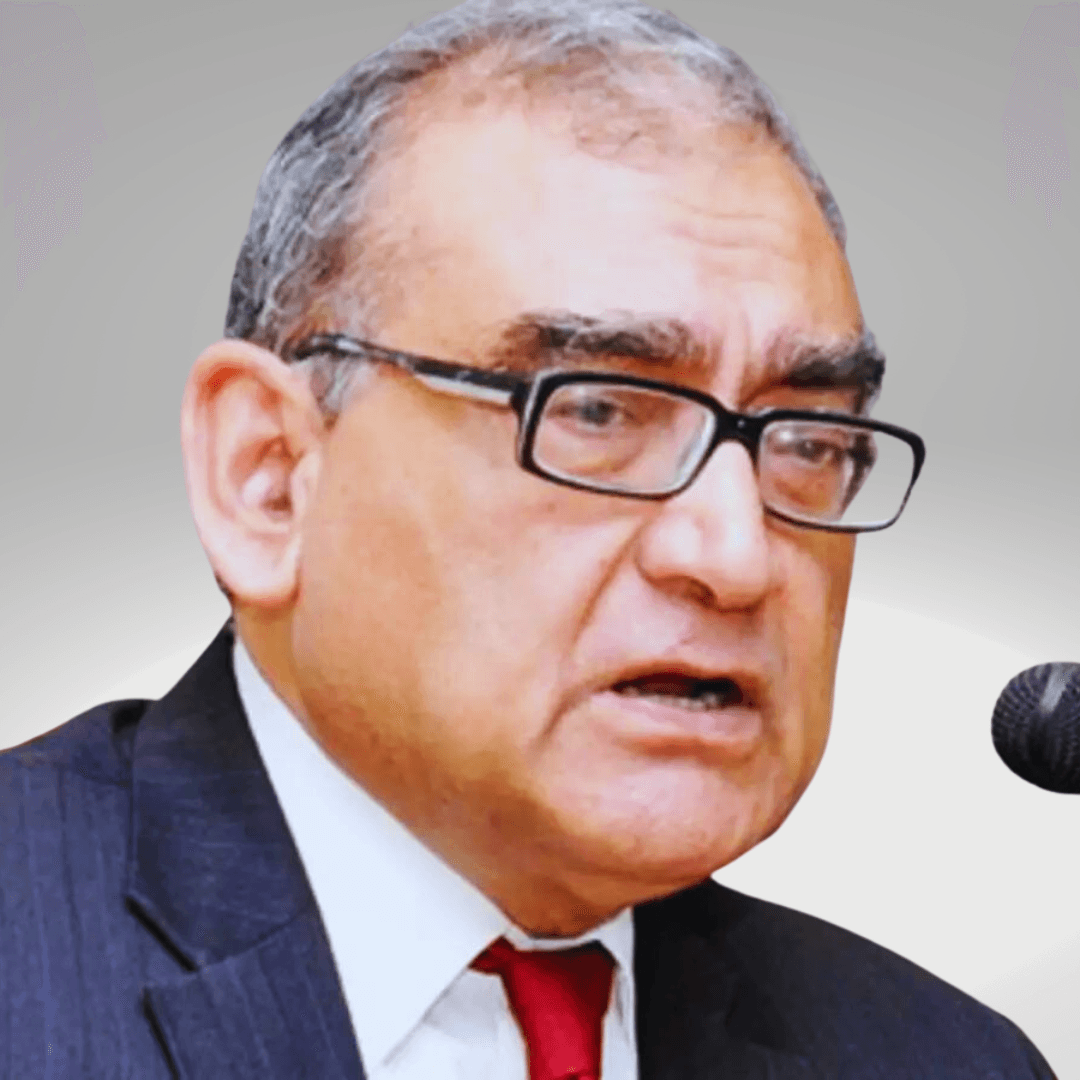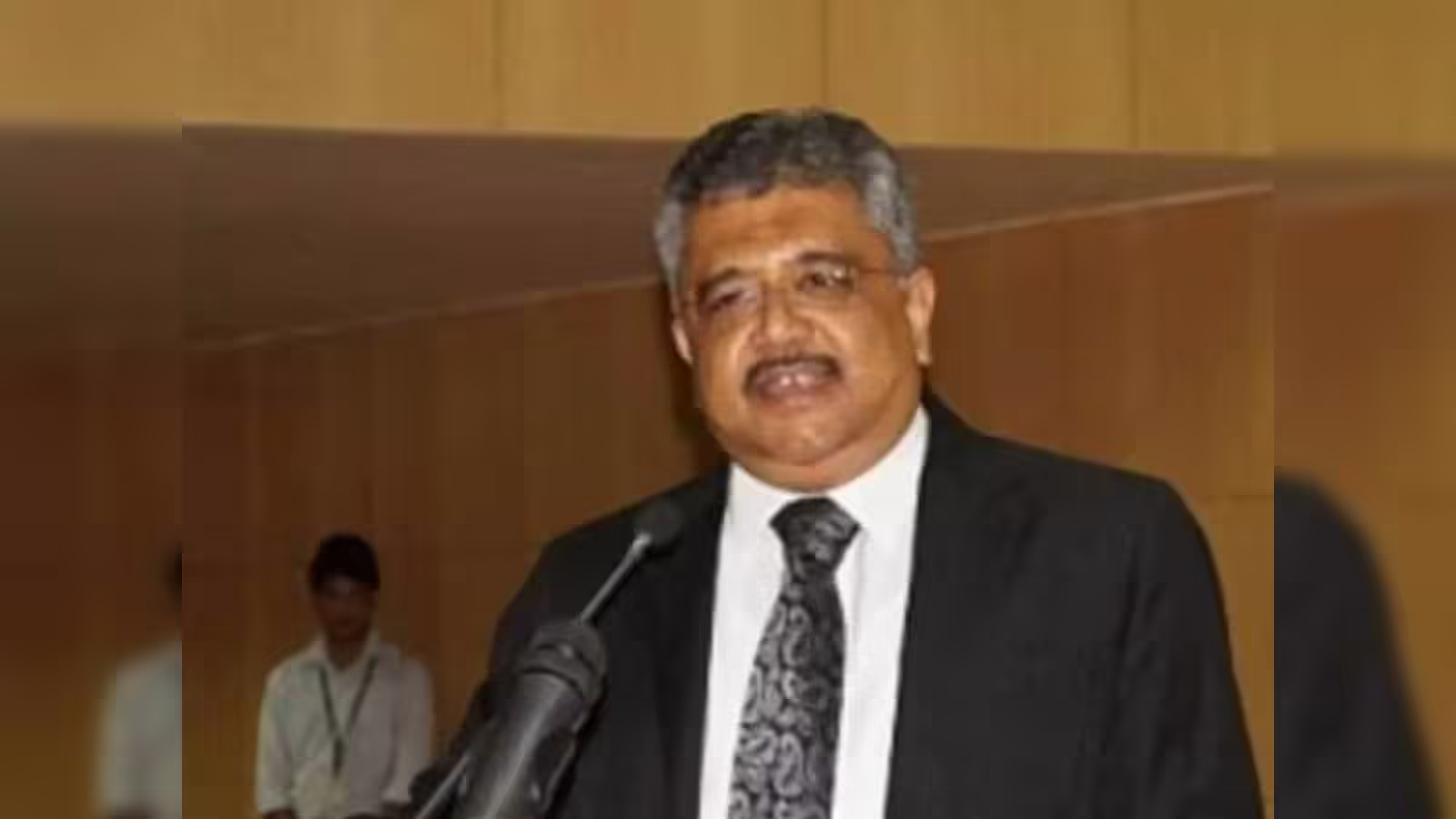
Solicitor General Tushar Mehta has just received another three years in his post from the central government. The Department of Personnel and Training quietly released the official order over the weekend; his current term was supposed to end in less than a month. Now, he is in office till the summer of 2029.
The Appointments Committee of the Cabinet — headed by the prime minister – has processed his papers without much fanfare.
Mehta holds the Solicitor General position since October 2018. The latest extension will ensure he completes an uninterrupted decade and a half at the country’s second-highest law officer post.
This is quite an extraordinary long duration. Government law officers rarely complete such extensive runs. Mehta acts as the government’s principal legal counsel right after the attorney general and is invariably the point person who defends the state in some of the more significant crises before the Supreme Court.
He took over from Ranjit Kumar.
Prior to that Mehta was already deeply entrenched in the government’s legal set up, having started out as an additional solicitor general in 2014. His initial appointment at the centre was after serving as the additional advocate general of Gujarat, a position he held for a significantly longer period when the current national leadership was in power in the western state.
Keeping the Old Team Together
Mehta is not alone among the government law officers in getting an extension of term. In the same Saturday notification the central government has also given three-year extensions to as many as five Additional Solicitors General. Both Additional Solicitor Generals Vikramjit Banerjee and K.M.
Nataraj will formally take over their extended terms in July.
However, the appointments of ASGs Suryaprakash V. Raju, N. Venkataraman, and Aishwarya Bhati will be effected slightly in advance with their terms to commence from June 30.
It’s pretty obvious the government’s strategy at the moment is not to alter its front-line legal defence team. The centre is faced with a heavy load of pending constitutional cases of great significance pending in Supreme Court and various high courts involving taxation issues, economic reforms, national security policies etc. Changing the entire law- officer cadre would create hurdles in continuity of work as a new cadre of law- officers may take a year or two to catch up on those files. Consequently, the government has put in a hold a six-month extension on Additional Solicitor General Chetan Sharma, who is part of the team of central government’s lawyers in Delhi High Court.
Defending the State in the Spotlight
Over the past six years, Tushar Mehta has emerged as the face of the Indian state on sensitive and often heated issues before the Supreme Court of India. While the Modi government has been involved in high-voltage litigation on everything from digital privacy laws to reforms in electoral processes to citizenship regulations, Mehta has been the one carrying the legal weight on behalf of the government. From cases related to national security, inter- state disputes, centre-state relations, massive tax-reforms, Mehta has had his finger on almost every important legal matter that has gone before the highest courts.
The work of a Solicitor General is no mean task. He shoulders the legal burden on behalf of the government and is in a sense the workhorse that defends the government policies and actions before the Supreme Court, working as the second senior most government counsel. His legal style is quite aggressive, and Mehta never shies away from a confrontation, neither in the court nor outside it.
This unwavering stance has earned him considerable faith within the present government.
He doesn’t let issues escape his grip and ensures that the Government’s side is consistently represented with full force.
Whispers of Institutional Favoritism
An eleven-year tenure for any individual at such a high post is unprecedented, and it is only expected that there would be voices raised against what is described by many as “institutional favouritism”. The consistent reappointment of Mehta to this powerful office – he comes from Gujarat and has long-standing connections with the present national leadership – from state level to Centre, and thereafter to Solicitor General and again renewed – makes it a closed system, say his critics. Several top lawyers maintain that there’s a concentration of power as more attention is given to “political alignment” of individuals than to their actual legal acumen.
There are very talented young law officers that are sidelined while only few are constantly in focus.
Many argue that this also leads to “less independent advice” being given to the government and it begins to look like that the law officers are serving only one political dispensation.