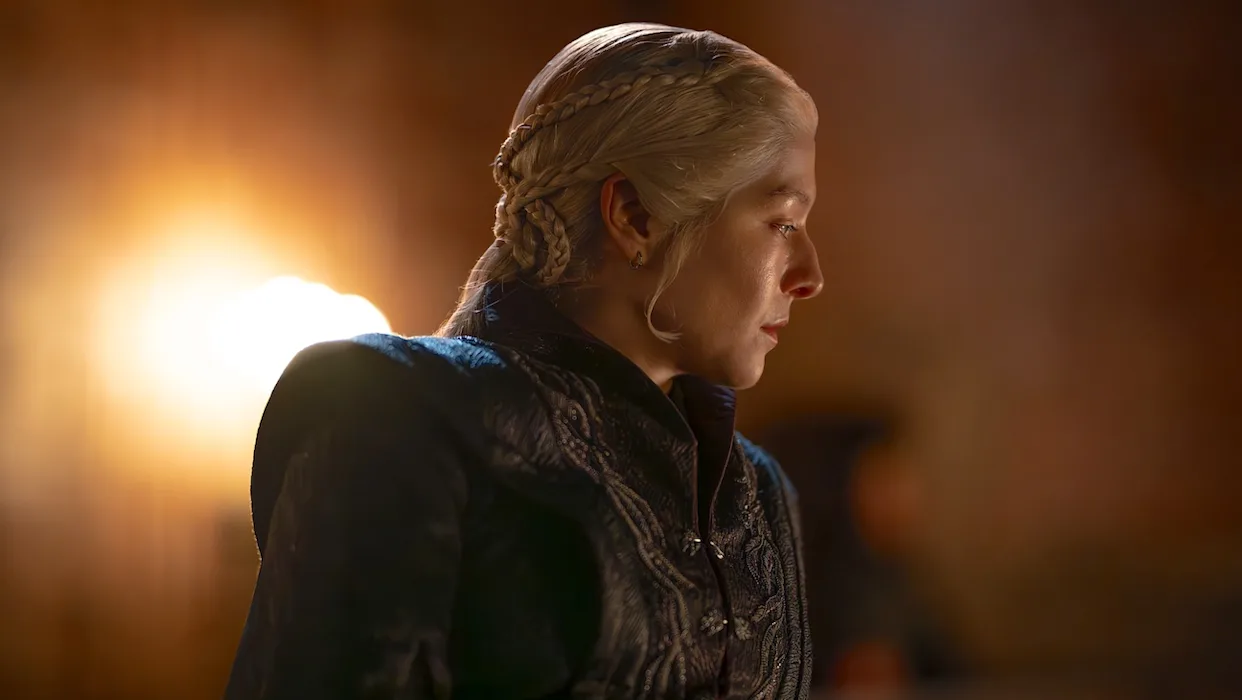
After a two-year hiatus, Westeros returned Sunday night with the highly anticipated premiere of House of the Dragon’s third season, promising a surge of fire, blood, and fallen rulers. While the episode delivered on the promise of dragons and decapitation, viewer reactions indicate a mounting sense of disillusionment. The series, once renowned for its unpredictable and shocking plotlines, now seems trapped in a predictable cycle, much to the disappointment of its devoted audience.
From its opening moments, the episode seemed to be ticking off a predictable checklist of House of the Dragon tropes. A dragon arrives; a ship is decimated; voices are raised in fury; a beloved character meets a watery, agonizing end. The first hour of season three, unfortunately, checked these boxes with the efficiency of a weary project manager. The visceral shock that once defined the franchise has faded, replaced by a predictability that left viewers complaining of predictable plot twists that were visible miles before they were enacted.
A Protracted Wait for a Déjà Vu Experience
The episode begins exactly where season two left off, with Queen Alicent Hightower desperately attempting to protect the ailing King Aegon II. Her initial plan to banish Aemond to Harrenhal and facilitate Rhaenyra’s conquest of King’s Landing quickly unravels. Larys Strong, ever the manipulator, persuades the bedridden Aegon to flee King’s Landing in disguise.
Their escape, however, is short-lived as they are apprehended just minutes into Black-aligned territory.
Larys then exposes them to save Aegon from being murdered on the road.
This exemplifies the frantic, ill-considered actions of these characters, actions the audience has witnessed repeated ad nauseam over the past twenty episodes, and viewers clearly took notice.
Meanwhile, at Dragonstone, the scenario feels similarly recycled. Rhaenyra is confined once again, only for her teenage son, Jacaerys, to decide she’s marching into a trap and effectively lock her in her chambers. This adolescent mutiny leads Jace to commandeer his dragon, Vermax, and fly to the aid of Lord Corlys Velaryon, accompanied by Baela on her dragon, Moondancer.
The tragic turn of events is apparent from the moment Jace defies his mother.
Fans lament how the writers consistently resort to the petulant prince trope as a device to thin out the cast.
The Battle of the Gullet: All Show, No Surprise
The central event of the June 21 premiere was the Battle of the Gullet, an event the network hyped as the most gruesome naval battle in television history. Under the command of Sharako Lohar, the Triarchy fleet sets out to crush Corlys Velaryon’s ships. Corlys, aiming to outwit Lohar, lures him into a treacherous narrow strait known as the Teeth.
His gambit seems to succeed, sinking two Triarchy ships.
But Lohar regroups, charging at Corlys’ flagship and bisecting it.
Water sprays, dragons incinerate sailors, and an extravagant sound design fills the screen, backed by what must be an enormous special effects budget. Then comes the moment everyone knew was inevitable. Jace swoops in on Vermax, blazing with fiery destruction and turning the tide.
Rhaena then arrives on the untamed dragon, Sheepstealer.
Sheepstealer, however, is beyond her control, attacking Vermax and creating utter pandemonium. Vermax is pulled into the ocean by a grappling hook, and as Jace surfaces for air, he’s immediately struck down by three crossbow bolts to the chest.
This was meant to be the dramatic, tear-jerking climax of the episode. Instead, there was a palpable collective sigh. While readers of George R.R.
Martin’s books knew the plot twist was coming, even casual viewers found it predictable, mirroring the unfortunate, inevitable fate of Lucerys.
Such repetition has become tiresome.
The other significant casualty of the battle was Sharako Lohar, who is killed in close combat by Alyn of Hull. Although the immediate threat is neutralized, Corlys loses a substantial portion of his fleet-another hollow victory disguised as a profound defeat, the kind of moral ambiguity the show has resorted to ad nauseam.
Mysteries on the Isle of Faces Prove Uninspired
Meanwhile, in contrast to the fiery spectacle at sea, a more somber scene unfolds near Harrenhal. The new dragonriders, Ulf, Hugh, and Addam of Hull, wait in hiding on an island in the God’s Eye lake to ambush Aemond and Vhagar.
This setting, the Isle of Faces, is reputed to be an extremely sacred place in the fictional universe.
The scene attempts to create a chilling atmosphere. The forest is eerily quiet, and the dragons, Silverwing and Seasmoke, grow restless. Addam and Hugh spot a tall, antlered figure with goat-like legs concealed among the trees, a figure clearly referencing the Green Men.
It stares intently at them before disappearing into the darkness.
Rather than enriching the narrative, the sequence felt like an unnecessary diversion, eliciting frustration from viewers. In a brutal civil war for a stolen throne, a bizarre woodland creature appearing to stare from the shadows felt like a cheap attempt to manufacture mystique or, at the very least, give online fan communities something to debate.
House of the Dragon Is losing Its Way
As House of the Dragon plunges further into its third season, the Dance of the Dragons has finally commenced. However, many viewers feel the pacing has become significantly convoluted. Showrunner Ryan Condal, who opted for an eight-episode season to address previous pacing issues, packed the premiere hour with naval battles, dragon combat, a mutiny, and mysterious woodland creatures. Yet, a pervasive sense of boredom seems to have settled over the fanbase.
The characters appear trapped in stagnant loops: Alicent negotiates deals she can’t enforce, Rhaenyra offers plaintive expressions and is frequently overridden by the men in her life, and Daemon is preoccupied with army mobilization elsewhere. Every triumph is quickly nullified, and every death feels like a result of misunderstandings or technological malfunctions. The shock value of a royal’s gruesome death no longer resonates.
With seven episodes remaining, and a new one airing every Sunday night at 9 p.m. ET on HBO, the higher production budget can’t compensate for a formulaic script. The widespread exhaustion of the audience is undeniable. Millions tuned in to witness a monumental sea battle conclude with a major character’s death, only to click off the TV and prepare for bed.