Trigger Warning: Suicide is discussed in this response. If you or someone you know is in distress, please contact for help. The suicide helpline in India is Sneha (044-24640050) and Sumaitri (011-23389090).
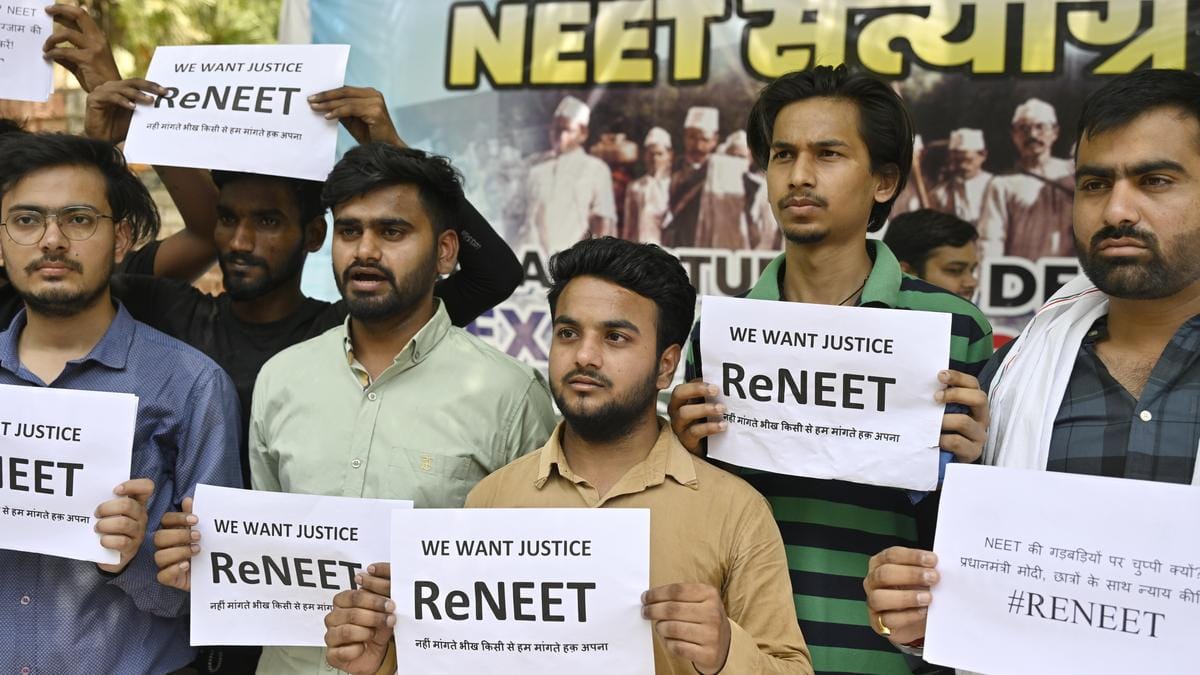
The unfortunate death of several students, including the recent ones in Karnataka, Rajasthan, and Goa after NEET-UG exam 2026 was cancelled due to paper leaks has triggered widespread public outrage. E.g., families and activists frequently ask for accountability of the system actors, who are responsible for the deaths caused by the failure
But, in a legal sense, the officials of the National Testing Agency (NTA) cannot be booked for “abetment to suicide.
So let’s break it down: why this particular criminal charge does not apply and what the legal obligations and penalties of the officials are.
The Legal Standard for Abetment
In India, the law on abetment of suicide is enshrined in Section 108 of the Bharatiya Nyaya Sanhita (BNS) (replacing Section 306 of IPC).
The prosecution has to establish that the accused was intentionally involved in inducing the victim to commit suicide. The Supreme Court of India has laid down a very high threshold for this charge. The law requires:
- Instigation: The accused should have intentionally incited, provoked or urged the person to attempt suicide.
The accused should have intentionally helped the act or been involved in the conspiracy.
No Other Option: The accused must have caused such a dire situation, that the victim had no choice but to take his/her own life. To explain why the charge fails against NTA officials - https://www.ft.com/content/2bfed8a4-8ea0-4627-b7a8-e9ca46945239?syn-25a6b1a6=1
The government would have to establish a causal connection between the NTA officials and the death of the particular student to prove a prima facie case for an FIR against them to stand the test of time in court. This is legally impossible for the following 3 main reasons:
No guilty mind (mens rea)
Mens rea is one of the essential elements of criminality, which refers to the guilty mind. The proof of abetment is that the officials intended to have the student die. The officers might have been negligent in their duties, corrupted, or failed to properly administer, but it wasn’t to kill a certain student, it was to gain some advantage or circumvent the system.
No Proximate Cause
Under the law, it is the “direct and proximate” cause of the suicide that the accused is required to have committed. The distance between the action and the killing can’t be too great. A cancellation of exam or stress from a paper leak are events that happen outside the individual and are general in nature. The courts have consistently ruled that an administrative decision, a hard exam or failure in the institution (a distressing and traumatic event) is not legally a direct personal incitement to suicide
General vs. specific harm;
More than 23 lakh candidates across the country suffered due to NEET paper leak. In the past, the Supreme Court has struck down abetment FIRs where the offence committed by the accused was general in nature and not to the deceased. The NTA’s shortcomings were systemic and at the school level and targetted all students and not a particular 18-year-old who might be expected to take his life.
What crimes are they allowed to be prosecuted for?
The abetment of suicide will not withstand the test of court but NTA officials and others who were involved in the paper leak mafia will not escape the noose of thorough prosecutors. They are prosecuted by the Central Bureau of Investigation (CBI) and state police forces on several serious charges:
Criminal Conspiracy and Cheating: Under the BNS, for orchestrating the leak and defrauding the public and the state.
Official Compromise of Exam Papers: Officials responsible for the security of the papers who compromise them are met with harsh penalties.
Prevention of Corruption Act: For accepting bribes to help leak or cause the compromise of the examination process.
Public Examination (Prevention of Unfair Means) Act, 2024: The federal law has been enacted to impose stringent penalties on organized paper leaks and manipulation of examination procedures, up to a massive fine of ₹1 crore and up to 10 years imprisonment.
An emotional reaction to a student’s suicide often results in the demand for murder or abetment charges, whereas the justice system’s classification of the crime is clear-cut. The officials are held to extremely high standards for criminal responsibility for having tampered with the integrity of the exam, but in terms of law, they did not aid and abet the tragic suicides that ensued.
News report on the tragedy in Rajasthan during the exam shock.
This talk is on the ground reality and emotional impact after a student’s suicide due to the recent controversy on NEET.