Satire is meant to make the reader squirm. It pokes holes in authority. Offends the powerful.Leaves powerful people feeling uncomfortable. When is a joke a national security threat, though?
The Delhi High Court has just stepped into this pickle. Their problem was that they had to determine how to manage the Cockroach Janta Party. You’ve probably heard of them, if you’re on social media. This is a large-scale internet phenomenon of utmost sarcasm. The government didn’t appear to be laughing, however. The MEAI took down the group’s X account a few days ago.
This guy is Abhijeet Dipke, who initiated the party. He immediately took his case to the High Court for a return of his account. He said that his group was only a “satirical digital outfit”. The crazy part? The government has blocked his account, even if it didn’t give him a copy of the official blocking order.
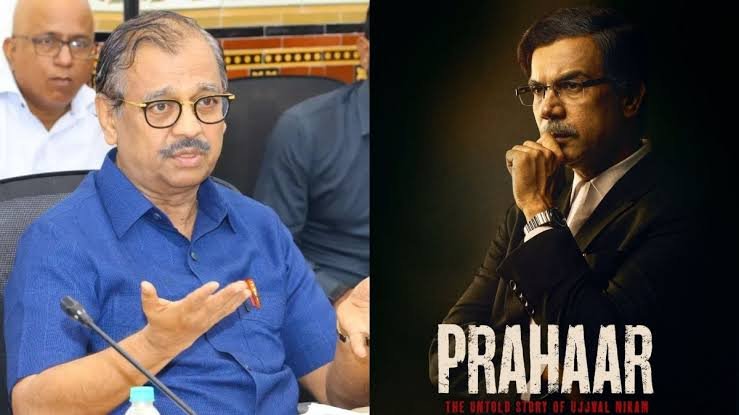
The court was not quick to come to his aid. The judge didn’t say that X should unblock the handle right away, but paused. Justice Purushaindra Kumar Kaurav gave a negative interim order. The laws against blocking social media accounts are still “in its infancy,” he said.
The “Slightly Offending” Standard
The most interesting part of the entire hearing was the discussion regarding the operation of digital blocking in practice under the patent law.
Need Help With Your PhD or LLM Thesis?
Explore our thesis and dissertation writing support services for PhD and LLM students. Get subject-specific academic assistance for your research project.
Explore Our Services →Siblings of Dipke’s were represented by Senior Advocate Akhil Sibal. He made a simple claim. When someone tweets something bad, you delete that tweet. You don’t kill the entire account. He cited previous rulings. Judges have repeatedly asked authorities to focus on specific offending posts, rather than shutting down an account.
The judge replied with a comment that did much to turn heads in the legal profession. The Justice said that this case was different from previous ones. He said that in the past this kind of tweet could be identified by authorities. But here, the judge had said that the whole party’s conduct “perhaps slightly offending.
Pause for a moment to consider that phrasing. Slightly offending.
When is it okay to remove a political group from the internet because of their offense?When is it OK to remove a political group from the internet because they’re slightly offensive? There is protection of freedom of speech in the Constitution under Article 19(1)(a). It does not ensure you that you will not be offended ever. Sibal drove this very message home. He was dismissive of the movement as a whole as being ‘pure satire.’ He said that, if ataxed, it is a violation of the principles of natural justice to take any action against the entire account. It infringes upon the strict procedural safeguards which are supposed to be incorporated under Section 69A of the Information Technology Act. It is not possible to simply delete an account in the dark without giving the reasons.
However, the court would not be able to trespass on the government’s territory. After hearing the case, the judge ruled that the bureaucrats should deal with it first.
Shifting responsibility to a Committee
Dipke was not given a judicial warrant to restore the account, but rather a homework task.
The High Court directed a review committee operating under the IT Rules to look into the mess. The judge told the committee to examine the whole situation and make a decision before July 7. Dipke is presently in Boston studying. The court, however, did permit him to appear in front of this government panel virtually.
Justice Kaurav told them that this committee can indeed unblock the account. When they see the facts and understand that the ban is completely unjustified, they can reverse it. That basically means that now a government committee grades the government’s homework.
The court has directed the Centre to make a record of the actual blocking order. The government lawyers, led by Solicitor General Tushar Mehta and Additional Solicitor General Chetan Sharma have a couple of weeks to submit its official reply. They are supposed to debate that it’s regarding far more widespread consequences. They will probably be heavily dependent on the national security side.
The Insect Revolution: How to make insects the heroes we urgently need.
To really understand the idiocy of this legal battle, one needs to understand how the Cockroach Janta Party came into existence in the first place.
It started with a comment in the Supreme Court. On 15th May, Chief Justice Surya Kant was presiding over a case. The topic of discussion was the entry into the legal profession. Words used to refer to the cockroaches and parasites were used.
The internet exploded. Young people became personally involved. In particular those who are disenchanted with the job shortage and the high cost of living. They were feeling like a nuisance in the system.
On the following day the Chief Justice sent out a statement of clarification. He insisted that he was misquoted to a great extent. He said that he was angry “only at those who walk into the Courts with fake degrees.” He was not talking about the youth in general.
However, it was too late for that. The insult was accepted and carried as a shield by the Internet. On 16th May, Dipke started the Cockroach Janta Party. It was a lesson in online defiance. They leveraged on memes to expose shoddy education and a lousy job market. Politicians began to take notice. The Trinamool Congress MPs showed interest in the movement.
A Ban That Backfired Spectacularly
The original article garnered a lot of attention quickly. But the government intervened. The handle was revoked in India on flimsiest security grounds on May 21st.
The idea was to try to shut down the group and it was an epic fail. It triggered the exact opposite reaction. Right away the organizers created another account named “Cockroach is Back”.
The new handle came flying off. It got more than 227,000 followers in days. The original ban simply added a tremendous amount of credibility to the movement. It was their way of proving their point. The establishment was scared of a joke.
The legal battle is languishing in limbo. The Delhi High Court is now being tested with limits of internet censorship as a satirical party based on an internet meme with the same name is making a challenge to the court.The Delhi High Court is now facing a test to the limits of internet censorship as a satire party is challenging the court with the same name based on an internet meme. The government must provide justification as to why jokes about unemployment pose a threat to the state. The case will be heard to determine if Section 69A can be used as a weapon against sarcasm. And the youth movement continues to hum as it did before.