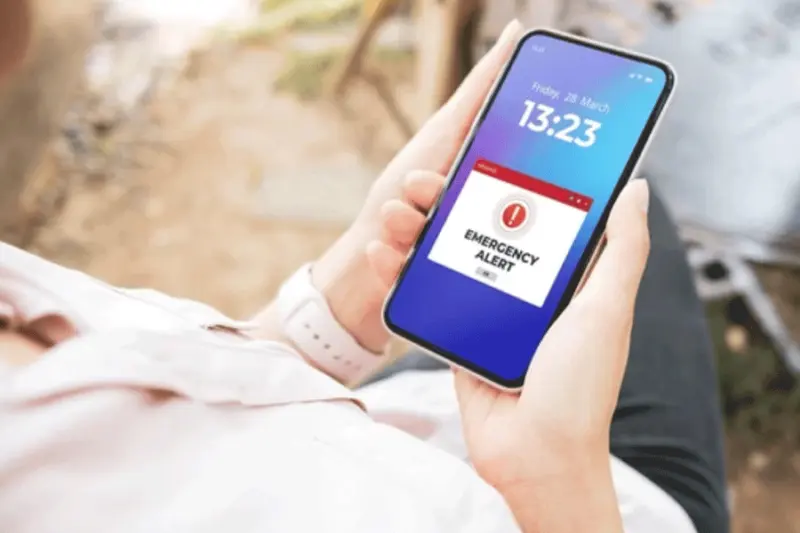
You might have been walking down the street or sitting at your desk when your phone suddenly shrieked. It was an unmistakable, piercing alarm tone that cut through the daily noise of your environment. Your screen lit up with a flashing message reading, “This is a test message.” This jarring experience was actually the Indian government quietly revolutionizing its emergency response infrastructure. The country has officially rolled out its indigenous Cell Broadcast Alert System
This technology is designed to push critical disaster warnings directly to the public in near real-time. It marks a massive leap forward from the days of relying solely on delayed text messages. When extreme weather strikes or a chemical hazard is detected, every second of lead time saves lives. The government is ensuring that you get that warning instantly, no matter what you are currently doing.
The Legal Framework Behind the Beep
This massive technological push does not just exist in a digital vacuum or as a random experiment. It draws its core legal strength directly from the Disaster Management Act of 2005. This specific legislation gave the central government the mandate to proactively build capacity against natural and man-made calamities. For years, the operational arm of getting immediate, mass warnings to everyday citizens remained a missing puzzle piece
By deploying this new broadcast technology, authorities are finally fulfilling a crucial statutory obligation. The Act created bodies like the National Disaster Management Authority, which now coordinates these massive nationwide alerts. Recent telecommunication laws also empower the government to utilize commercial networks for urgent public safety needs. It is a perfect intersection of digital capability and legal responsibility
Bypassing the Digital Traffic Jam
Need Help With Your PhD or LLM Thesis?
Explore our thesis and dissertation writing support services for PhD and LLM students. Get subject-specific academic assistance for your research project.
Explore Our Services →During a severe earthquake or a flash flood, the first thing people do is grab their phones. This sudden spike in communication completely chokes the local telecom infrastructure almost instantly. Standard SMS messages are sent sequentially, meaning they get stuck in this massive digital traffic jam. By the time a traditional text warning actually reaches a user, the disaster might have already struck.
Cell broadcast technology completely sidesteps this fatal network bottleneck. Instead of sending messages one by one, it utilizes a dedicated channel to blast the alert simultaneously. Think of it like a powerful radio transmission from your nearest cell tower, rather than a personalized letter. It pushes through the network congestion effortlessly, reaching millions of devices in a fraction of a second.
The Masterminds at C-DOT and NDMA
You can thank the dedicated engineers at the Centre for Development of Telematics for making this a reality. C-DOT is the premier research and development arm of the Department of Telecommunications. They worked closely with the NDMA to build an end-to-end Indian solution for this massive logistical challenge. The result is the Integrated Alert System, widely known within the government sector as SACHET.
Before this cell broadcast upgrade, SACHET primarily relied on sending geo-targeted SMS alerts across the country. They successfully pushed out billions of those text warnings over the past few years to mobile users. However, the top brass recognized that fast-moving threats like tsunamis required something significantly faster. They seamlessly integrated the new broadcast tech into the existing SACHET backbone to fix this gap.
How the Tower-Level Tech Works
The absolute brilliance of this system lies in its geographical precision and targeting. Authorities do not need to send a coastal tsunami warning to someone sitting safely in landlocked Delhi. The system allows disaster managers to draw a digital fence around a specific vulnerable geographic area. Any active cell tower inside that designated zone will broadcast the alarm to every connected device.
You do not need a special downloaded application, a subscription, or even an active internet data plan. As long as your phone is locked onto a local cellular network, the warning will actively push through. The entire setup is based on the Common Alerting Protocol recommended by the International Telecommunication Union. This ensures the alerts are standardized and universally understood by different smartphone operating systems.
Breaking the Language Barrier
India is incredibly linguistically diverse, making a single English alert largely ineffective for the broader masses. The developers knew that a warning message must be immediately understood to prevent widespread public panic. Therefore, the system is engineered to deliver these critical alerts in multiple regional Indian languages. When the alarm sounds, the text on your screen will likely match the dominant dialect of your specific state.
This multilingual approach ensures that the most vulnerable populations, especially in rural belts, are fully informed. During the ongoing pan-India testing phases, users have received these dummy warnings in Hindi, English, and local dialects. Accessibility was clearly a top priority from the very beginning of the software design phase.
Privacy and the Question of Data
Whenever the government rolls out a mass communication tool, privacy advocates naturally raise their eyebrows. It is easy to assume that authorities are tracking your exact location to send these targeted digital messages. However, the underlying technology of cell broadcasting is inherently privacy-friendly by its very technical design. The system does not require, store, or even know your specific personal phone number.
The cell tower simply shouts the message blindly to every mobile device within its physical signal range. It does not look up a subscriber registry or pull any personal identification data from your active SIM card. It is a completely one-way street of communication meant exclusively for broad public safety. You get the critical information you need without sacrificing an ounce of your personal digital privacy.
The Nationwide Testing Phase
If you have received one of these loud alerts recently, you are part of a massive validation exercise. The government has been conducting scheduled trials across various states to test the active network loads. They want to identify any dead zones or software bugs before a real, life-threatening crisis hits the nation. Officials have actively urged the public not to panic when the sudden, harsh alarm goes off on their screens.
These tests are crucial to ensure that the hardware of different mobile operators communicates flawlessly with central servers. Some users might receive the identical message multiple times as engineers tweak the transmission parameters on the backend. Once the testing phase completely wraps up, the system will sit silently in the background, waiting for an actual emergency.
A Future of Faster Evacuations
The successful rollout of this specific technology marks a turning point in Indian disaster management protocols. We are officially transitioning from a reactive approach to a highly proactive digital defense system. When extreme weather events become more frequent, early warnings are unequivocally our best line of defense. The ability to evacuate a coastal village twenty minutes earlier translates directly to thousands of actual lives saved.
This initiative brings the country up to speed with the emergency infrastructure seen in places like Japan. It proves that indigenous technology can solve incredibly complex logistical challenges on a truly massive national scale. The next time your phone screams at you, it might just be the critical warning that saves your life.
You might have been walking down the street or sitting at your desk when your phone suddenly shrieked. It was an unmistakable, piercing alarm tone that cut through the daily noise of your environment. Your screen lit up with a flashing message reading, “This is a test message.” This jarring experience was actually the Indian government quietly revolutionizing its emergency response infrastructure. The country has officially rolled out its indigenous Cell Broadcast Alert System.
This technology is designed to push critical disaster warnings directly to the public in near real-time. It marks a massive leap forward from the days of relying solely on delayed text messages. When extreme weather strikes or a chemical hazard is detected, every second of lead time saves lives. The government is ensuring that you get that warning instantly, no matter what you are currently doing.
The Legal Framework Behind the Beep
This massive technological push does not just exist in a digital vacuum or as a random experiment. It draws its core legal strength directly from the Disaster Management Act of 2005. This specific legislation gave the central government the mandate to proactively build capacity against natural and man-made calamities. For years, the operational arm of getting immediate, mass warnings to everyday citizens remained a missing puzzle piece.
By deploying this new broadcast technology, authorities are finally fulfilling a crucial statutory obligation. The Act created bodies like the National Disaster Management Authority, which now coordinates these massive nationwide alerts. Recent telecommunication laws also empower the government to utilize commercial networks for urgent public safety needs. It is a perfect intersection of digital capability and legal responsibility.
Bypassing the Digital Traffic Jam
During a severe earthquake or a flash flood, the first thing people do is grab their phones. This sudden spike in communication completely chokes the local telecom infrastructure almost instantly. Standard SMS messages are sent sequentially, meaning they get stuck in this massive digital traffic jam. By the time a traditional text warning actually reaches a user, the disaster might have already struck.
Cell broadcast technology completely sidesteps this fatal network bottleneck. Instead of sending messages one by one, it utilizes a dedicated channel to blast the alert simultaneously. Think of it like a powerful radio transmission from your nearest cell tower, rather than a personalized letter. It pushes through the network congestion effortlessly, reaching millions of devices in a fraction of a second.
The Masterminds at C-DOT and NDMA
You can thank the dedicated engineers at the Centre for Development of Telematics for making this a reality. C-DOT is the premier research and development arm of the Department of Telecommunications. They worked closely with the NDMA to build an end-to-end Indian solution for this massive logistical challenge. The result is the Integrated Alert System, widely known within the government sector as SACHET.
Before this cell broadcast upgrade, SACHET primarily relied on sending geo-targeted SMS alerts across the country. They successfully pushed out billions of those text warnings over the past few years to mobile users. However, the top brass recognized that fast-moving threats like tsunamis required something significantly faster. They seamlessly integrated the new broadcast tech into the existing SACHET backbone to fix this gap.
How the Tower-Level Tech Works
The absolute brilliance of this system lies in its geographical precision and targeting. Authorities do not need to send a coastal tsunami warning to someone sitting safely in landlocked Delhi. The system allows disaster managers to draw a digital fence around a specific vulnerable geographic area. Any active cell tower inside that designated zone will broadcast the alarm to every connected device.
You do not need a special downloaded application, a subscription, or even an active internet data plan. As long as your phone is locked onto a local cellular network, the warning will actively push through. The entire setup is based on the Common Alerting Protocol recommended by the International Telecommunication Union. This ensures the alerts are standardized and universally understood by different smartphone operating systems.
Breaking the Language Barrier
India is incredibly linguistically diverse, making a single English alert largely ineffective for the broader masses. The developers knew that a warning message must be immediately understood to prevent widespread public panic. Therefore, the system is engineered to deliver these critical alerts in multiple regional Indian languages. When the alarm sounds, the text on your screen will likely match the dominant dialect of your specific state.
This multilingual approach ensures that the most vulnerable populations, especially in rural belts, are fully informed. During the ongoing pan-India testing phases, users have received these dummy warnings in Hindi, English, and local dialects. Accessibility was clearly a top priority from the very beginning of the software design phase.
Privacy and the Question of Data
Whenever the government rolls out a mass communication tool, privacy advocates naturally raise their eyebrows. It is easy to assume that authorities are tracking your exact location to send these targeted digital messages. However, the underlying technology of cell broadcasting is inherently privacy-friendly by its very technical design. The system does not require, store, or even know your specific personal phone number.
The cell tower simply shouts the message blindly to every mobile device within its physical signal range. It does not look up a subscriber registry or pull any personal identification data from your active SIM card. It is a completely one-way street of communication meant exclusively for broad public safety. You get the critical information you need without sacrificing an ounce of your personal digital privacy.
The Nationwide Testing Phase
If you have received one of these loud alerts recently, you are part of a massive validation exercise. The government has been conducting scheduled trials across various states to test the active network loads. They want to identify any dead zones or software bugs before a real, life-threatening crisis hits the nation. Officials have actively urged the public not to panic when the sudden, harsh alarm goes off on their screens.
These tests are crucial to ensure that the hardware of different mobile operators communicates flawlessly with central servers. Some users might receive the identical message multiple times as engineers tweak the transmission parameters on the backend. Once the testing phase completely wraps up, the system will sit silently in the background, waiting for an actual emergency.
A Future of Faster Evacuations
The successful rollout of this specific technology marks a turning point in Indian disaster management protocols. We are officially transitioning from a reactive approach to a highly proactive digital defense system. When extreme weather events become more frequent, early warnings are unequivocally our best line of defense. The ability to evacuate a coastal village twenty minutes earlier translates directly to thousands of actual lives saved.
This initiative brings the country up to speed with the emergency infrastructure seen in places like Japan. It proves that indigenous technology can solve incredibly complex logistical challenges on a truly massive national scale. The next time your phone screams at you, it might just be the critical warning that saves your life.