It seems almost certain now that the US military, on President Trump’s order, will attack Iran any day, possibly even within 48 hours
https://www.youtube.com/watch?v=SiPniWDSLkI&pp=ygUTdXMgd2lsbCBhdHRhY2sgaXJhbg%3D%3D
https://www.youtube.com/watch?v=nI-Tt91iCcI&pp=ygUTdXMgd2lsbCBhdHRhY2sgaXJhbg%3D%3D
https://www.youtube.com/watch?v=6L30VN1d_7U&t=27s&pp=ygUTdXMgd2lsbCBhdHRhY2sgaXJhbg%3D%3D
https://www.youtube.com/watch?v=C0hJIngXeVM&pp=ygUTdXMgd2lsbCBhdHRhY2sgaXJhbg%3D%3D
A huge American armada with two aircraft carrier groups packed with the most advanced aircraft with the most lethal weapons in them is being gathered near Iran, and they are not there just for a picnic. Iran, even with the help of China and Russia, cannot withstand such a powerful onslaught, if made.
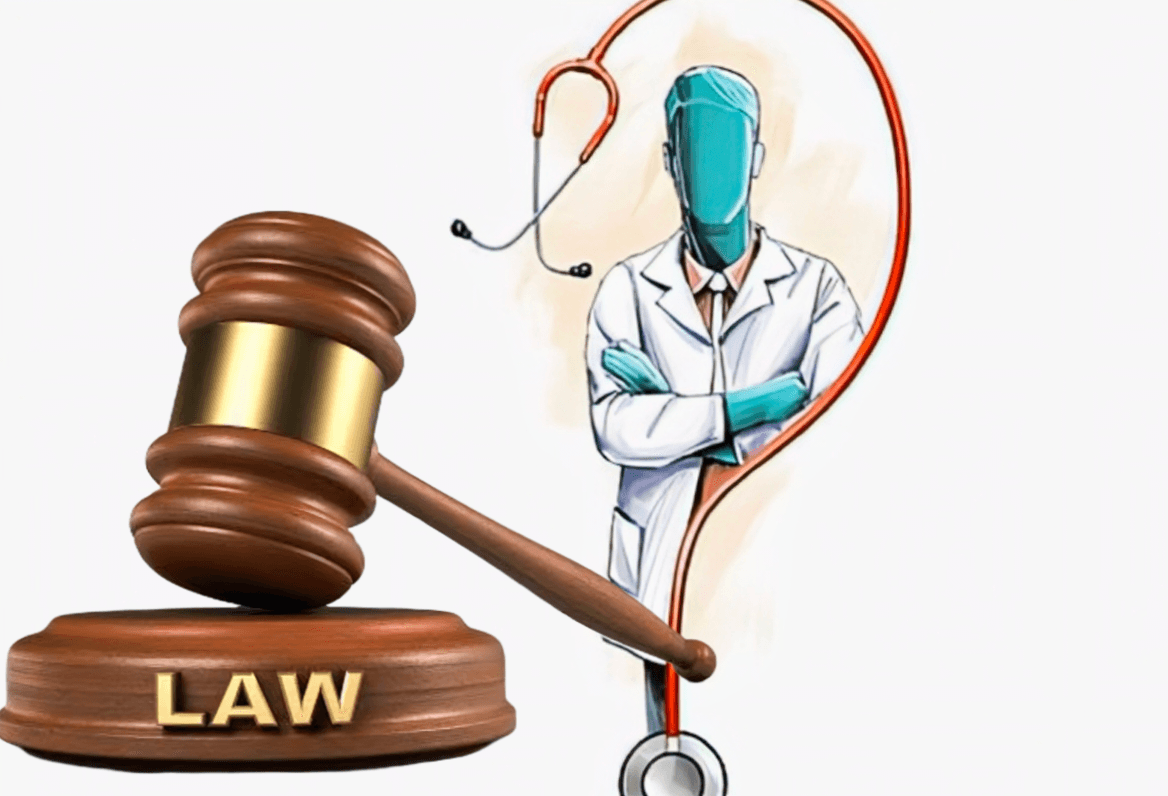
But will this attack be legal ? US Congressmen Ro Khanna and Thomas Massie have already announced they will be moving a bill in Congress against such an act without Congress authorization
https://thehill.com/homenews/house/5745037-khanna-massie-war-powers-iran/
What is the legal position in this connection ?
Article 1 section 8 of the US Constitution says that it is the US Congress which has the power to declare war. No such power has been given to the US President.
But US President Harry Truman committed U.S. forces to the Korean War in June 1950 without a formal declaration of war or direct authorization from Congress, acting instead under a UN Security Council resolution dated 28.6.1950 to repel North Korea’s invasion ( the Soviet Union, which could have vetoed the resolution, was boycotting the UN at that time over the Taiwan issue ). Describing the conflict as a “police action,” Truman relied on his authority as commander-in-chief in Article 2 of the US Constitution, setting a significant precedent for future undeclared presidential wars.
https://www.cfr.org/articles/twe-remembers-trumans-decision-intervene-korea
https://www.loufisher.org/docs/wp/425.pdf
https://www.britannica.com/biography/Harry-S-Truman/Outbreak-of-the-Korean-War
https://www.history.com/this-day-in-history/june-27/truman-orders-u-s-forces-to-korea-2
It is generally accepted that the US President has certain implied powers, apart from those expressly conferred on him by Article 2 of the US Constitution
https://www.history.com/this-day-in-history/june-27/truman-orders-u-s-forces-to-korea-2
However, there are certain grey areas on this issue, and much depends on the views of the judges constituting the US Supreme Court at a particular time. The majority of the present Judges are pro-Trump ( many were nominated by him ), so if there is a challenge to a US military action against Iran without Congressional authorization or approval, the likelihood is that it will be rejected by the Court, relying on the implied powers of the US President, and the alleged threat of Iran acquiring nuclear weapons
As regards international law, the Pact of Paris, 1928 ( the Kellogg-Briand Pact ) outlawed aggressive law, and its principle was approved in the Nuremberg Trials, and also in the Rome Statute of the International Criminal Court
https://en.wikipedia.org/wiki/War_of_aggression.
However, little heed is paid to it by the powerful states e.g. the Russian invasion of Ukraine and the US attack on Venezuela. As the British jurist Holland said “international law is the vanishing point of jurisprudence,” suggesting that international law lacks the essential characteristics of true law—a sovereign legislature, binding sanctions, and enforcement mechanisms—and thus represents the limit where law becomes subordinate to international politics.
So nothing legally can be done if the US military attacks Iran Everything now depends on President Trump, whether he will order a strike or not, and Trump is known to be an assertive and aggressive President ( as the Venezuela attack shows )
Legality of US attack on Iran By Justice Katju