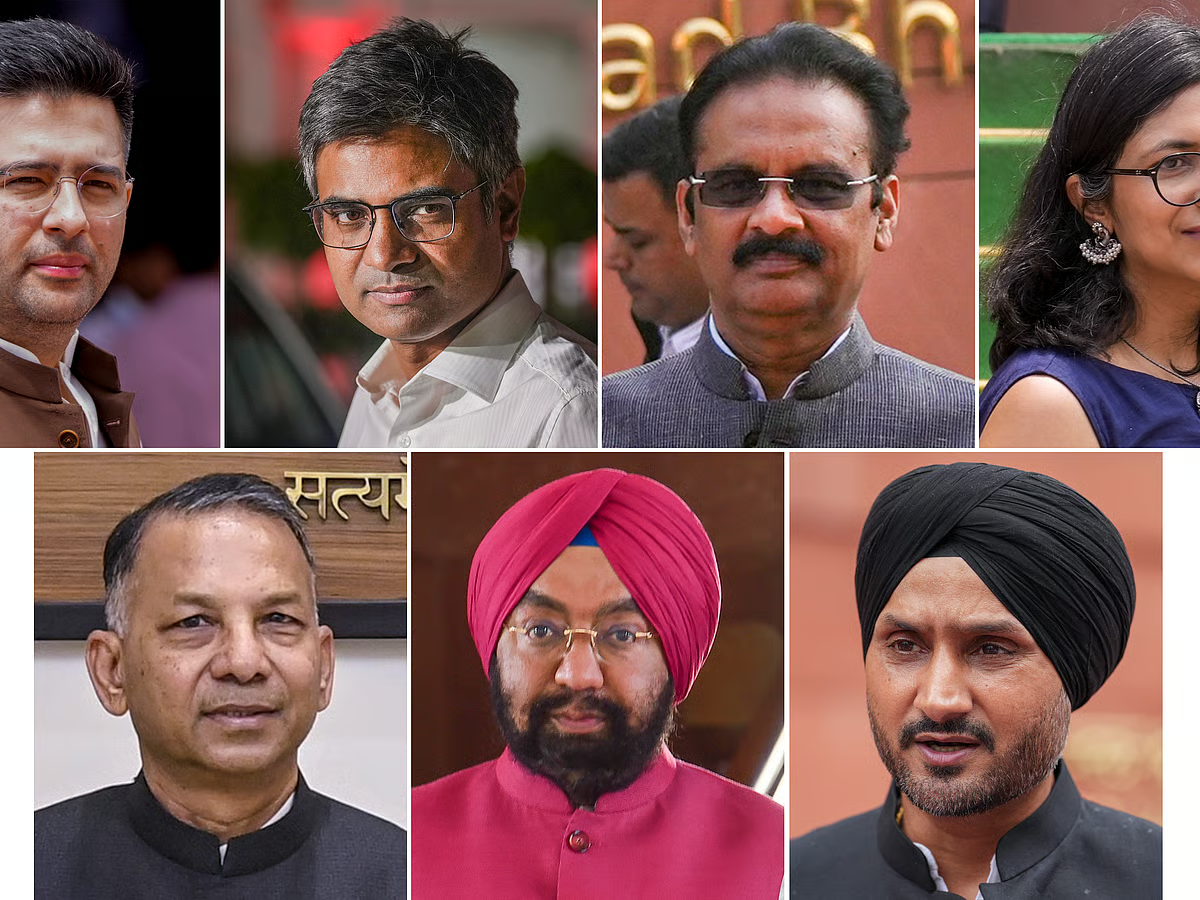
A Massive Shift In Parliament
A political tsunami just hit the upper house of the Indian Parliament. The numbers in the record now look very different for the majority party and the opposition. A group of seven influential Aam Aadmi Party (AAP) MPs chose to defect and join the Bharatiya Janata Party (BJP). This sudden defection has now significantly altered the strength of the two sides of politics. The abrupt turn of events left many political observers stunned
The Defecting Lawmakers
Some of the most prominent members of the Aam Aadmi Party are among those who have defected. The resignations began with Raghav Chadha, who was part of the party’s strategy team. Along with him are Sandeep Pathak, Ashok Mittal and former international cricket player Harbhajan Singh. Swati Maliwal, Rajinder Gupta and Vikramjit Sahney also formally submitted their papers to change parties. These leaders also jointly approached to merge their faction with the ruling party
The Math Behind The Move
This defection has decimated the Aam Aadmi Party’s Rajya Sabha numbers. They were previously represented by ten members in the upper house, and had a strong presence there. But now they are down to just three representatives. In contrast, the Bharatiya Janata Party has gained a massive boost in numbers. The ruling party’s strength has grown to 113 seats and the ruling alliance has now crossed the 140 seat mark
Why Did They Leave?
Raghav Chadha has issued a video statement to the public to explain his surprise move. He said that the working environment of his former party was extremely hostile. He alleged some corrupt people in the political party had taken over its values for their own benefit. Chadha said he entered politics to serve the nation, not to partake in nefarious activities. The dissident lawmakers felt the party had completely forgotten its anti-corruption origins.
The Official Acceptance
The Chairman of Rajya Sabha, C.P. Radhakrishnan, wasted no time in accepting the documents presented by the new lawmakers. He duly accepted the merger petition, formalising their defection to the new party. The secretariat of the parliament website also updated its member list. The seven politicians are now officially recognised as the Bharatiya Janata Party members in the house of representatives. The swift bureaucratic move angered the rest of the opposition leaders.
AAP Won’t Give Up
The Aam Aadmi Party is doing all it can to undo this colossal political setback. The party’s Rajya Sabha floor leader Sanjay Singh has gone into a swift counter-attack. He sent an urgent letter to the Secretary General of the upper house of Parliament. Singh seeks to know how and why the party stand was changed in the official records without prior notice. Singh termed the whole administrative process arbitrary and without the sanction of the parent party.
Approaching The Supreme Court
The Delhi legal battle for these vacant seats has only begun. Sanjay Singh has made it clear that his party believes the merger to be illegal and unconstitutional. He had already put in a formal request to the Chairman for the disqualification of these seven defectors. That appeal was not taken into account and the party is gearing up for a legal fight. If the secretariat of the parliament doesn’t respond, they will move the matter directly to the Supreme Court of India.
Reaction From The Ruling Party
The Bharatiya Janata Party is taking this huge addition to their strength in the parliament with elation. Kiren Rijiju, Union Minister for Parliamentary Affairs, welcomed the seven politicians to the ruling party. He tweeted an appreciation of their past behaviour, explaining they never used foul language in Parliament. Rijiju said the merger was a good sign for national unity in the current Prime Minister’s tenure. He also lashed out at the opposition alliance in his celebratory speech.
A History Of The Rulebook
The drama is all about the Tenth Schedule of the Indian Constitution. This particular piece of legislation was designed to prevent politicians from defecting for personal gain. It usually disqualifies individuals for breaking away from their political parties by stripping them of their well-earned seats in parliament. But the statute has a huge loophole regarding mass defections. If two-thirds of a party’s members choose to merge with another political group, they are protected against any disqualification penalties.
Using The Exemption Clause
The seven lawmakers who were disgruntled must have done their calculations well before making such a radical manoeuvre. The Aam Aadmi Party had only ten members in the upper house and seven is more than two-thirds. This very mathematical reality is what ensures that Chadha and his friends will not lose their seats. Legal analysts say the anti-defection act is “dead” when applied to a rebellion on this scale. The rebels used the constitution’s word-for-word to gain their seats.
The Impact On Regional Politics
The majority of the defectors were elected to the house from Punjab. The Aam Aadmi Party currently holds a huge majority in the Punjab state assembly, which assisted them in winning these Rajya Sabha seats. The departure of six members of the Rajya Sabha from one state is an interesting situation for the people back in the state. Now, the central government has more clout in the upper house of the parliament. This will impact the national capital’s discussion of local issues.
What’s Next For Both Sides
The dust is still settling in the national capital after this political game. The government’s new alliance now finds it easier to get new bills passed in the upper house of the parliament. The Aam Aadmi Party needs to try and piece together its decimated parliament. Now, the eyes and ears are in the eyes and ears of the country’s highest court. The arguments that will be presented will probably test the very boundaries of the anti-defection laws in today’s India.