Anarchy in Karkardooma Court Complex.
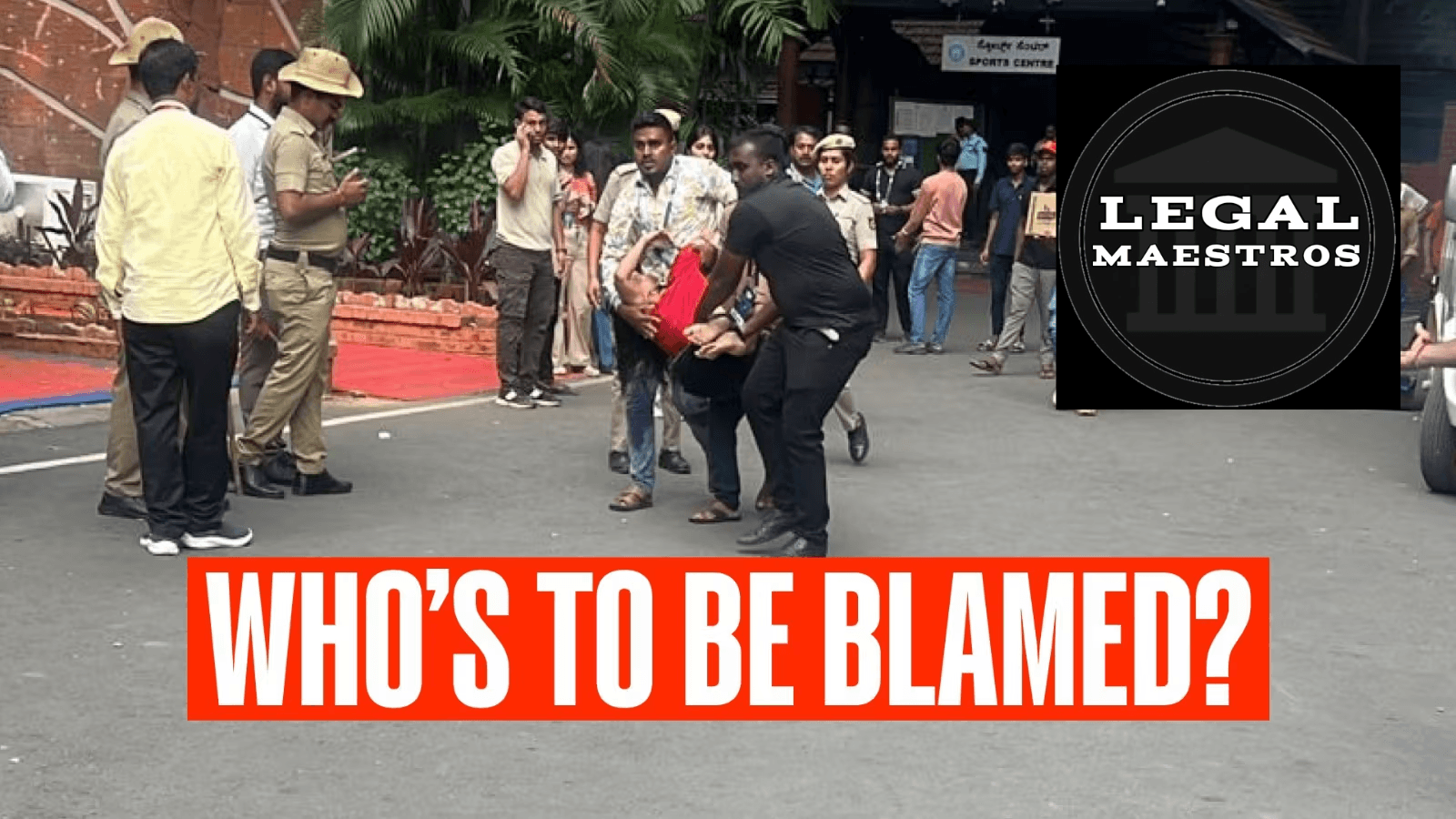
This was a chaotic scene at the Karkardooma Court in Delhi this Tuesday afternoon. Rakesh Kishore, an already infamous senior lawyer was the victim of a physical attack. It was said that the seventy-one-year-old advocate was surrounded by an unknown number of people on the court premise. It soon developed into a verbal fight which resulted in physical fights with the use of slippers as weapons. Onlookers and other legal experts were surprised to see the commotion interrupt the proceedings of the district court that was going on normally.
The event filmed on the mobiles phones spread immediately in the social media. Kishore is seen in the video clips attempting to repel the attacks as he gets into a heated argument with those who attacked him. The attack seemed to have been a sort of organized revenge and not a fight on the spur of the moment. It has been reported that the attackers were made up of other lawyers and potentially members of the general public who had a grudge. The audacity of the attack into a complex of courts has brought up serious questions on security and decorum.
Kishore was defiant in the scuffle despite the physical assault that was inflicted on him. Rather than hiding he was heard shouting out slogans in support of Sanatan Dharma as he was struck. This response brought in an ideological clash to this physical fight. Security guards later came in to scuffle and separate the two sides of the fight. Nonetheless, there was a lot of tension in the court complex even after the actual physical fight.
Revenge against the Supreme Court Shoe-Gate.
The intent of this slipper attack is directly connected to an unpopular incident of October 2025. Rakesh Kishore had already become a national headline featuring in making an attempt to have thrown a shoe at the Chief Justice of India, B.R. Gavai at the time. It was an enormous violation of the decorum of the court, and it had occurred within the Supreme Court. This previous act is the exact reason given by the attackers at Karkardooma Court when it targeted Kishore. They allegedly informed him that they were punishing him because of disrespecting the head of the Indian judicial system.
Kishore himself gave the media an account of how the attackers had raised the caste identity of the former Chief Justice. He alleged that they had accused him of targeting Justice Gavai on grounds of him being a Dalit. This adds a sensitive caste element to the conflict implying bitter resentment due to his earlier behavior. To the attackers, his attempt to throw his shoes was not only contempt of court, but rather an individual and community offense. This perceived disrespect appears to have been one of the factors that had led to a boiled over anger that culminated into violence months later.
That the anger at Kishore lasts proves that his previous actions had a social impact that went far. Although the legal system had its own means of handling him, there were portions of the legal community who took the issue into their own hands. Some observers refer to the slipper attack as vigilante justice. It points out a very dangerous trend that lawyers themselves are going around the law to score an axe. The incident is a bleak lesson that the personal consequences of high-profile courtroom antics may be long term.
Need Help With Your PhD or LLM Thesis?
Explore our thesis and dissertation writing support services for PhD and LLM students. Get subject-specific academic assistance for your research project.
Explore Our Services →Defiant Stance and Refusal to Complain by Kishore.
However, in a twist of events, Rakesh Kishore declined to make a formal complaint to the police on the assault. When reporters came to him, he minimized the violence as a family issue amongst the lawyers. He called his attackers his brothers and said they did not need the police to interfere. Such an approach has a strange insularity in the legal fraternity where internal conflicts are frequently held outside of the law enforcement system. It also implies that Kishore believes himself to be a martyr to his cause and he is ready to suffer the physical pain.
His disobedience was not only demonstrated when he never grumbled, but also through his words when he was attacked. He tried to place the story in a spiritual or ideological struggle by chanting religious slogans as he is getting beaten. He has always argued that he has no regrets to his actions against the Chief Justice. This sense of impunity has probably made him even more estranged in the mainstream legal community. Nonetheless, it has made him also have a niche following of supporters who see his actions as daring instead of being disrespectful.
The fact that the decision was not to press the charges further complicates the situation of the police and court administration. It is hard to file a case against the attackers without a formal complaint, and hence, it could be hard to legally bring the attackers to court. This may also invite more violence in the court grounds in case those who commit it are confident that they will not be punished. The management of Karkadooma Court has now the task of keeping order in the absence of a complainant to kick off the legal process.
The Original Incident: Violation of the Decorum of the Supreme Court.
The key to this present-day violence does lie in the horrible events of the October 6, 2025. On this day, Rakesh Kishore appeared before the first court in India in Supreme Court. At the time of mentioning, he took his shoe off and tried to toss it at the bench headed by CJI B.R. Gavai. Security guards moved in a timely manner to stop him so that the shoe did not hit the judges. The very attempt was sufficient to produce shocks in the whole country.
Kishore later justified his actions as a protest to some of the statements made by the CJI. He was angry over a court ruling on the recovery of religious idol. He alleged that his religious feelings were offended, which is why he made such radical move. This excuse, however, was not very popular among the jurists. This was completely criticized as an assault on the institution of judiciary.
Former CJI Gavai showed exceptional calmness in the October case. He did not allow the disturbance to stop the court proceedings and requested lawyers to proceed with their cases. He then directed the Supreme Court registry not to press criminal charges against Kishore. This generosity prevented Kishore being thrown into jail at the same time, however, it was evident that it would not help him in the face of social punishment. The dignity with which the judge received the outcry and the protest by the lawyer was very clear.