Record Breaking Turnout for Polling Day
The latest voting statistics from West Bengal are jaw-dropping. More than 92 percent of voters turned out for the first round of the state assembly elections. That’s despite an election held in 152 constituencies on an exceedingly warm Thursday. Authorities were surprised that so many people were waiting outside polling booths. It is the state’s highest turnout since the landmark elections of 2011.
The Court’s Rare Praise
The extraordinary exercise of democracy quickly found the nation’s topmost court’s attention. The Supreme Court on Friday showered praise on the people of West Bengal. Chief Justice of India Surya Kant was personally delighted to see the record turnout. The large turnout strengthens the nation’s democracy, he said. For a process that is sometimes controversial, it was a rare judicial moment of celebration.
Silence Replaces the Usual Violence
Expectations here for elections are often dire, with accompanying political violence. Yet the first phase of this election was as peaceful as ever, with just a few isolated incidents of violence. Justice Joymalya Bagchi noted the lack of serious violence during the polling hours. The court said that once people are aware of the power of their vote, violence is reduced. The massive security machinery certainly had a firm control of the situation.
Against the Electoral Roll Scandal
This voter turnout increase did not occur in a political vacuum. A Special Intensive Revision of the electoral rolls was recently conducted in the state. The bracero-style clean-up operation led to the removal of approximately 9.1 million names. Numerous constituencies witnessed bulk removals, and this sent panic among ethnic communities and migrant workers. The mass removals directly led to several court challenges that made their way to the Supreme Court.
Fear Driving the Ballot Box
Political parties’ lawyers had a different view of the turnout. Senior advocate Kalyan Banerjee said fear was the reason for the record turnout. Thousands of migrant workers, it was reported, scurried home to vote. They feared they would lose their right to vote if they didn’t turn up on election day. This vote of fear over citizenship and voting rights forced a mass exodus.
Security Forces Get Their Due
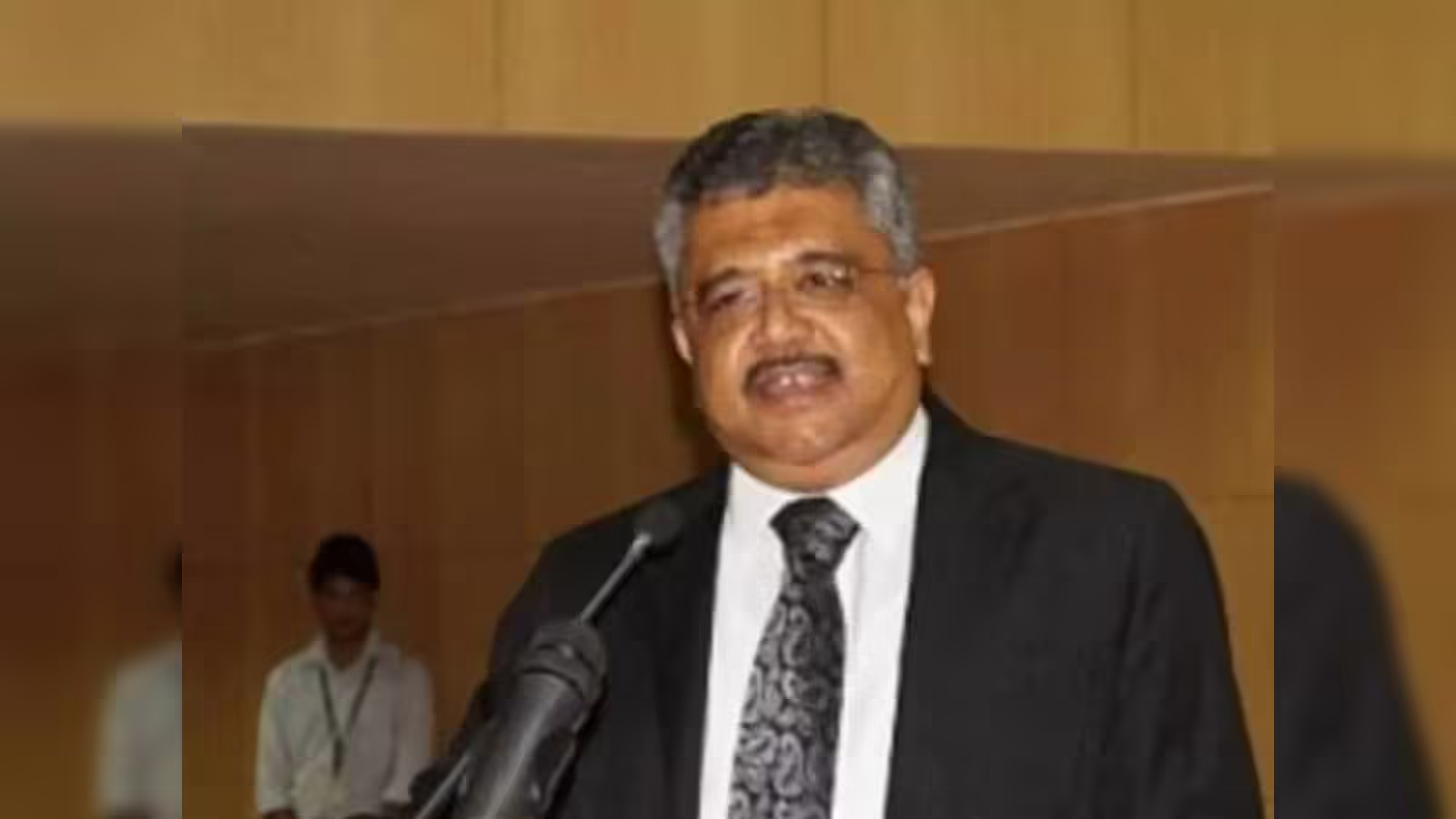
The extensive presence of central armed police forces was also a big contributor here. Solicitor General Tushar Mehta, in particular, praised their role in the Supreme Court hearing. There were more than 2,400 companies of central forces deployed in most sensitive polling stations. They protected more than 8,000 extremely sensitive polling booths with stringent surveillance and webcasting. Their strong presence ensured that there was no pre-poll violence in the same areas.
The Election Commission Takes a Bow
The Election Commission is not often on the receiving end of positive feedback from the judiciary. Justice Bagchi stunned the courtroom when he publicly praised the poll body. This surely infuriated some politicians who had been railing at the commission’s handling of the elections for the last several days. The poll panel had its hands full with a 3.6 crore electorate to handle in a single phase. But the arrangements somehow coped with an overwhelming rush of voters.
High Stakes in Key Constituencies
This first phase of voting has been the key to the election. Polling was high in critical districts such as Murshidabad, Birbhum, Hooghly and Cooch Behar. Dakshin Dinajpur topped the turnout chart with more than 95 percent voters. These were the areas where neck-to-neck fights were played out between the ruling party and opposition’s bigwigs. The high voter turnout has left political pundits guessing the eventual winner.
Legal Battles Go On During Polling
The voting may have been peaceful but the court disputes over the removed voters continue. Earlier, the Supreme Court directed special courts to entertain appeals of the disenfranchised. But there were reports that few such cleared voters voted on Thursday. The court strongly resisted an immediate blanket relief to thousands of polling officers. They argued that the right to be on the electoral roll is a valuable ongoing right.
Migrant Math and Local Dynamics
The influx of out-of-state workers distorted the anticipated voting patterns on the ground. A large number of people have returned from across the country to central and northern Bengal. They carried with them different political experiences, which may not align with local political allegiances. Political analysts said the new voter profile makes it nearly impossible to predict the winner. The normal anti- or pro-incumbency equations don’t work with this particular group.
Steeping in the Peace
While the elections have been generally peaceful, there has been some violence in certain rural areas. In Kumarganj, a candidate was forced to flee his constituency after being allegedly attacked by a mob. In Murshidabad, a local party activist’s convoy was brutally attacked by some unknown hoons near a polling station. Security forces were also stoned in Dubrajpur, injuring a couple of jawans. These isolated incidents were a reminder of the region’s political tensions.
Eyes on Next Phases
The remaining seats in the assembly are now looking to have a similar experience in the next few days. The second phase will be held on April 29, for another 142 seats. The government is working to provide the first phase’s security and efficiency. And the political parties are feverishly reworking their game plans on the basis of the early voting bonanza. All are hoping this record-breaking trend will continue.
A Broader Democratic Trend
The trend of unprecedented voter turnout in the elections was not limited to the state of West Bengal. The Supreme Court judges also pointed to comparably high turnout rates in the southernmost state of Tamil Nadu. The Chief Election Commissioner lauded the people of these two states for setting the record. This parallel uplift is suggestive of a surge in political engagement across diverse regions of the country. The courts are still keeping a close eye on the elections in both states in preparation for the final tallies.