Current Legal Update

Ashoka University Professor’s Arrest Over Operation Sindoor Post: Supreme Court to Examine Free Speech and Legal Misuse

The Supreme Court will hear a plea challenging the arrest of Ashoka University professor Ali Khan Mahmudabad, detained on May 18, 2025, over a Facebook post on Operation Sindoor. Arrested under Bharatiya Nyaya Sanhita for allegedly endangering sovereignty and promoting enmity, Mahmudabad’s post praised India’s military action but criticized selective support for Muslim officers. Senior advocate Kapil Sibal argues the arrest violates free speech under Article 19(1)(a). The case highlights tensions between national security and academic freedom, with the Court set to examine potential legal misuse. Updates are available on Legal Maestros.

Current Legal Update

Waqf (Amendment) Act 2025: Supreme Court’s Live Hearing, Keep Checking Legal Maestros for Updates

The Supreme Court’s live hearings on the Waqf (Amendment) Act, 2025, effective April 8, 2025, address challenges to its constitutional validity. The Act mandates waqf property registration, includes non-Muslims in waqf boards, and abolishes “waqf by user,” prompting objections for violating Article 26’s religious autonomy. Petitioners, including Asaduddin Owaisi, contest its provisions, while the Centre defends enhanced transparency and property oversight. The Court, under CJI B.R. Gavai, has paused denotification of waqf properties and non-Muslim appointments pending further review. Stay updated via Legal Maestros for real-time developments in this landmark case.

Current Legal Update

Section 27 of the Customs Act and the Doctrine of Unjust Enrichment Examined in Patanjali Foods Ltd. v. Union of India

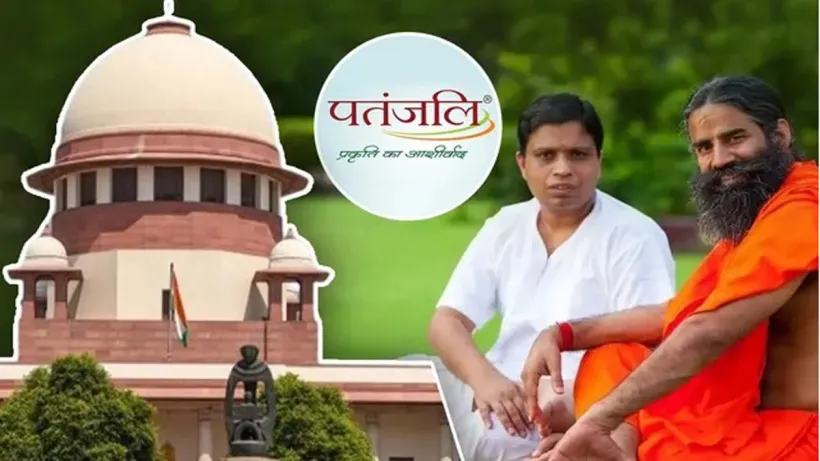
In Patanjali Foods Ltd. v. Union of India, the Supreme Court held that encashment of a bank guarantee is not equivalent to payment of customs duty under Section 27. Therefore, the doctrine of unjust enrichment does not apply, and the government must refund amounts secured through such guarantees without demanding compliance with refund procedures.

Current Legal Update

Supreme Court Streamlines Multi-State FIRs: Ravinder Singh Sidhu Case and Principles on FIR Clubbing

The Supreme Court’s 2025 ruling in Ravinder Singh Sidhu vs. State of Punjab (2025 INSC 727) establishes principles for clubbing multi-state FIRs, enhancing judicial efficiency. Addressing multiple FIRs filed across states for related offenses, the Court emphasized consolidating cases to prevent procedural abuse and ensure fairness, as seen in Sidhu’s case involving Punjab and Haryana. The verdict aligns with Article 21’s right to a fair trial, streamlining investigations while safeguarding defendants’ rights. It sets a precedent for handling cross-jurisdictional disputes, reducing redundancy.

Current Legal Update

Equal Pensions for Equal Service: Supreme Court’s Clarification on High Court Judges’ Post-Retirement Benefits

The Supreme Court of India, in a landmark ruling on May 19, 2025, mandated equal pensions for all retired High Court judges under the ‘One Rank One Pension’ principle, regardless of their entry route or tenure. The decision eliminates disparities between permanent and additional judges, ensuring a uniform pension of ₹15 lakh annually for Chief Justices and ₹13.5 lakh for other judges. It upholds Article 14’s equality clause, reinforcing judicial independence by standardizing post-retirement benefits. The ruling also extends family pension rights, addressing long-standing inequities.

Current Legal Update

Citizenship Denied: Supreme Court’s Verdict on Rofiqul Hoque and the Burden of Proof under the Foreigners Act

The Supreme Court’s verdict on Rofiqul Hoque’s citizenship case clarifies the burden of proof under Section 9 of the Foreigners Act, 1946. The Court ruled that authorities cannot arbitrarily label individuals as foreigners without primary evidence, emphasizing natural justice and the principle of audi alteram partem. Hoque, initially declared a foreigner by Assam’s Foreigners Tribunal due to documentary discrepancies, had his citizenship restored. The decision critiques random suspicions and reinforces procedural fairness, impacting citizenship disputes amid Assam’s NRC exercise. It alleviates concerns over minor errors in documentation.

Current Legal Update

Flood Damage Under Consumer Law: A Supreme Court Clarification

This paper examines a recent U.S. Supreme Court ruling clarifying consumer rights in flood damage cases under consumer law. The decision addresses liability for property damage caused by state actions, emphasizing the Fifth Amendment’s Takings Clause and state law remedies. It enables affected consumers, like Texas landowners, to seek compensation for flood-related losses due to government infrastructure projects. The ruling highlights the balance between public projects and private property rights, offering a framework for future litigation. It underscores the importance of clear legal pathways for consumers seeking redress.

Current Legal Update

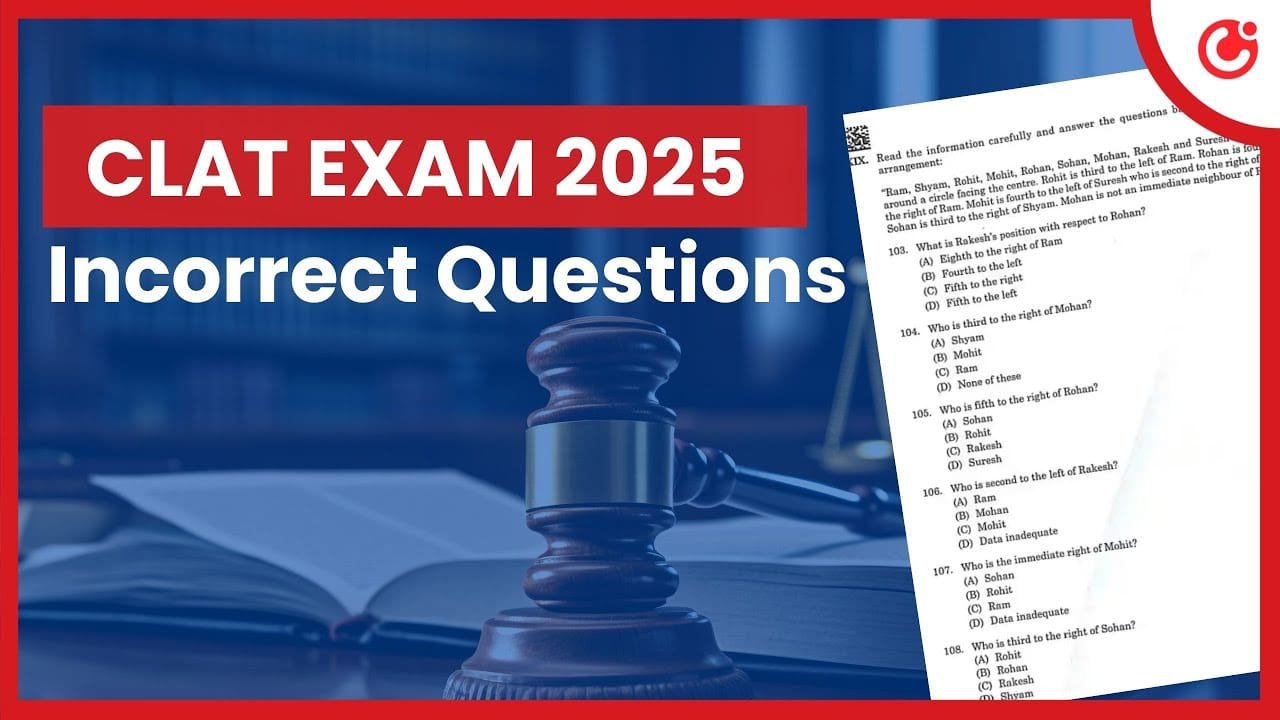
How CLAT UG 2025’s Flawed Logical Reasoning Section Sparked Nationwide Petitions

As soon as the CLAT results were announced, students discovered that several Logical Reasoning questions were flawed. The ambiguity of certain puzzles and the lack of clear premises led many to believe their scores were unfairly affected. Within hours, petitions began pouring into high courts in Delhi, Mumbai, Chennai, and other cities. Candidates demanded the removal of disputed questions, correction of answer keys, and reissuance of merit lists. The urgency of admission deadlines heightened the pressure on courts to act quickly. This immediate legal response underscored the high stakes of the exam and the depth of nationwide frustration.

Current Legal Update

Vanashakti v. Union of India: Analyzing the Supreme Court’s Rejection of Retrospective Environmental Clearances

The Supreme Court’s decision in Vanashakti v. Union of India firmly rejects the practice of granting environmental clearances after project work has begun. The Court struck down government orders that allowed retrospective approvals, emphasizing that prior clearance is essential to ensure public participation, expert review, and meaningful impact assessment. By declaring post-facto regularization impermissible, the judgment reinforces the precautionary principle and the rule of law in environmental governance. It sends a clear message that developers and public authorities cannot flout mandatory procedures without consequence, and it warns policymakers against using administrative shortcuts to bypass core protections. This ruling strengthens India’s environmental framework by upholding transparent, timely, and accountable decision-making in the interest of sustainable development.

Current Legal Update

Preserving Judicial Integrity: Why Justice Sanjiv Khanna Rejected Post-Retirement Assignments

The fact that Justice Sanjiv Khanna has decided to turn down all post-retirement appointments is evidence of his steadfast dedication to upholding the highest standards of judicial integrity. Furthermore, his position underlines that the highest judicial post carries responsibilities that extend beyond the bench, which is particularly important in this day and age, when public faith in institutions can be difficult to maintain. This individual has established a tremendous example for future jurists by refusing to accept the trappings of power once his tenure came to an end. His judgment kicks off an important conversation about the steps that must be taken in order to protect the independence of the judicial system and the trust that society places in those who are responsible for its protection. By doing so, Justice Khanna has not only paid tribute to the legacy of his ancestors, but he has also paved the way for future generations of judges to follow in his footsteps by establishing a route that is guided by principles.