Supreme Court Awards Additional Compensation for US-Based Accident Victim’s Family
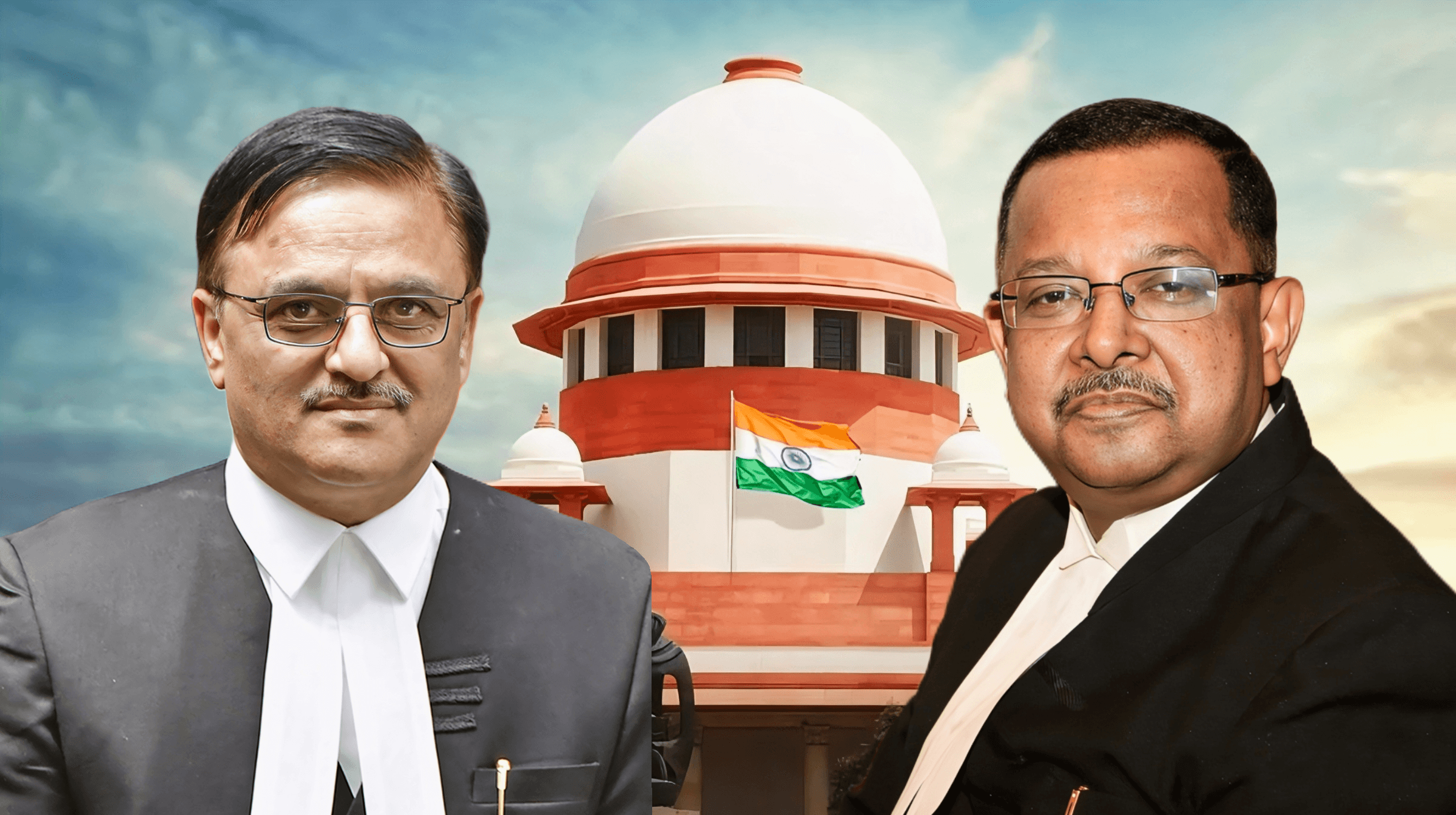
Presided by: Justice K. Vinod Chandran, Justice N.V. Anjaria, Supreme Court of India Appellant: Senior Advocate for Kulwinder Kaur &…
Keeping Pace with Legal Change
Presided by: Justice K. Vinod Chandran, Justice N.V. Anjaria, Supreme Court of India Appellant: Senior Advocate for Kulwinder Kaur &…
The Kavita Devi and Others v. In Sunil Kumar and Another the Supreme Court substantially increased the compensation to the family of a victim of an accident. The Court held that in determining compensation, actual income should consist of HRA and wages and the allowances are part of the benefits enjoyed by the entire family. The verdict stated that courts needed to abandon hyper-technical inferences and should be more comprehensive on the meaning of the word income in order to equally provide compensation that is both proper and appreciated. This decision holds fast to a victim-oriented approach to a motor accident claim.
In the persisting conflict between old-fashioned auto-rickshaw drivers and taxis and the new breed of vehicles providing bike taxis such…
The present article dwells on the examination of the recent judgment of the Supreme Court of India on 2025 INSC…
The current paper discusses an important case of the Supreme Court of India SUHAGRANI AND OTHERS versus MANAGER CHOLAMANDALAM MS…
In G Nagarathna Vs. G Manjunatha, the Supreme Court held that legal heirs of a driver who died as a result of his own rash and negligent driving could not claim compensation under the Motor Vehicles Act. The Court confirmed orders of the Tribunal and Karnataka High Court, placing reliance upon precedents which rule out the possibility of one deriving benefit from one’s own wrong. The ruling makes it clear that insurance firms are not responsible in such situations and supports fundamental tort law and public policy tenets.
On July 2, 2025, the Supreme Court of India delivered a significant judgment clarifying that legal heirs of a driver who dies due to his own rash and negligent driving are not entitled to compensation from insurance companies under the Motor Vehicles Act, 1988.
The Supreme Court in a historic suo motu judgment gave the systemic directions to ensure just disbursement of unclaimed compensation worth more than 1,000 crore rupees that is lying with Motor Accident Claims Tribunals and the Labour Courts so as to eliminate the gap between the justice delivery and implementation.
The Supreme Court through suo motu writ petition ordered all the High Courts and State Governments to make proper procedure to release any unclaimed amounts of compensation under the Motor Vehicles Act and also under Workmans Compensation Act Act to protect the rights of the beneficiaries and accountability.
In a high profile motor accident case, compensation was awarded to the claimants of the case by the Supreme Court after the high court had dismissed the income tax evidence in a most arbitrary manner and the court reiterated that compensation should be in line with the actual income primarily as a welfare intention of the Motor Vehicles Act.