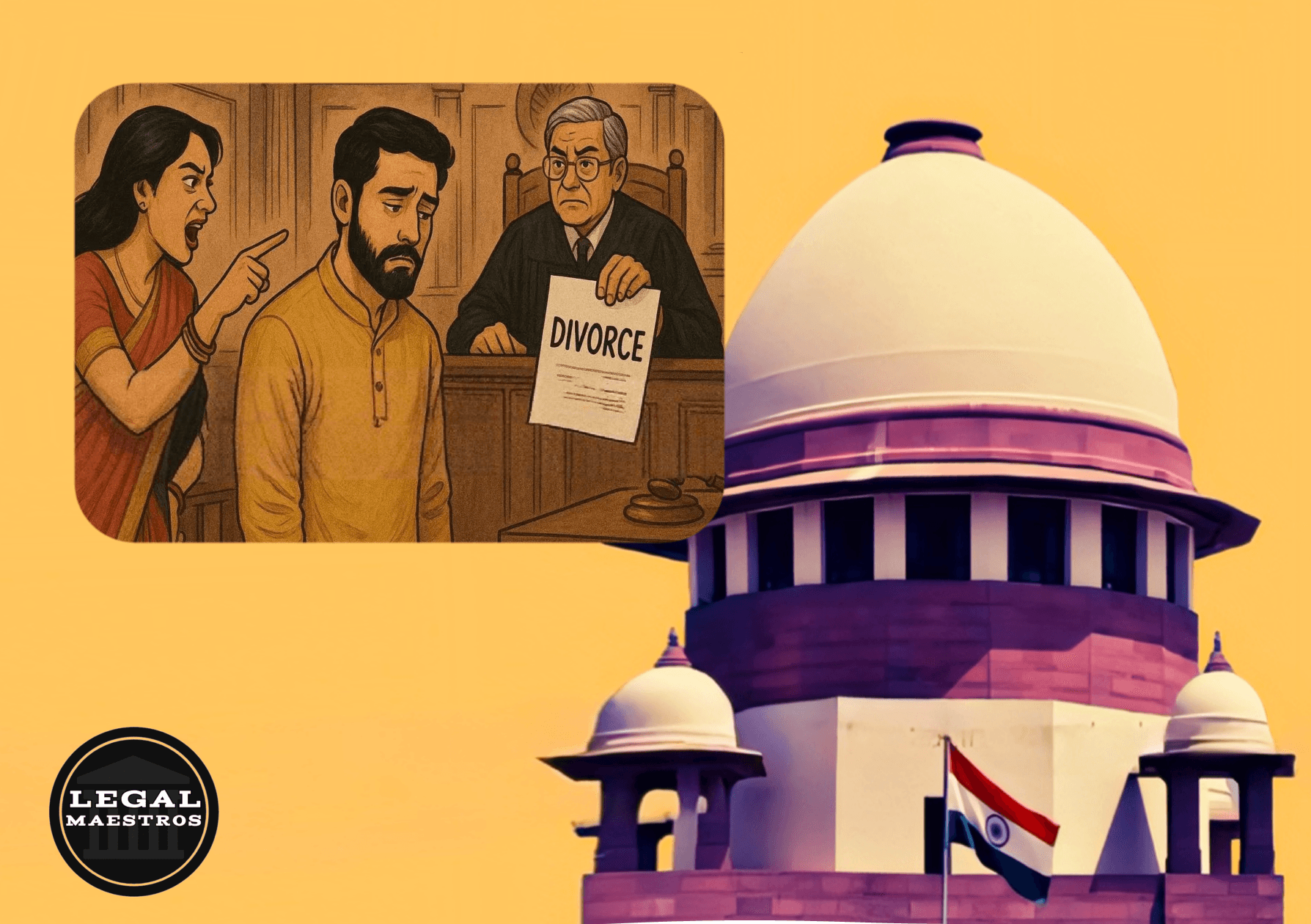
Supreme Court Settles High-Profile Alimony Dispute: Woman Awarded Mumbai Flat After Demanding ₹12 Crore in Contentious Divorce Case
Recently and in an area of brouhaha, the Supreme Court of India has proffered a legal end to a controversial…
Keeping Pace with Legal Change
Recently and in an area of brouhaha, the Supreme Court of India has proffered a legal end to a controversial…
The modern thwack of the Supreme Court judgment in the matter of Neethu B. @ Neethu Baby Mathew v. Rajesh…
The Supreme court in a landmark decision dissolved the marriage of a couple who had been separated for more than ten years saying irretrievable breakdown was a valid ground to grant divorce under Article 142 of the Constitution. The case shows that the Court, as an arm of the constitution, has the right to give full justice when there is no statute on the matter.
Through this short yet procedurally influential order, the Supreme Court allowed liberty to the petitioner, Danish Zaheer Siddiqui, to withdraw his Special Leave Petition and avail of a fresh audience in Bombay High Court. The case exposes major procedural issues in the appellate litigation.
In the case of Ankit Mishra v. State of Madhya Pradesh, the Supreme Court supported the decision of the High Court to give anticipatory bail to a man who had committed many offenses. With a focus on judicial discretion in accordance with Section 438 of the Criminal Procedure Code, the ruling investigates the legal criteria for granting or canceling bail.
This article provides an explanation of the process by which the Supreme Court determined whether or not sexual consent derived from a promise of marriage is valid. This paper investigates Section 376 of the Indian Penal Code and the legal framework that governs partnerships that involve adult consent and subsequent charges of rape.
In order to safeguard retired workers from having to recover overpayment salaries that were issued as a result of administrative errors, the Supreme Court emphasized that no recovery may be made without a hearing and that there must be no instances of fraud or misrepresentation on the part of the employee.
In a decision that found in favor of retired stenographers, the Supreme Court halted the recovery of extra income that had been given out as a result of a clerical error. This decision brought to light the principles of equity, non-fraudulent overpayment, and equal opportunity of hearing in matters pertaining to public employment.
Section 8 of the Bhartiya Nyaya Sanhita, 2023, formulates distinct and equitable standards for levying fines and handling defaults in payment. By placing caps on fines and related imprisonment, and outlining recovery processes, the law makes penalties equitable and enforceable, balancing deterrence with equity in the administration of justice.
The Bharatiya Nyaya Sanhita, 2023, provides a systematic framework of punishments to deliver justice. It harmonizes harsh punishments with equity by enabling the government to alter sentences when needed. With provisions covering punishments from death penalties to community service, the law seeks to deliver justice to match the crime’s gravity as well as permit mercy and reconsideration in meritorious cases.