







Supreme Court

Supreme Court: No Compensation for Legal Heirs if Driver Dies Due to Own Negligence

In G Nagarathna Vs. G Manjunatha, the Supreme Court held that legal heirs of a driver who died as a result of his own rash and negligent driving could not claim compensation under the Motor Vehicles Act. The Court confirmed orders of the Tribunal and Karnataka High Court, placing reliance upon precedents which rule out the possibility of one deriving benefit from one’s own wrong. The ruling makes it clear that insurance firms are not responsible in such situations and supports fundamental tort law and public policy tenets.

Current Legal Update

Allahabad HC Rules BNSS Anticipatory Bail Provisions Apply Retrospectively

In this article, we are going to examine the Abdul Hameed v. State case, a landmark judgment explaining anticipatory bail under the new BNSS in India. It focuses on the maintenance of consecutive bail applications, the retrospective effect of procedural legislations such as BNSS and principle of beneficial law in the sense that the evolution of the law legally deserves reconsideration of bail considering the new legal considerations.

High court

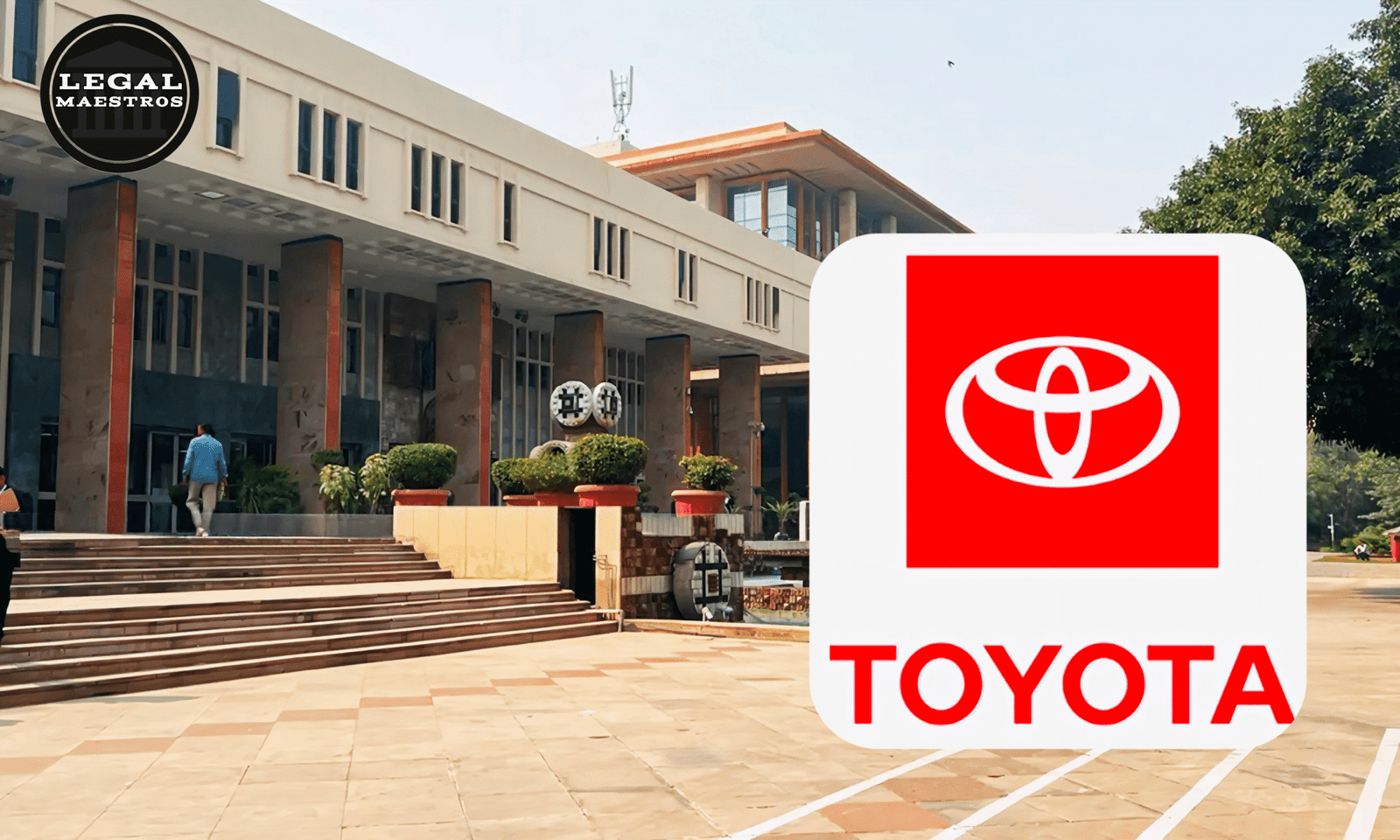
Delhi High Court Rejects Toyota’s Patent Infringement Plea Against Indian Firm

This article explains the case in the Delhi High Court between Kabushiki Kaisha Toyota Jidoshokki and LMW Limited on patent IN2447593. Toyota Jidoshokki claimed that LMW Spinpact machines had violated the patent rights of its invention entitled Fiber Bundle Concentrating Apparatus. The court denied the request for an injunction on the basis that the patent expires on May 24, 2025, which renders the technology publicly available.

Current Legal Update

India Eases SEZ Norms Spark Semiconductor Investment Wave in India

The recent liberalization of SEZ regulations is a strategic thrust towards India’s semiconductor indigenization. Top reforms are lighter land requirements, eased land encumbrance rules, permission for onshore sales, and operational flexibility—facilitating the investment of global and domestic companies. These reforms seek to place India in global supply chains, increase indigenous chip manufacturing, and lure big ticket investments. But infrastructure deficits, skill deficiencies, and environmental issues are still fundamental challenges to overcome for sustainable success.

High court

Privacy over Procedure: Bombay HC Orders ₹50K Compensation for Denial of Bank Account Without Aadhaar

In Microfibers Pvt. Ltd. v. Yes Bank Ltd., the Bombay High Court criticized the bank’s insistence on Aadhaar to open an account, even in violation of Supreme Court orders prohibiting compulsion. The petitioner, whose inability to rent property without a bank account led to this writ, petitioned for Rs. 10 lakhs in compensation. Finding constitutional violation and monetary loss, the Court granted a compensation of Rs. 50,000. The decision upholds citizen rights under Article 21 and asserts institutional accountability in the compliance with privacy and service access jurisprudence following Puttaswamy.

High court

Delhi High Court Affirms Disability Pension for Soldiers: Upholds Presumption of Service-Linked Ailments Even in Peace Postings

In Union of India & Ors. v. Maj Gen Rajesh Chaba (Retd), the Delhi High Court affirmed the order of the Armed Forces Tribunal directing disability pension for soldiers afflicted with diseases such as hypertension and ischaemic heart disease, even on peace postings. The Court held that stress inherent in military life warrants presumption of service connection under the Entitlement Rules. It spurned non-verdict medical board views that were without reasoned detail and noted pensions are a constitutional entitlement, not charity. This ruling reinforces welfare jurisprudence and requires accountability and transparency from medical boards in determining disabilities.