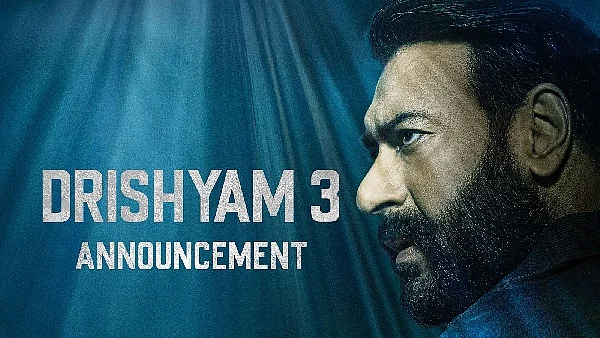
It’s May 21st, 2026 and Drishyam 3 has landed from Jeethu Joseph. Coinciding with Mohanlal’s birthday, it was an immediate financial success. A 141 crore opening weekend, breaking 226 crore worldwide within less than two weeks. Panorama Studios and Pen Studios secured Indian distribution while Hamsini Entertainments and York Cinemas snatched up North American distribution for approximately 10 crores. On paper, a massive hit. It also became Mohanlal’s fifth film to cross the 100-crore milestone.
However, if you walk out of a theater in Kerala right now, the only discourse you’ll hear is the sheer exhaustion of audiences. The movie has a run time of 159 minutes; a huge portion of it completely sidesteps the razor-sharp, high-octane thrills of its predecessors.
The script is a victim of heavy-handed family drama. Georgekutty is a film producer now, the family has moved into a bigger house and the film opens on a shot from one he produced starring Biju Menon. Peace, however, has not been bought with this newfound success. The first half is almost entirely dedicated to the arrange marriage of his eldest daughter, Anju. The house is constantly flooded by brokers, good matches miraculously fall apart at the eleventh hour and the specter of the old murder mystery continues to haunt the family’s reputation among neighbors, leading to actively malicious efforts by anonymous locals to sabotage the wedding. The film crawls to a grinding halt for the sake of this dramatic filler. The journalist character of Veena Nandakumar introduced halfway through also disappears, making the overall feel like the director is flinging ideas at a wall to see what sticks.
Then the old enemies return: Asha Sharath and Siddique reprise their roles as Geetha and Prabhakar and bring with them former cop Sahadevan and IG Thomas Bastin. They orchestrate a complex plot to frame Anju in a staged crime so that they can drive Georgekutty insane.
When Georgekutty finally understands their plan, he does the unthinkable. He falsifies the fake crime scene and injures his own daughter enough to make her the perfect victim, then walks straight over to Prabhakar. He gives them his last option: go to prison for the original murder if they leave his family alone forever.
Georgekutty is arrested; you think it’s the end. But it isn’t. Geetha chillingly tells the camera that she’s not done seeking revenge and a post-credits scene is shown, giving a heavy implication that another sequel is coming. In an interview, Jeethu Joseph recently revealed that he doesn’t actually have a plan for a fourth installment and is often pressured to continue the franchise by producer Antony Perumbavoor. He admitted he pushed the ending to the post-credits scene because younger members of the crew told him it would feel different. Audiences, however, have caught on. They paid for a whodunit but sat through nearly three hours of filler for the sake of a potential Drishyam 4. The mystery has died and has become an endless, tedious struggle for survival.
Maharashtra Orders Tech Giants to Uninstall Bike Taxi Apps
Things came to a head very quickly in Maharashtra’s transport sector on May 12, 2026. The transport minister of the state, Pratap Sarnaik, directed the cyber crime department to immediately halt unauthorized bike taxi services. Major app-based players like Uber, Ola, and Rapido were targeted. The state government bypassed local authorities and went directly to the source. A formal letter was sent from the Additional Director General of Police, Maharashtra Cyber, to Apple and Google, demanding the outright removal of the ride-sharing applications from app stores.
Bike taxis have been operating in Mumbai and Pune without the required permits from the Transport Department for quite some time now. The state claims this is a clear violation of the Motor Vehicles Act and the IT Act.
The authorities have heavily emphasized public safety as the primary motivation for this move. Officials highlighted the fact that there are no background checks of any kind being conducted for the two-wheeler drivers operating under these platforms, and passengers have no insurance coverage in case of any unfortunate incidents. Woman-specific safety features on these apps are reportedly non-existent on the bike taxi section of the services. An accident on the Bandra Link Road in Mumbai last week involving a similar unregulated vehicle pushed the authorities to take immediate action.
The real drivers behind the ban, however, appear to be financial and political. Traditional taxi and auto drivers have been demonstrating against these low-cost, app-based services for months, as they are losing a significant amount of daily earnings. These transactions are all happening outside the normal state regulated process, and the transport minister claims that these unauthorized services are causing a massive disruption to the local market.
WhileMillions of citizens in Maharashtra rely on these services for quick last-mile connectivity to metro stations and offices. The sudden lack of access is leading to widespread confusion on the ground and frustration among commuters about the sudden discontinuation of these services. People are uncertain if they will still be able to book regular taxis now, considering that the tech giants could be forced to remove their apps. The transport minister did assure that traditional taxi and four-wheeler bookings through the apps were still considered legal but claimed that until the tech companies decide to create completely separate apps for different modes of transportation, they stand the threat of being removed entirely.
The government has decided to abandon the warning approach and has pulled Apple and Google into the fray to ensure complete compliance. Standard taxi and four-wheeler bookings will be operating on the applications as usual but the state government has decided to remove the bike taxi function altogether.

![JOB POST: Junior Associate at ASM Law Chambers, Jaipur [Freshers]](https://legalmaestros.com/wp-content/uploads/2025/11/Gemini_Generated_Image_8wrxer8wrxer8wrx.png)