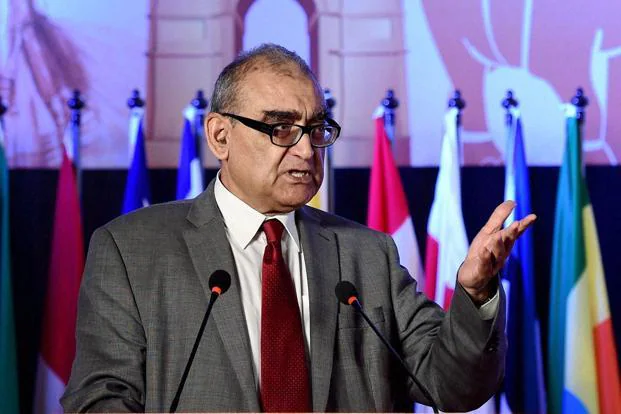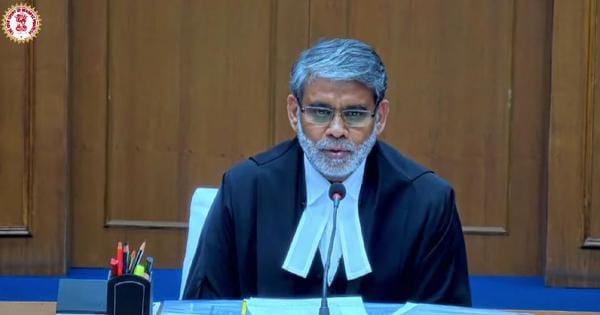
The country’s top court has issued a tough warning to a leading advocate representative. Dhanya Kumar Jain was issued a notice for contempt of court by the Supreme Court on Wednesday. He is the Jabalpur-based President of the Madhya Pradesh High Court Bar Association. The notice was issued by a bench of Chief Justice of India Surya Kant and Justice Joymalya Bagchi. The notice is in relation to a very controversial police complaint made by the advocate
The Bar Council Petition
The Bar Council of India (BCI) petitioned the Supreme Court about the complaint that Jain filed. He submitted this letter to the Superintendent of Police in Jabalpur. The BCI writ petition claimed this complaint to the police was full of false and serious allegations. Jain directly accused BCI Chairman Manan Kumar Mishra in his letter to the police. He also pointed fingers at a High Powered Election Committee, chaired by a former Supreme Court judge, Justice Sudhanshu Dhulia.
Comments on the Chief Justice
The police complaint did not leave the sitting Chief Justice of India out of the radar. Jain made several statements against CJI Surya Kant in regard to the eligibility criteria of State Bar Council elections. The lawyer openly maligning the Chief Justice for his appointment of Justice Dhulia. He also accused him of bearing ill-will towards him. He also accused a recent order of the judiciary, which reserves seats for women in Bar bodies, of abusing the judicial power
The Former Judge Controversy
The Jabalpur police complaint also brought in another former judge controversy. Jain raised the question of a previous decision of the Supreme Court to not direct an FIR against former Delhi High Court judge Yashwant Verma. Most recently, Justice Verma had come under attack for allegedly possessing a huge sum of cash at his home after a fire. The president of the Bar Association said the Supreme Court has committed a heinous crime against the democracy of the country in the present case
Courtroom Exchanges
The Supreme Court bench took up the matter after the BCI “urgently” moved the police complaint. The Bar Council was represented by Senior Advocate Guru Krishna Kumar during the short hearing. He said the conduct of the Bar Association president was most unfortunate and needed to be taken up urgently. The judges were appalled at the words spoken by the senior fraternity member. Justice Bagchi questioned whether this was the behaviour expected of the leader of the advocates.
Show Cause Demands
The court directed the issue of a show-cause notice to the Jabalpur lawyer. The court wanted to know why the criminal contempt of court proceedings under the Contempt of Courts Act should not be initiated. They also wanted to know why his licence to practice should not be suspended. The judges also asked him why he should not be forcibly removed from his post as an office bearer of the Bar Association.
Rejection of Ex-Parte Relief
During the hearing, the Bar Council of India also requested for interim relief. Their lawyer had requested the court to issue a directive to the Madhya Pradesh state government to take no notice of the police complaint by Jain. The Supreme Court bench did not wish to issue any ex-parte directions without hearing the accused lawyer. The Chief Justice said they would hear him first. This is to ensure the lawyer is heard first before any final ban is imposed.
Warning from the Bench
Despite giving time, the Chief Justice did not shy away from stating the gravity of the matter. He recognised the status of the accused by saying that advocates are, after all, advocates. But he immediately followed that by warning of the court’s intolerance. He observed that when the court sees no place for common sense, it knows how to deal with common senseless people. The warning was a clear message to the bar.
The Electoral Dispute
The simmering dispute between the local leaders and the national council has been ongoing for a while now. The dispute is largely over a particular election rule of the legal bodies. Dhanya Kumar Jain and other local leaders successfully challenged a rule of the BCI. It prevented office-bearers of district and high court bar associations from running for the State Bar Council. The local leaders saw this as a rule that prevented grassroots lawyers from taking on administrative positions.
Previous Supreme Court Order
This is not the first time the Supreme Court has been drawn into this particular election matter. In fact, just a few months ago, the Supreme Court had heard the election ban case of Jain. In a landmark ruling, the court had ordered the Bar Council of India to review the rule excluding lawyers. The judges had commented that there did not appear to be a reason to draw a new distinction against the local bar leaders.
The SCBA Exemption
Local bar leaders are upset at what they see as double standards in the election regulations. The BCI regulation creates a narrow exemption that favours a few. Bar members who are office bearers of the Supreme Court Bar Association are free to stand unchecked in the state council elections. Jain and his friends argued this exemption does create an unconstitutional discrimination among lawyers. They claim local presidents are in a better position to ascertain facts than Delhi practitioners.
Defending Regulatory Authority
The Bar Council of India (BCI) prepared a detailed writ petition to take the case to the Supreme Court. Their petition pointed out how Jain had been undermining the authority of national regulatory bodies. The BCI said the criminal complaint for an administrative dispute is a bad precedent for the profession. The BCI asked the Supreme Court to safeguard the sanctity of the election committee and the members appointed to it from police intervention.