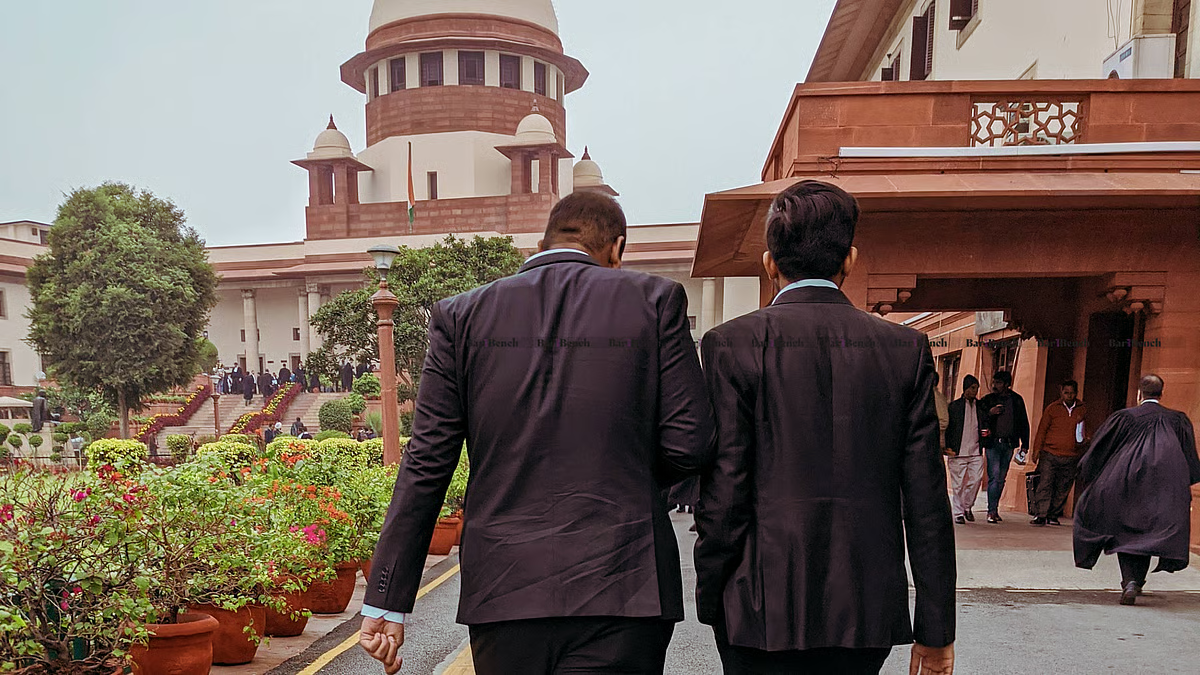
Mohammad Kashif is walking out. He spent nearly three full years locked up. His crime? The authorities say he pretended to be a close associate of Prime Minister Narendra Modi. He allegedly used that fake identity to squeeze money out of unsuspecting people. Today, the Supreme Court of India handed him a lifeline. Justices MM Sundresh and N Kotiswar Singh looked at the calendar. They saw a man sitting in jail since May 2023. That specific amount of time mattered to the judges. They threw out an earlier decision from the Allahabad High Court which had kept him in a cell. The main reason for his release is straightforward. The highest court decided three years in custody before a final verdict is simply too long.
The Fake Photos and Extortion Charges
The whole saga started on social media. Kashif supposedly took to platforms like Facebook and Instagram to build a fabricated life. The Enforcement Directorate claims he posted heavily edited pictures. These photos showed him standing right next to the Prime Minister and various other high-ranking government ministers. People saw these images and believed the lie. They thought he had the ear of the most powerful politicians in New Delhi. That is exactly what he wanted them to think.
Once the trap was set, he allegedly started making promises. He told targets he could secure government jobs for them. He promised to push through lucrative government contracts. He guaranteed he could get their stalled files moving in bureaucratic departments. But none of this access was real. He just demanded cash in exchange for these fake favors. The police in Gautam Budh Nagar initially caught wind of the scam. They filed a First Information Report at the Surajpur police station. They booked him for cheating, forgery, and breaking cyber laws under the Information Technology Act.
The Money Trail
Things escalated when the financial cops got involved. The Enforcement Directorate registered its own case in April 2023. They focus on money laundering and tracking illegal wealth. Federal investigators raided properties connected to Kashif. They found hard cash. The agency told the court they recovered just over ₹1.10 crore during these searches. They labeled this money the direct proceeds of his criminal hustle. That specific figure became a heavy anchor holding him down during his previous attempts to get bail. His lawyers argued that the sum, while large, did not justify an endless stay in a jail cell while the slow wheels of the trial kept turning.
The Battle in the Courtroom
Getting out of jail in a money laundering case is notoriously difficult in India. The laws are incredibly strict. Kashif had already secured bail for the original cheating charges. But the Enforcement Directorate’s case kept him locked up. He took his fight to the Allahabad High Court first. He lost. The High Court listened to the federal agency. The prosecutors pushed back hard against the idea of a delayed trial. They argued that the proceedings were actually moving forward. They pointed fingers at Kashif himself for the delays. According to the agency, his own legal team kept filing applications to push back the questioning of prosecution witnesses. Because of those defense tactics, the lower court felt there was no unfair delay caused by the government side.
His legal team, led by Senior Advocate Siddhartha Dave along with lawyers Nitish Rana and Vivek Jain, did not give up. They went straight to the Supreme Court. They laid out a specific timeline. They showed that formal charges under the Prevention of Money Laundering Act were framed back in November 2023. The very first witness only finished testifying in August 2024. They argued the pace was too slow. Waiting for the final gavel to drop while sitting inside a cell seemed entirely unfair to the defense.
Strict Rules for the Outside World
The Supreme Court listened to the defense but did not hand over a free pass. The judges attached a heavy chain to his release order. During the hearing, Kashif had to make a formal promise to the bench. He swore he would never again use the names of constitutional figures or government officials. He has to completely abandon the fake persona that got him in trouble. The court wrote down strict conditions for his freedom. He must show up for his trial dates. He must cooperate with the ongoing legal process.
The judges also gave the Enforcement Directorate a clear instruction. If Kashif tries to pull another stunt, or if he skips a court date, the agency can immediately go to the trial court. They have the absolute liberty to demand his bail be canceled. He would go straight back to his cell.
The Reality of Prolonged Custody
This ruling highlights a constant tension in the Indian justice system. You have severe financial crimes on one side. On the other side, you have the reality of under-trial prisoners rotting in jail for years before a judge ever decides if they are guilty. The Enforcement Directorate fought hard to keep him inside. They maintained that a man who dares to fake ties with the Prime Minister to run an extortion racket poses a unique risk. The massive recovery of over one crore rupees gave their arguments heavy weight. They wanted him to stay behind bars until the final witness spoke.
The Supreme Court judges bypassed the emotional weight of the accusations. They focused purely on the math of his incarceration. Thirty-six months is a massive chunk of a person’s life to lose without a conviction. The bench made it clear that keeping someone locked up indefinitely while a trial drags on is not how the system should work.
What Happens Next
The case against Kashif is far from over. He is only getting temporary freedom, not a clean slate. He will have to fight the money laundering charges from the outside now. The trial court in Uttar Pradesh will continue hearing from witnesses. The Enforcement Directorate will present the forged social media posts. They will show the judge the seized cash. They will bring in the people who allegedly handed over their life savings for fake government jobs. Kashif will have to mount a defense against a mountain of digital and financial evidence. For now, he gets to sleep in a normal bed. He gets to walk outside without guards watching his every move. But the threat of returning to a prison cell hangs over every decision he makes from today onward. The trial moves to its next phase, with both sides preparing for a long fight ahead.