As an AI, I am happy to help you break down this complex legal document into an easy-to-read, engaging article. Here is a simplified narrative of the Supreme Court’s judgment.
Finding the Balance: Individual Liberty versus the Pursuit of Justice
The Supreme Court of India recently delivered a compelling judgment that highlights the delicate balance between a person’s right to travel and the necessity of a speedy trial. Decided on June 4, 2026, the case of Seesa Santosh against the State of Telangana and another individual presents a fascinating look at how the justice system handles prolonged legal battles.
The Origins of the Dispute
The story began over a decade ago when Seesa Santosh filed a formal complaint in October 2014 regarding the suspicious and unnatural death of his father. This initial complaint led to a full police investigation and the registration of serious charges against the second respondent, which included accusations of criminal conspiracy and abetment of suicide. The formal chargesheet was presented to the court in February 2016.
However, the path to justice faced numerous delays. Over the years, the accused initiated multiple legal proceedings attempting to pause or cancel the criminal case. He eventually traveled to the United States in 2017 after securing a temporary suspension of a Look Out Circular that had been issued against him.
The Passport Ping-Pong
Fast forward to April 2025: the accused finally returned to India and was promptly arrested at the Rajiv Gandhi International Airport in Hyderabad. After he was released from custody, a legal tug-of-war began over his passport.
Initially, a local Magistrate allowed the return of his passport but strictly clarified that possessing the passport did not give him the right to leave the country without obtaining explicit court permission first.
The State appealed this decision, and a Sessions Court reversed the Magistrate’s ruling, demanding the accused deposit his passport due to the prolonged, years-long delay in the trial. Unhappy with this restriction, the accused took the matter up to the High Court. The High Court sided with him, overturning the Sessions Court and allowing him to travel back to the USA. The High Court based its leniency on his claims of needing ongoing medical treatment for two brain strokes he suffered in 2023, along with his firm promise to return to India within six months.
The Supreme Court’s Final Word
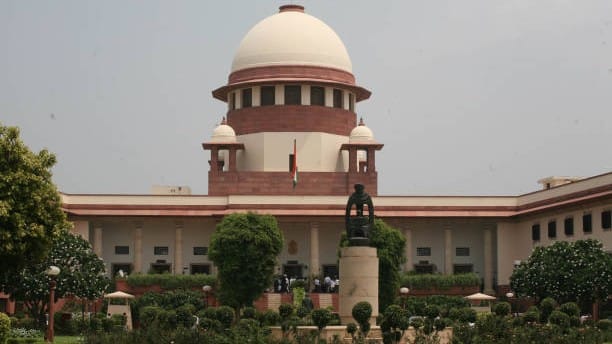
Ultimately, the Supreme Court had to step in to settle the matter. Justices Dipankar Datta and Satish Chandra Sharma expressed serious concern that the actual trial had not even commenced nearly ten years after the chargesheet was originally filed. The Justices noted that the accused himself had played a proactive role in stalling the trial through his various legal maneuvers over the years.
The accused’s legal team argued that forcing him to surrender his passport violated his fundamental right to personal liberty and his freedom to travel under Article 21 of the Indian Constitution. However, the Supreme Court beautifully countered this argument by stating that the right to a speedy trial is also a crucial, integral part of that very same constitutional article. The Court emphasized the vital need to strike a fair balance between an individual’s personal freedom and the broader societal interest in the effective administration of criminal justice.
Furthermore, the Supreme Court felt the High Court was entirely too lenient regarding the request to travel for medical reasons. The judges confidently noted that the medical facilities available right here in India are highly capable and perfectly comparable to those in any foreign country, making a trip to the USA for treatment unnecessary.
In the end, the Supreme Court canceled both the High Court and Sessions Court orders, choosing to restore the original, practical decision made by the Magistrate. The accused is not required to permanently surrender his passport, but he is strictly prohibited from flying out of India without express permission from the Sessions Court. To ensure this rule is strictly followed, the civil, police, and airport administrations have been directed to coordinate with one another to prevent him from leaving the country unauthorized.