Supreme Court Reinforces Burden of Proof
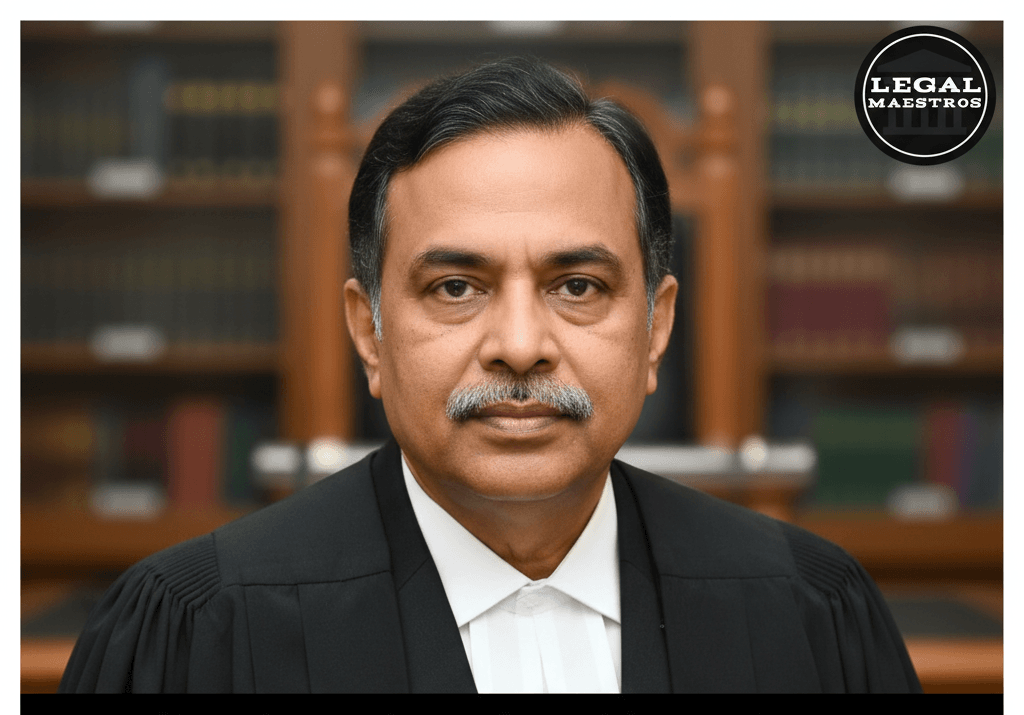
A historic case that upheld an important principle of criminal justice has been passed by the Supreme Court of India. One of the judges, Justice PK Mishra, said that one should not presume that a public servant is guilty of corruption just because money was found in their hands.
The court explained that in order to find out a conviction involving the Prevention of Corruption Act (PC Act), they must initially demonstrate the supporting facts. This ruling promotes the fact that there must be high standards of proof that are in a criminal case.
This ruling reinstates a long-established legal case that had been tinted. It repeats the fact that the prosecution has the burden of proof at all times. In this particular instance, a Labor Commissioner (Assistant) was absolved of taking a three thousand rupees bribe. As the Supreme Court mentioned, the prosecution case had a lot of inconsistencies in it. The ruling prevails a High Court order and reinstates a trial court ruling of acquittal.
This order by the court written by Justice Mishra is an important interpretation of Section 20 of the PC Act. This is a section that concerns a presumption of guilt. Nevertheless, the court said that this presumption did not occur automatically. It is one that one can invoke once the prosecution has managed to prove that the accused required the bribe and thereafter took it. The case against the accused collapses without demonstrating these two pre-eminent facts.
This case is a significant reprieve to the public servants who have to endure the danger of untrue or malicious claims. It acts as a good countermeasure to abuse of the anti-corruption law. What the court is guarding is a fundamental tenet; that being suspected, or even finding money in one’s possession, is not a form of evidence that can be used to prove beyond a reasonable doubt that a crime has occurred. Justice is supposed to be founded on proven facts and not assumptions.
The Crucial Elements of “Demand” and “Acceptance”
The decision of the Supreme Court is based on the two key words namely, demand and acceptance. The bench headed by Justice PK Mishra was categorical that they both had to be proven beyond reasonable doubt. The prosecution should demonstrate first that it was the public servant that requested the bribe. It is the demand that is the initial step in the crime. It is not sufficient to have had a chance to take money but the official should have personally solicited it.
After demonstrating the evidence of demand, the prosecution will then have to demonstrate acceptance. This is to demonstrate the fact that the official had the illegal gratification, and he had known and accepted the gratification voluntarily. With the case in point, the dirty money was located in a drawer close to the desk of the accused. The court, however, did not determine that the official had instructed the complainant to put the money there or that he had even accepted the money.
It puts a difference between an active, corrupt official and a victim of a set up. In most trap cases, one may be framed by ensuring that money is planted in his or her office or on his or her body. This ruling confirms that the law should be too intelligent to make the difference. In the absence of both demand and acceptance, the whole corruption argument falls off.
Other weaknesses that were highlighted by the court in the own story of the complainant were also serious. The allegation was based on the oral statement of the complainant and this is not corroborated by any other independent witness. As an example, a witness who was to be present at the time of the exchange of the bribes was requested to wait outside. This precluded any chance of corroborating the argument that at one point a demand was made which further deteriorated the case presented by the prosecution.
Why Mere Recovery of Money is Not Enough
The second myth concerning the cases of corruption is that in the event the contaminated money notes are discovered on the suspect, it is the end of the road. In this sentence, the power of judgement discredits such a notion. According to the Supreme Court, one is not convicted just because of mere recovery of currency notes. This is because the recovery in itself does not put the context into the picture. It fails to demonstrate the reasons as to why the money was provided and because it was offered as a bribe.
The rationale of the court saves honest officials against malicious complaints. Any citizen who is angry or a colleague who is not satisfied could easily drop money in the drawer of an official and then report to the vigilance department. The possibility of recovery to think of convicting would make a dangerous weapon of vengeance on the part of individuals. The motive and act must be corrupt as per the law and not the presence of the money.
The decision is in line with a decision made by the Constitution Bench in the case of Neeraj Datta vs State. It was also ruled in that case that demand and acceptance has to be proved as a fact by the prosecution. These facts may be either directly evidenced using audio or video or even by circumstantial evidence. But they must be proven. It is not possible to go directly to the conclusion that a bribe was taken only because they found money.
By exonerating the official, the Supreme Court has made it very clear to every subordinate court as well as anti-corruption agencies. It has emphasized that the investigations should be rigorous enough, and that the cases should be established on substantial evidence. This is necessary to fight corruption but one cannot do it by damaging the presumption of innocence, which is the foundation of criminal justice in India.
Three of the accused in Sambhal Jama Masjid Violence Case Bailed by Supreme Court.
Supreme Court Intervenes in Sambhal Case
The Supreme Court of India has allowed bail to three men who are accused of the Sambhal Jama Masjid violence case. Mohd Rashid, Mohd Faizan and Mohd Danish are the three men who are about to leave jail after close to one year in jail.
This prohibition issued by the highest court in the country reverses the decision of the lower courts. In May 2025, the Allahabad high court had denied the bail requests of the accused men. This was their last move to obtain release awaiting the end of their trial when they petitioned the Supreme Court.